AC or DC-coupled plug-in home battery: Which setup suits your home?
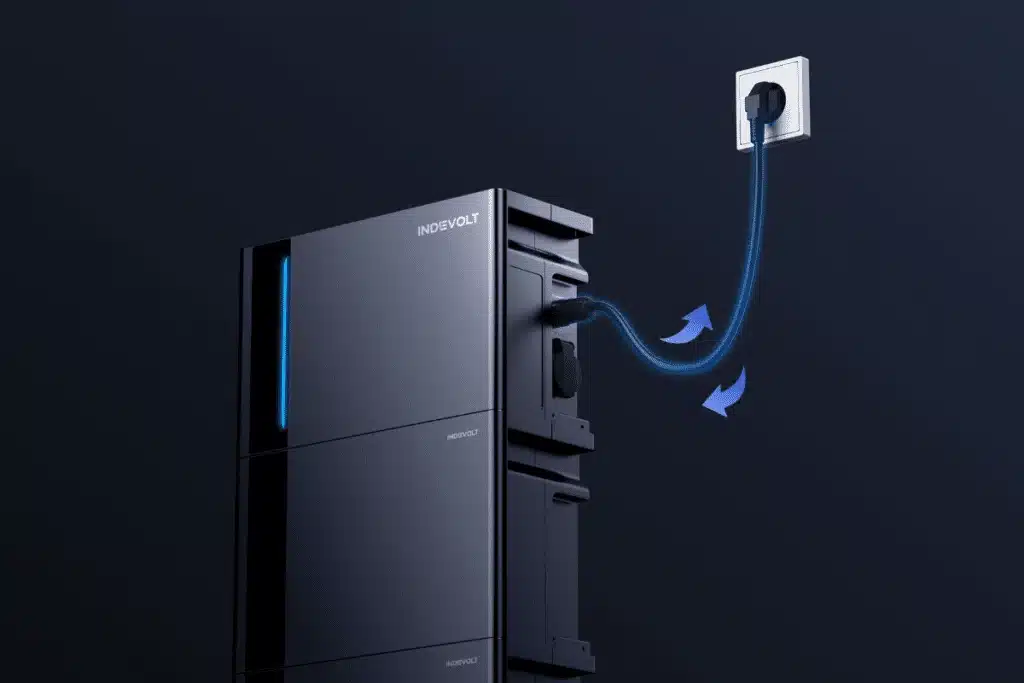
- AC-coupled batteries are easier to add to existing solar systems and can also work in homes without solar panels.
- DC-coupled batteries are slightly more efficient because solar power can be stored directly as DC, with fewer conversion steps.
- AC-coupled systems lose a little more energy because electricity is converted between AC and DC several times.
- For most households, flexibility matters more than the small efficiency difference, especially when solar panels are already installed.
An AC-coupled plug-in homeAn AC-coupled home battery works with the AC electricity in your home, while a DC-coupled battery is connected directly to the solar panels. The main difference is therefore how the electricity flows through the system. AC-coupled batteries are usually easier to add to an existing solar setup, while DC-coupled systems are often more efficient because the electricity needs fewer conversion steps. battery connects to your home’s AC electricity system, while a DC-coupled battery is directly connected to the solar panels.
If you are planning to combine solar panels with a home battery, choosing between a AC and DC coupled system is one of the first decisions you will need to make. Both setups have their own advantages, so the best option depends on your existing solar system, your budget and how you want to use the battery. Below, we explain the main differences and what you should consider before choosing.
How do AC and DC-coupled batteries work with solar panels?
Solar panels always generate electricity as direct current (DC), while your home and the electricity grid use alternating current (AC). Before that solar energy can power your appliances, it therefore needs to be converted from DC to AC.
| AC-coupled home battery | DC-coupled home battery |
|---|---|
| The solar panels first need to generate power, this is still direct current. | Solar panels generate electricity as direct current. |
| The inverter that is connected to the solar panels changes the direct current into alternating current. | The generated DC electricity can be sent directly to the DC-coupled home battery for storage, without first being converted to alternating current. |
| When you want to store the surplus solar power that you’re not immediately using inside your home. It has to be converted back into direct current. | When the stored energy is needed in your home, the inverter converts the DC electricity from the battery into alternating current. |
| When you eventually want to use that electricity, it needs to be converted again back into alternating current. | The AC electricity can then be used by your appliances or supplied to the grid. |
AC vs DC-Coupled Home Battery: How Does the Electricity Flow?

Because this type of home battery requires several conversion steps, some energy is lost along the way. The more often electricity has to be converted between AC and DC, the more energy is lost before it can be used again. Every time electricity gets converted it losses around 2 to 5%.
Which option is more efficient?
AC-coupled home batteries are slightly less efficient because the electricity needs to be converted several times before it is stored and used again. As a result, a small amount of energy is lost with each conversion. However, for most households, this difference is only a few percentage points and has little impact on the energy bill. The difference becomes more important with larger battery systems or when large amounts of energy are being moved.

What are the main advantages and disadvantages of both systems?
An AC-coupled home battery is mainly about flexibility. For example, it can usually be added to an existing solar system without major changes. As a result, it is a practical choice for many households. However, there are also some downsides. Because the system uses extra conversion steps and components, it is slightly less efficient. In addition, the installation can be a little more complex.
These are the main advantages and disadvantages of an AC-coupled setup.
Pros and cons of a AC-coupled system
Pros
- Easy to add if you already have solar panels.
- Works independently from your existing solar inverter, giving you more flexibility.
- Can also be used without solar panels.
- Easier to replace or upgrade the battery later without changing the solar system.
Cons
- More AC/DC conversions mean slightly more energy loss.
- A separate battery inverter and extra installation work are usually needed.
- More components can make the complete system more expensive.
- Installation can be a little more complex.
For most households, the flexibility and ease of adding an AC-coupled battery later will matter more than the small difference in efficiency. This is especially true if you already have solar panels installed. A DC-coupled home battery is efficient and compact, but it is usually less flexible when it comes to installation and choosing different battery brands.
Pros and cons of a DC-coupled system
Pros
- Solar power can go straight into the battery before being converted to AC.
- More efficient when storing solar energy because fewer conversions are needed.
- Fewer separate components are required.
- A neat option when installing solar panels and a battery at the same time.
Cons
- Your hybrid inverter determines which batteries are compatible.
- Less convenient to add to an existing solar installation, as the inverter may need replacing.
- The inverter can limit the maximum power available from the battery.
- You can ussually only place 4 or 6 solar panels on 1 plug-in battery.
Should you choose an AC or DC-coupled home battery?
The right choice mainly comes down to the system you already have. An AC-coupled battery is often the most practical option if solar panels are already installed. A DC-coupled setup can be a better fit if you are installing solar panels and a battery at the same time.
It is also worth looking beyond efficiency alone. Compatibility, installation costs, available space and how you plan to use the battery all matter. These factors can make one setup more suitable than the other.
Still not sure?
Use our calculator and get a personal recommendation.
More articles
-

Are home batteries safe? Fire risk and chemistry explained
-

Can you put a home battery outside?
-
How long will a home battery last in a power cut?
-

Plug-in battery vs installed home battery: which makes more sense?
-

How to choose a home battery: a step-by-step guide
-
Are there grants for home batteries in the UK?