How long will a home battery last in a power cut?

- A 10 kWh battery with 9 kWh usable can run essentials (around 200 W) for roughly 45 hours, or empty in 3 hours under a 3 kW load
- Capacity, round-trip efficiency and how much you actually use are the three biggest factors
- Keeping 20 to 30% of the battery in reserve protects you against an unexpected outage
- Solar panels wired into backup mode can recharge the battery during the day and extend runtime significantly
How long a home battery can provide backup power during a power cut depends on several factors. Battery capacity, the amount of charge available and how much electricity you use all play an important role.
A fridge or laptop, for example, uses far less power than an oven, washing machine or heat pump. In this article, we explain the main factors that determine how long your backup power can last and what you can do to make it last longer.
The short answer
A home battery could provide backup power for anything from a few hours to several days. A 10 kWh battery with around 9 kWh of usable energy could, for example, supply essential appliances using 200 W for around 45 hours, while a 3 kW load could empty it in around 3 hours.

Do all home batteries have a backup power feature?
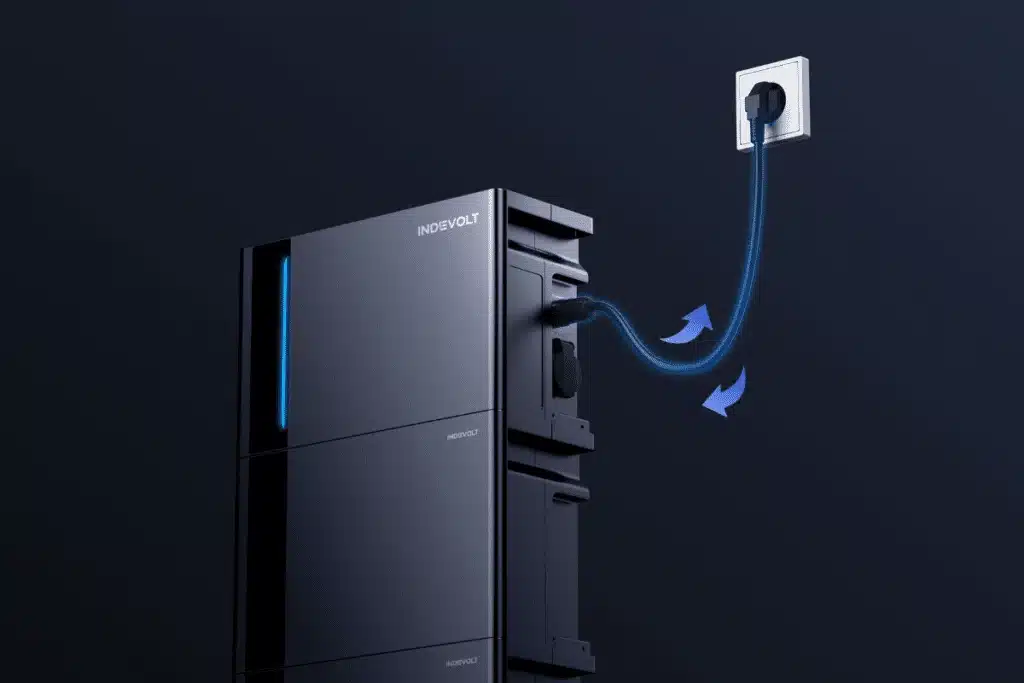
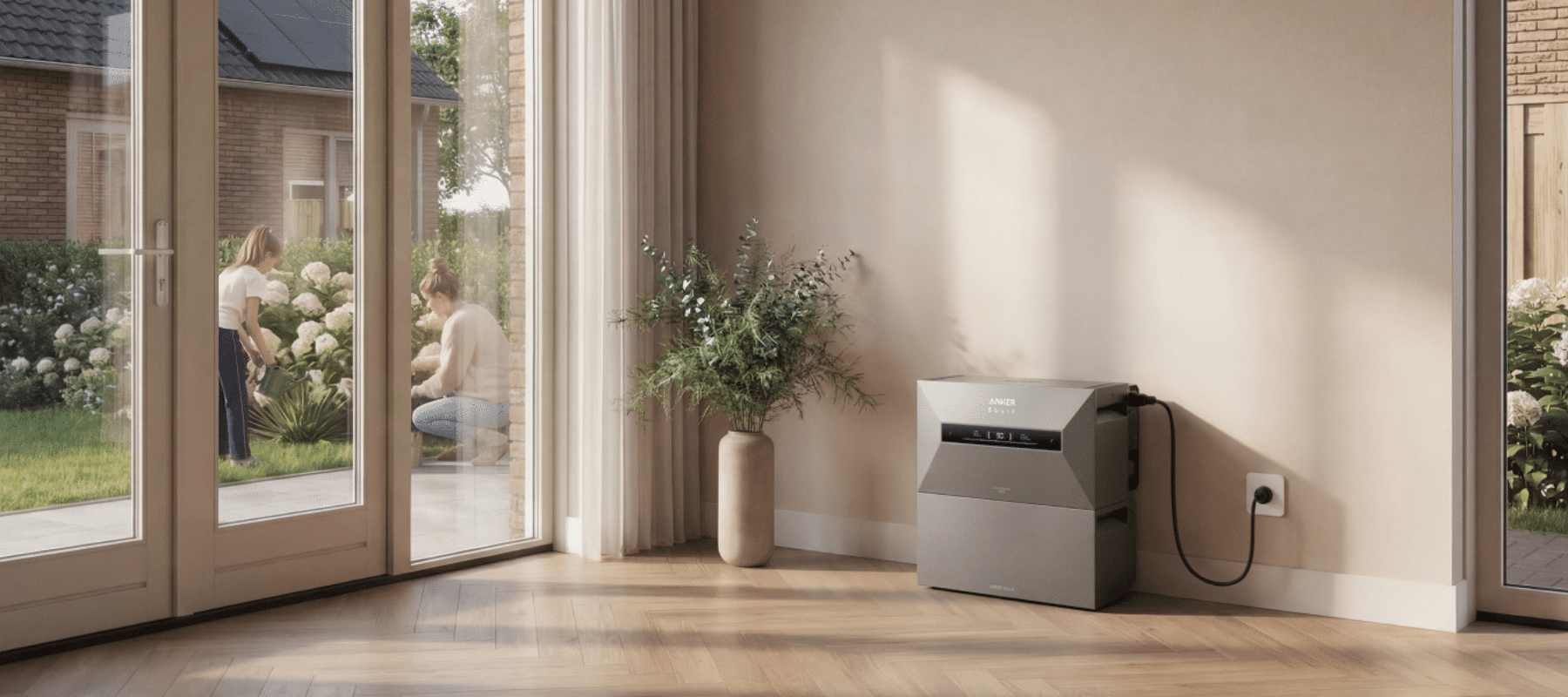
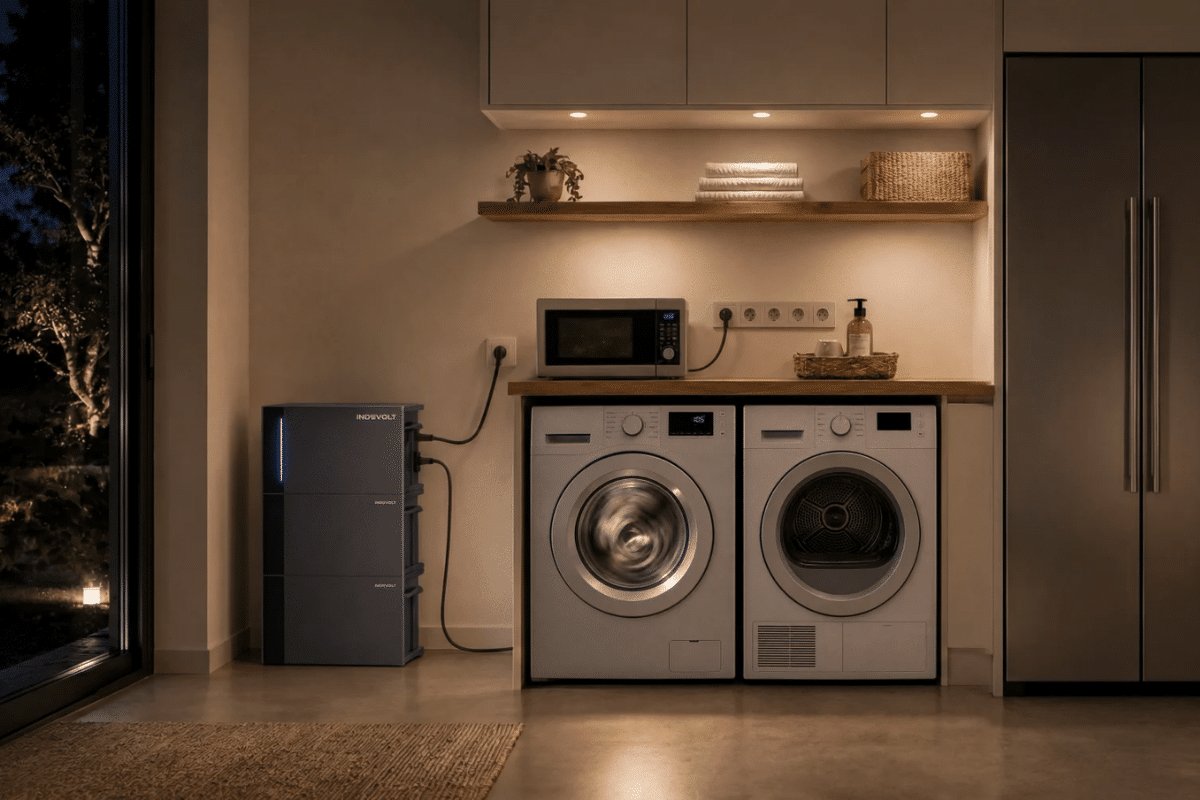
Many home batteries already come with a basic backup power function. This usually works through a dedicated backup socket, where you can connect a few essential appliances using an extension lead, such as a fridge, router or lamp. With a fixed home battery system, it is often possible to provide backup power to a large part of the home, or even the entire property.
A fixed home battery can provide backup power to an entire home, but this usually requires additional equipment. During a power cut, the home must first be safely disconnected from the public electricity grid using a backup box or automatic transfer switch. The battery and inverter can then create a separate local supply for the property, allowing selected circuits or, if the system is powerful enough, the whole home to continue running. The exact requirements and installation rules can differ between European countries and grid operators.
What has the biggest impact on how long a home battery lasts?
How long your home battery can provide backup power depends on several factors. The most important are the battery capacity, its efficiency and how much electricity you use during the power cut.
Capacity of your home battery
A larger battery stores more energy, so it can keep your appliances running for longer during a power cut. For example, a 10 kWh battery could theoretically supply appliances using a combined 1 kW for around 10 hours.
Round-trip efficiency
Not all of the energy stored in a home battery can be used. Some energy is lost while charging, storing and discharging the battery. At 90% efficiency, around 9 kWh of every 10 kWh stored is available after these losses.
How much energy do you use?
Running only essential appliances uses much less energy than powering larger appliances such as an oven, washing machine or heat pump. The fewer high-power appliances you use, the longer your backup power will last.
How much electricity do common household appliances use?
Different appliances use very different amounts of electricity. Small devices such as lights, a router or a laptop use relatively little, while appliances that produce heat usually use much more.
| Appliance | Usual electricity use |
|---|---|
| Fridge-freezer | 1.0–1.5 kWh per day |
| Lighting, router and standby devices | Around 0.5 kWh per evening |
| TV and laptop | Around 0.3 kWh for 4 hours |
| Washing machine | 0.6–0.9 kWh per cycle |
| Dishwasher | 0.8–1.1 kWh per cycle |
| Induction cooking | 0.5–0.8 kWh per meal |
| Electric oven | 1.5–2.0 kWh per hour |
| Heat pump | Around 6–12 kWh per winter day |
| Electric car | Around 50–80 kWh for a full charge |
This shows why it is usually best to focus on essential appliances during a power cut. A fridge, router and a few lights use relatively little energy, while heating, cooking and EV charging can empty a battery much faster.
How long can a 10 kWh battery provide backup power?
A 10 kWh battery typically provides around 9 kWh of usable energy, depending on the system. The table below gives a simple indication of how long this could last with different levels of electricity use.
| Backup use | Approx. power use | Estimated runtime with 9 kWh |
|---|---|---|
| Fridge, router, lights and phone charging | 150–250 W | 36–60 hours |
| Above + TV and laptop | 350–450 W | 20–26 hours |
| Several household appliances | Around 1,000 W | Around 9 hours |
| Higher-power appliances | Around 1,500 W | Around 6 hours |
| Heavy electricity use | Around 3,000 W | Around 3 hours |
These figures are only estimates. Actual backup time depends on the battery’s state of charge, efficiency, maximum backup output and which appliances are switched on at the same time.
Can solar panels work during a power cut?
Solar panels can continue to provide electricity during a power cut, but only if they are set up to work with the battery in backup mode. In practice, this usually means the solar panels need to be connected directly to the battery system or its compatible hybrid inverter. If they are connected through a separate standard solar inverter, they will normally switch off when the grid goes down.
Why solar can make a big difference
If your solar panels can continue operating during a power cut, they may be able to recharge the home battery during the day. This can significantly extend the amount of time backup power remains available.
Keep part of the battery in reserve
Many home battery systems allow you to keep a certain percentage of the battery available for emergencies. Through the battery management system or app, you can set a minimum state of charge, such as 20 or 30%. The battery will then avoid using this reserved energy during normal daily use, so some capacity remains available if a power cut occurs.
| Setting | Why it helps |
|---|---|
| Emergency reserve: 20–30% | Setting aside part of the battery means some stored energy remains available if an unexpected power cut occurs. |
During a longer power cut, it helps to prioritise essential appliances. A fridge, router, lights and phone chargers use relatively little electricity, while electric heating, ovens, kettles and EV charging can drain the battery much faster. By limiting high-power appliances, you can make the available backup energy last much longer.
Prioritise essentials
Focus on your fridge, router, lighting and phone charging before using higher-power appliances.
Avoid heavy loads
Heating, ovens, kettles and EV charging can use the available battery capacity much faster.
How long will your home battery last?
There is not one single answer to how long a home battery will last during a power cut. A larger battery can provide power for longer, but your electricity use, available charge, efficiency and backup output are just as important.
By keeping part of the battery in reserve, prioritising essential appliances and, where possible, using solar panels to recharge the battery, you can significantly extend the amount of time your home has access to backup power.
Want backup power you can rely on?
Use the calculator to find a battery that matches your household's needs.
More articles
-

AC or DC-coupled plug-in home battery: Which setup suits your home?
-

Are home batteries safe? Fire risk and chemistry explained
-

Can you put a home battery outside?
-

Plug-in battery vs installed home battery: which makes more sense?
-

How to choose a home battery: a step-by-step guide
-
Are there grants for home batteries in the UK?