
How to Choose a Battery Storage Installer in the UK: The Checks That Protect Your Payback
28/10/2026


There is not one single grant in the UK that gives every homeowner money for buying a home battery. But there are still several ways to get financial support or reduce the total cost.
Some households can receive battery storage as part of a wider energy-saving scheme, while others can benefit from tax relief or lower energy costs after installation.
The support available depends on multiple things like your income, where you live and the type of system you want to install. Different schemes can also apply in England, Scotland, Wales and Northern Ireland. Because of this, it is worth looking at the different options before buying a battery.
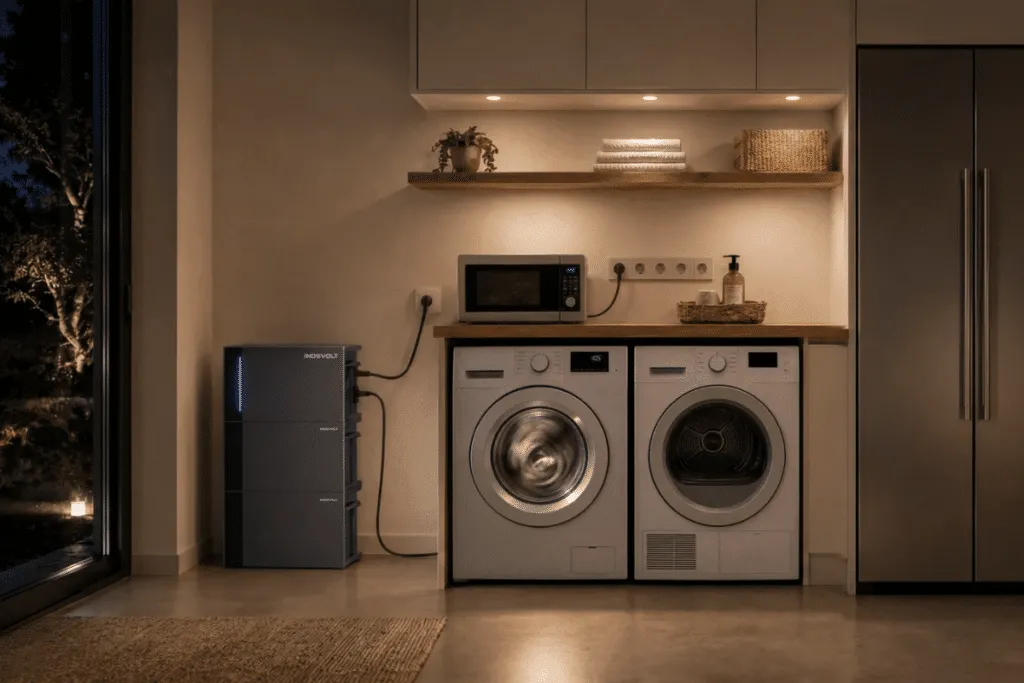
Low-income households (below £36,000) usually have the best chance of receiving financial support. One of the main schemes in England is the Warm Homes: Local Grant. This is aimed at households with a lower income and homes that are not very energy efficient. If you qualify for the grant, your local council may help with improvements such as insulation, solar panels and in some cases battery storage.
Another option is the ECO4 scheme, which runs until the end of 2026. ECO4 helps lower-income households make their homes more energy efficient. Support can include insulation and sometimes solar panels or battery storage as part of a wider package.
A battery is usually part of a wider package
You normally cannot apply for a free home battery on its own. Your home and financial situation are looked at first, after which the most suitable improvements are chosen. It is therefore worth checking with your local council before paying for a system yourself.
Even if you do not qualify for a grant, there are still other ways to save money. One of the biggest benefits is the current 0% VAT rate on qualifying home battery installations until 31 March 2027. This can apply when a battery is installed with solar panels, added to an existing solar system or installed on its own. You can read more about this in our guide to 0% VAT on home batteries in the UK.
Choosing the right battery size can also save you money. A larger battery is not always better. If you buy much more storage than you actually need, part of the battery may hardly be used. A battery that matches your daily electricity use can often give better value for money. Use our home battery capacity calculator to make sure you get the right size battery.
More financial support for home energy systems is expected in the next few years. One of the main plans is a government-backed loan scheme for things such as solar panels and home batteries. The idea is to make these systems easier to afford by allowing households to spread the cost with low-interest or possibly zero-interest loans.
This scheme is expected to start in April 2027. The exact terms are not yet fully known, so things such as the interest rate, maximum amount and eligibility rules could still change before it starts.
There is also a planned £2,500 grant for thermal batteries through the Boiler Upgrade Scheme. A thermal battery is different from a normal home battery. It stores heat for your heating and hot water rather than electricity for your home.
For most people, the best way to save on a home battery is not to rely on one specific grant, but to combine the main ways to save money that are already available. This could mean using 0% VAT, choosing the right battery size and making the most of your own solar power or cheaper electricity rates.
The options are also likely to improve over the next few years, as new funding and loan schemes are expected in 2027. Because of that, it is worth checking the latest support before you buy a home battery, as the total cost can be very different depending on the scheme you can use.
Use the calculator to find a battery size that better matches your household.
28/10/2026
28/10/2026

22/10/2026
22/10/2026
21/10/2026
20/10/2026