Plug-in battery vs installed home battery: which makes more sense?
- A plug-in battery is usually cheaper, faster to install and easier to take with you if you move house
- An installed home battery suits higher capacity, higher power output or more advanced backup needs
- Both use similar LFP battery cells and typically last 10 to 20 years with a similar warranty
- The right choice depends on your budget, your energy contract and how much storage you actually need
Choosing between a plug-in battery and an installed home battery mainly comes down to your budget, your energy use and how flexible you want the system to be.
Both options can help you store solar power, use cheaper electricity and rely less on the grid. However, there are clear differences in price, installation, capacity and whether you can take the battery with you if you move house.
Which type should you choose?
A plug-in battery generally makes more sense if you want a cheaper, quicker and more flexible solution that you can install yourself. An installed home battery can be more suitable if you need higher power, a larger fixed system or more advanced backup options.

What is the difference between the two?
A plug-in battery is usually much cheaper than an installed home battery. In many cases, it can be around two times cheaper for the same storage capacity.
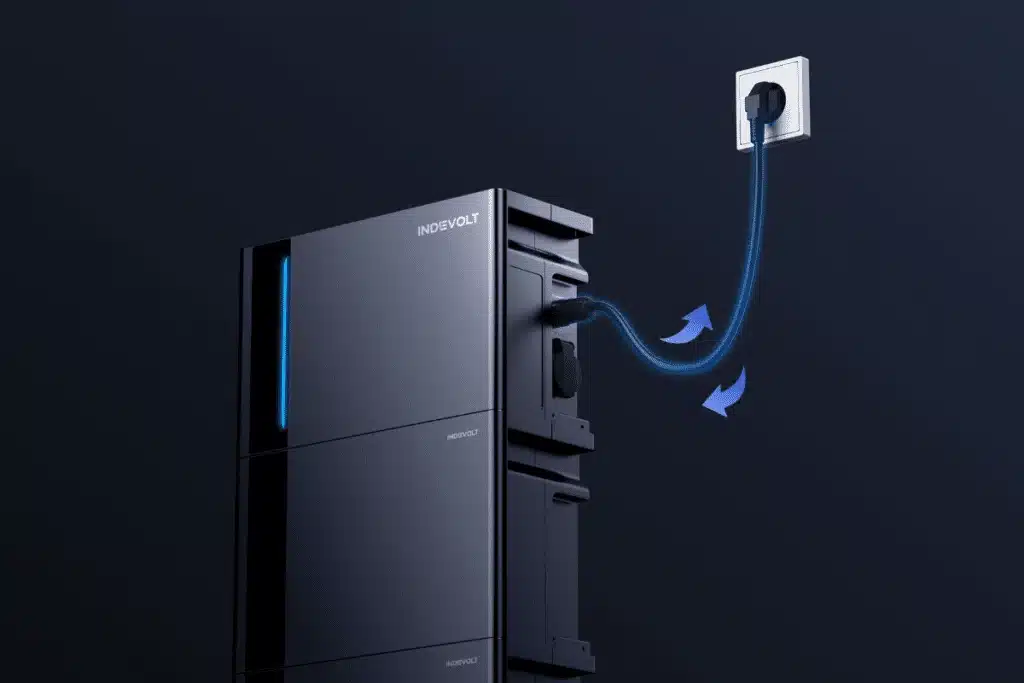
Another big difference is the installation. A plug-in battery can usually be installed by yourself once it arrives. This often takes around 30 minutes and means there are no installation costs. With an installed home battery, you normally need an electrician. You may also have to wait until they are available, which can take around 4 to 8 weeks.
Flexibility is also important. An installed home battery is fixed in your home, so you normally cannot take it with you when you move. A plug-in battery is much easier to take with you to a new home.
Plug-in and installed batteries compared
Plug-in battery: lower cost and more flexibility
A plug-in battery is generally cheaper to buy and does not normally require professional installation. You can usually get started quickly and the system can be easier to move if you change home.
Best suited to: households looking for a simple, flexible and lower-cost way to add battery storage.
Installed battery: a larger fixed installation
An installed home battery normally requires an electrician and costs more to install. In return, fixed systems can be suitable for higher capacities, higher power requirements and more advanced backup configurations.
Best suited to: households that want a larger permanent system or more advanced integration with the home.
Costs, capacity and installation compared
Below is a comparison between average plug-in batteries and average installed home battery systems.
| Capacity | Plug-in price | Plug-in installation | Installed price | Installed installation |
|---|---|---|---|---|
| 5 kWh | €1,200–€1,500 | €0 self-installation | €5,000–€7,000 | €1,000–€3,000 |
| 10 kWh | €2,500–€4,250 | €0 self-installation | €7,000–€8,500 | €1,000–€3,000 |
| 16 kWh | €4,250–€5,000 | €0 self-installation | €8,500–€10,000 | €1,000–€3,000 |
| 24 kWh | €5,000–€6,250 | €0 self-installation | €10,000–€12,500 | €1,000–€3,000 |
| 32 kWh | €6,250–€7,500 | €0 self-installation | €12,500–€15,000 | €1,000–€3,000 |
| 40 kWh | €7,500–€10,000 | €0 self-installation | €15,000–€20,000 | €1,000–€3,000 |
Prices are indicative and can vary depending on the battery brand, inverter, installation requirements and system configuration.
When does a home battery make sense?
A home battery can be useful in several situations. Most people choose one because they have solar panels and want to use more of their own solar energy. Without a battery, you might only use around 30% of the power your solar panels generate. With a battery, this can often increase to around 60% to 80%.
A home battery can also make sense if you have a dynamic energy contract. Even without solar panels, you can charge the battery when electricity is cheap and use that stored power when electricity is more expensive.
Some systems can also be used for energy trading. In that case, the battery charges when your solar panels are producing power or when electricity prices are low, and then discharges or sells electricity back to the grid when prices are higher.
The main question to ask
Think about what you actually want the battery to do. Storing your own solar power, responding to changing electricity prices and providing backup power can all require a slightly different system.
Ease of use, safety and reliability
When it comes to ease of use, safety and reliability, plug-in batteries and installed home batteries are quite similar. Both usually work with an EMS system, which lets you set up and manage how the battery charges and discharges.
In terms of safety, most modern home batteries use lithium iron phosphate batteries, also known as LFP batteries. These are used in both plug-in batteries and fixed installations and are known for being safe and stable.
The expected lifespan is also similar. Most batteries last around 10 to 20 years, and many suppliers offer a product warranty of around 10 years. This makes both types of batteries comparable on these points.
| Metric | Typical value |
|---|---|
| Expected lifespan | 10 to 20 years |
| Common product warranty | 10+ years |
| Common modern battery chemistry | LFP |
Which makes more sense for your home?
In most cases, a plug-in battery makes more sense if you want a cheaper, faster and more flexible solution. You can usually install it yourself, avoid installation costs and take the battery with you if you move house.
An installed home battery can still be a good option if you want a fixed system or prefer a full professional installation. It can also be more suitable when you need higher power output or more advanced backup options.
The best choice depends on your home, your energy contract and how much storage capacity you actually need.
Still weighing up the options?
Use the calculator to see which battery type and size fit your situation.
More articles
-

AC or DC-coupled plug-in home battery: Which setup suits your home?
-

Are home batteries safe? Fire risk and chemistry explained
-

Can you put a home battery outside?
-
How long will a home battery last in a power cut?
-

How to choose a home battery: a step-by-step guide
-
Are there grants for home batteries in the UK?