
GivEnergy vs Fox ESS
Two home battery brands sold through UK installers, compared in two matched pairs using only figures the makers publish, with the difference between battery-only and all-in-one units made clear.
- 2 matched pairs
- Maker data only
- Checked 12 Nov 2026

- We matched two GivEnergy and two Fox ESS installed home batteries by capacity: the Giv-Bat 9.5 kWh against the EP11, and the All in One against the EP12. They are fixed installations, not plug-in batteries.
- In the 4 rows where a higher or lower number is clearly better or exactly level, GivEnergy leads in 2 and Fox ESS in 0; 2 are level.
- The products are not all the same kind. The Giv-Bat 9.5, EP11 and EP12 are batteries only and need an inverter, while the GivEnergy All in One is AC-coupled and has its own 6 kW inverter. The Giv-Bat 9.5 is low-voltage (51.2 V) and the Fox ESS batteries are high-voltage (384 V), so they are not interchangeable.
- Both makers leave figures out on the pages we read: 6 cells on GivEnergy's side read 'not stated' against 3 on Fox ESS's.
- We have not tested any of these products. Where a maker does not publish a figure, we say so instead of guessing.
Not tested by us, and no prices
Every figure on this page comes from GivEnergy's and Fox ESS's own product pages, datasheets and manuals, last checked on 12 November 2026. We have not tested these batteries, so we do not score them or crown a winner. We show no prices because installed batteries are quoted by the installer and change often.
The short answer
There is no overall winner. Across our two pairs, GivEnergy leads in 2 of the 4 clear-cut rows and Fox ESS in 0, with 2 level. Most of the figures that matter cannot be ranked, because the products are different kinds of system.
In the first pair, the Giv-Bat 9.5 holds 9.5 kWh and weighs 85 kg, while the EP11 holds 10.36 kWh and weighs 99 kg. GivEnergy states a 12-year warranty with unlimited cycles; Fox ESS states 10 years or 33.4 MWh of throughput in the UK and Ireland, whichever comes first. Fox ESS publishes an efficiency (at least 95%) and a cycle rating (at least 4,000 cycles) that GivEnergy's datasheet does not. In the second pair, GivEnergy's All in One holds 13.5 kWh with a 6 kW inverter and states 12 years, while the EP12 holds 11.52 kWh, is battery only, and has no warranty stated for this model.
Do not read the row count as a score. The inverter you pair with matters as much as the battery, so start with the type of system you need. Use the pair tables below, then check Which should you choose? for the situations where each fits better.
How we matched the models
We paired products by capacity, because that is how people shop: they pick a size, then compare brands. Each pair is the closest match in our catalogue, which holds only two products from each brand. The first pair is 9.5 kWh against 10.36 kWh, and the second is 13.5 kWh against 11.52 kWh.
The pairs differ in more than size. The Giv-Bat 9.5 is a low-voltage battery (51.2 V nominal) for GivEnergy's third-generation inverter range, and the EP11 and EP12 are high-voltage batteries (384 V nominal) for Fox ESS inverters. Both batteries in the first pair are DC-coupled through an inverter. The second pair is not like for like: the GivEnergy All in One is an AC-coupled unit with a 6 kW inverter built in, and the EP12 is a battery only that still needs an inverter. Weight and price comparisons across that pair would be misleading, so we do not mark the weight row.
| Specification | GivEnergy | Fox ESS |
|---|---|---|
| The battery-only pair (about 10 kWh) | GivEnergy 9.5 kWh Battery | Fox ESS EP11 |
| The all-in-one against battery-only pair (11.5 to 13.5 kWh) | GivEnergy All in One | Fox ESS EP12 |
GivEnergy and Fox ESS at brand level
Before the model pairs, here is how the two companies differ. See our full brand guides to GivEnergy and Fox ESS.
| Specification | GivEnergy | Fox ESS |
|---|---|---|
| Models in our catalogue | 2 | 2 |
| Coupling in our pairs | Giv-Bat 9.5 kWh: a low-voltage battery (51.2 V) for GivEnergy's inverters; All in One: AC-coupled with a 6 kW inverter inside | EP11 and EP12: high-voltage batteries (384 V) for Fox ESS inverters |
| Cell chemistry in our pairs | LFP on the Giv-Bat 9.5 kWh; not stated for the All in One | LFP on both |
| Warranty in our pairs | 12 years on both | EP11: 10 years or 33.4 MWh throughput in the UK and Ireland; not stated for the EP12 |
| Expansion in our pairs | Giv-Bat 9.5 kWh: up to five units in parallel; All in One: modular design, parallel operation to come | Up to four units in parallel on both |
| Protection rating in our pairs | IP65 on both | IP65 on both |
GivEnergy Giv-Bat 9.5 kWh vs Fox ESS EP11
Both are LFP batteries without an inverter, sold to be paired with the maker's own hybrid inverter. The Giv-Bat 9.5 holds 9.5 kWh and the EP11 holds 10.36 kWh. This is the closest like-for-like pair in the comparison, with one important catch: one is low-voltage and the other high-voltage.
The battery-only pair (about 10 kWh)
| Specification | 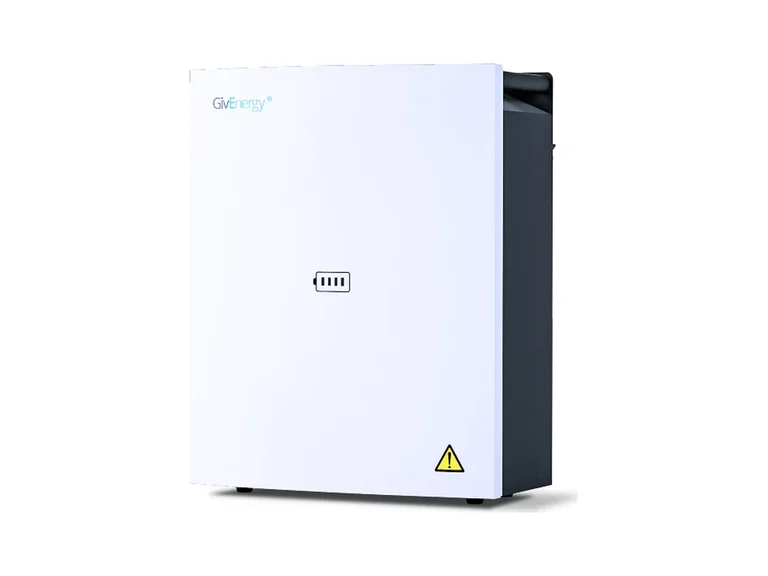 GivEnergy 9.5 kWh Battery | 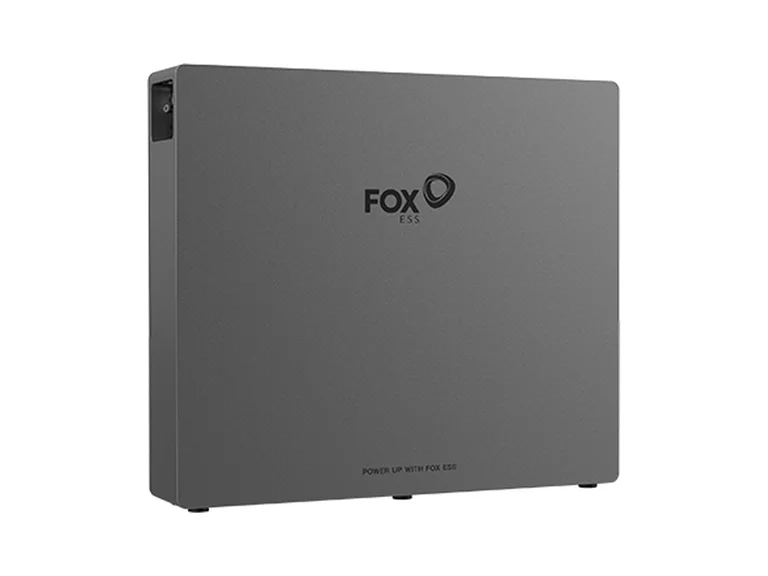 Fox ESS EP11 |
|---|---|---|
| Capacity | 9.5 kWh nominal (186 Ah) | 10.36 kWh nominal per unit |
| Usable capacity | Not stated | About 9.3 kWh per unit (calculated from 10.36 kWh at 90% depth of discharge) |
| Depth of discharge | 100% | 90% |
| Battery chemistry | LiFePO4 (LFP), prismatic cells | LFP (LiFePO4) |
| Cycle life | Unlimited cycles within the warranty period (no cycle rating given) | At least 4,000 cycles at 25 °C and 90% depth of discharge; the UK warranty is also set by throughput: 33.4 MWh |
| Expansion | Up to five units in parallel, stackable | Up to four units connected in parallel |
| Charge and discharge power | Under 120 A continuous at 51.2 V nominal; no kW figure given | 27 A maximum at 384 V nominal; about 10.4 kW, calculated from amps × volts |
| Round-trip efficiency | Not stated | At least 95% (battery pack) |
| Backup in a power cut | Depends on the inverter | Depends on the inverter; Fox ESS says the system can provide emergency standby power |
| Solar input | None: battery only, for GivEnergy's third-generation inverter range | None: battery only, needs a Fox ESS hybrid inverter (H1, KH, H3, H3 Smart or H3 Pro series) |
| Works with solar panels | Yes: through the inverter it connects to | Yes: DC-coupled through a Fox ESS hybrid inverter |
| Off-grid use | Partly: depends on the connected inverter | Partly: emergency standby power; stand-alone use not described |
| Grid connection | Not applicable: connects to an inverter (51.2 V nominal, 44.8-57.6 V, low-voltage DC) | Not applicable: connects to an inverter (384 V nominal, 348-438 V, high-voltage DC) |
| Dimensions | 480 × 576 × 225 mm (W × H × D) | 710 × 625 × 147 mm (W × H × D) |
| Weight | 85 ± 2 kg (better value) | 99 ± 2 kg |
| Protection rating | IP65, IK10 impact rating, protection class 1; floor or wall mounting | IP65, indoor or outdoor, floor or wall mounting |
| Operating temperature | Charging 0 to 50 °C; discharging -10 to 50 °C | Charging 0 to 55 °C; discharging -10 to 55 °C; -25 to 55 °C with the optional warming function on |
| Connectivity | RS485, USB and CAN interfaces; Modbus and CANbus protocols | CAN communication to the inverter; 5 LED status display; no Wi-Fi or app on the battery |
| Certifications | IEC 62619, IEC 62040, CE, UKCA, UN 38.3, CEC-AU | IEC 62619, EN IEC 61000-6-1/2/3/4 and UN 38.3 |
| Warranty | 12 years, unlimited cycles (per the datasheet) (better value) | UK and Ireland: 10 years or 33.4 MWh throughput, whichever comes first, with at least 70% of nominal energy retained |
Green cells mark the clearly better value where a higher or lower number is better. Capacity is never marked, because more is not automatically better. Level rows and rows without a clear direction are not marked. Differences smaller than about a tenth are not marked.
Our read
The Giv-Bat 9.5 is lighter (85 kg against 99 kg) and states the longer warranty (12 years with unlimited cycles, against 10 years or 33.4 MWh for the EP11 in the UK and Ireland), and both are rated IP65. The EP11 holds a little more (10.36 kWh against 9.5 kWh) and publishes more of the detail: a cycle rating of at least 4,000, a round-trip efficiency of at least 95% and a wider temperature range with its optional warming function. GivEnergy's datasheet gives neither a cycle rating nor an efficiency. Depth of discharge favours GivEnergy (100% against 90%), but it is not marked because a higher depth only adds usable energy and we have not tested it. The biggest practical difference is the voltage: 51.2 V for the Giv-Bat against 384 V for the EP11, so each works only with its own maker's inverter range.
Full pages: GivEnergy 9.5 kWh Battery · Fox ESS EP11 · Compare these two in the tool
GivEnergy All in One vs Fox ESS EP12
This pair is different: the GivEnergy All in One is an AC-coupled unit with a 6 kW inverter inside, holding 13.5 kWh, while the Fox ESS EP12 is a high-voltage battery of 11.52 kWh that needs an inverter. They are the nearest match in capacity in our catalogue, not a like-for-like comparison.
The all-in-one against battery-only pair (11.5 to 13.5 kWh)
| Specification | 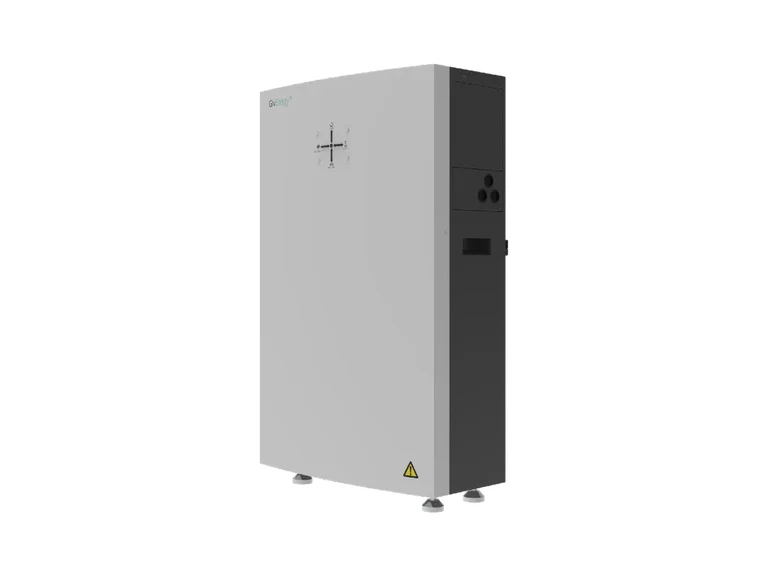 GivEnergy All in One | 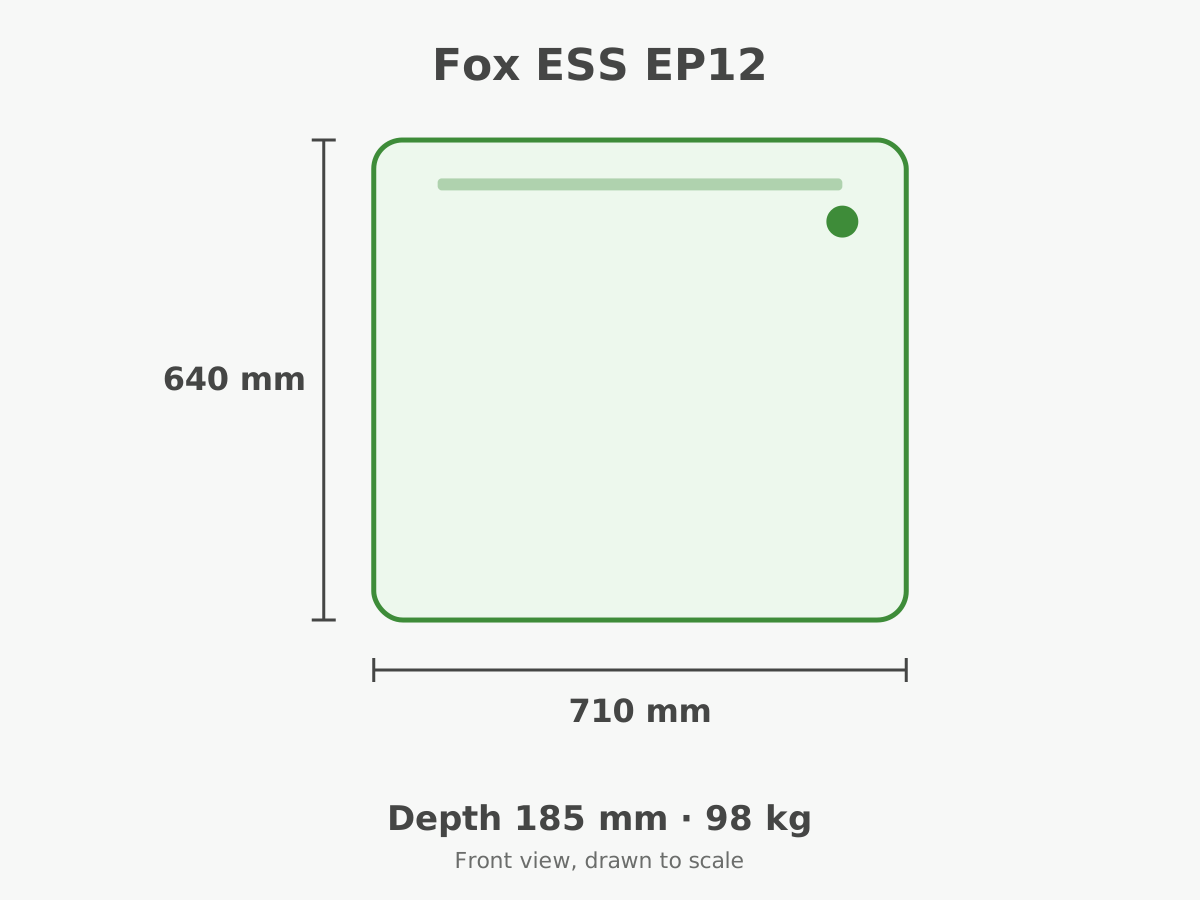 Fox ESS EP12 |
|---|---|---|
| Capacity | 13.5 kWh (stated as usable capacity) | 11.52 kWh nominal per unit (30 Ah at 384 V) |
| Usable capacity | 13.5 kWh | Not stated |
| Depth of discharge | 100% | 90% |
| Battery chemistry | Not stated | LFP (LiFePO4) |
| Cycle life | Not stated | Not stated |
| Expansion | Modular design that GivEnergy says supports future parallel operation | Up to four units connected in parallel |
| Charge and discharge power | Maximum 25 A charge and discharge current, battery voltage 260-346 V (307 V nominal) | Maximum 30 A charge and discharge current (15 A recommended for charging); peak discharge 65 A for 60 s |
| Round-trip efficiency | Not stated | At least 95% (battery pack) |
| Backup in a power cut | Whole-home backup when paired with a Gateway | Depends on the inverter: the battery itself is not an inverter |
| Solar input | No solar inverter built in: AC-coupled, connects to the AC side of an existing solar system | None: battery only, connects to a Fox ESS inverter over CAN; compatible models not listed |
| Works with solar panels | Partly: AC-coupled, adds storage to an existing solar system through that system's inverter | Yes: through the inverter it connects to |
| Off-grid use | Partly: whole-home backup with a Giv-Gateway; stand-alone use not described | Partly: depends on the connected inverter; stand-alone use not described |
| Grid connection | 230 V (180-270 V), 50/60 Hz ±5 Hz; 26 A nominal and 32 A maximum AC current | Not applicable: connects to an inverter (384 V nominal, 348-438 V, high-voltage DC) |
| Dimensions | 600 × 280 × 1,100 mm (W × D × H) | 710 × 640 × 185 mm (W × H × D) |
| Weight | 173.7 kg, including the built-in inverter | 98 kg (±5%), of which the cells weigh 70 kg |
| Protection rating | IP65 weatherproof enclosure | IP65, indoor or outdoor, floor or wall mounting |
| Operating temperature | -10 to 50 °C; humidity 0 to 95%; natural convection cooling | Charging 0 to 55 °C; discharging -10 to 55 °C; optional warm-up function (-25 to 55 °C when on) |
| Connectivity | Wi-Fi, LAN and 4G; CAN battery communication | CAN to the inverter; 5 LED status display |
| Certifications | Not stated | IEC 62619, EN IEC 61000-6-1/2/3/4 and UN 38.3 |
| Warranty | 12 years | Not stated |
Green cells mark the clearly better value where a higher or lower number is better. Capacity is never marked, because more is not automatically better. Level rows and rows without a clear direction are not marked. Differences smaller than about a tenth are not marked.
Our read
The All in One holds more (13.5 kWh against 11.52 kWh) and includes the inverter, so it is the more complete box, but it weighs 173.7 kg against 98 kg for the EP12, which still needs an inverter. We do not mark the weight row because the two units do different jobs. The All in One states a 12-year warranty; Fox ESS states none for the EP12 (its UK and Ireland warranty policy names the EP11 and not the EP12). Fox ESS publishes a chemistry (LFP), an efficiency of at least 95% and certifications, which GivEnergy's All in One page does not. Both are IP65 and neither states a cycle rating. The All in One page lists Wi-Fi, LAN and 4G connectivity; the EP12 has a CAN link to the inverter and no app of its own.
Full pages: GivEnergy All in One · Fox ESS EP12 · Compare these two in the tool
Side by side in words
Numbers in a table miss the bigger picture. Here is how the two brands differ on the points that matter when you choose.
| Specification | GivEnergy | Fox ESS |
|---|---|---|
| Range and sizes | Our catalogue has the Giv-Bat 9.5 kWh (9.5 kWh, a battery only) and the All in One (13.5 kWh, battery and 6 kW inverter in one cabinet). | Our catalogue has the EP11 (10.36 kWh per unit) and the EP12 (11.52 kWh per unit), both high-voltage batteries that stack up to four units. |
| Coupling and inverter | The Giv-Bat 9.5 is a battery that connects to an inverter and is meant for GivEnergy's third-generation inverter range. The All in One is AC-coupled, so it adds storage to an existing solar system without a panel input of its own. | Both are DC batteries that need a Fox ESS inverter: the EP11 datasheet lists the H1, KH, H3, H3 Smart and H3 Pro hybrid series. The EP12 datasheet and manual do not list compatible inverter models. |
| Voltage | The Giv-Bat 9.5 runs at 51.2 V nominal (low voltage). The All in One's battery voltage is 260-346 V (307 V nominal). | The EP11 and EP12 run at 384 V nominal (348-438 V operating range, high voltage). |
| Warranty | 12 years on both. The Giv-Bat 9.5 states unlimited cycles within the warranty period. | The EP11 has 10 years or 33.4 MWh throughput in the UK and Ireland, whichever comes first, with at least 70% of nominal energy retained. No warranty is stated for the EP12. |
| Published detail | GivEnergy's pages give no cycle rating or efficiency for either product, and no chemistry or certifications for the All in One. | Fox ESS publishes efficiency, certifications and, for the EP11, a cycle rating. Charge and discharge power is given in amps rather than kW. |
| App and connectivity | The All in One lists Wi-Fi, LAN and 4G. The Giv-Bat 9.5 has RS485, USB and CAN interfaces. | The batteries communicate with the inverter by CAN; monitoring is through the inverter, not the battery. |
Which should you choose?
Neither brand is the right answer for everyone. These are the situations where each one fits better, based on the published figures above.
Choose GivEnergy if
- You want battery and inverter in one cabinet: the All in One has a 6 kW inverter built in and states 12 years.
- You want a lighter battery-only unit: the Giv-Bat 9.5 is 85 kg against 99 kg for the EP11.
- You want a warranty without a throughput limit: GivEnergy states 12 years with unlimited cycles for the Giv-Bat 9.5.
- You want a low-voltage battery (51.2 V) for GivEnergy's inverter range, rather than a high-voltage one.
Choose Fox ESS if
- You want more published detail: Fox ESS gives an efficiency of at least 95%, certifications and, for the EP11, a cycle rating of at least 4,000.
- You want a bit more capacity per unit in a battery-only pair: the EP11 holds 10.36 kWh against 9.5 kWh.
- You want to stack up to four units on a high-voltage Fox ESS inverter system: the EP11 reaches 41.6 kWh and the EP12 46.08 kWh.
- You want a wider operating range on paper: the EP11 charges and discharges up to 55 °C and works down to -25 °C with its optional warming function.
What we could not compare
A comparison is only as good as its data. Here is where the published information ran out, so you know what the tables cannot tell you.
- Several cells show 'Not stated': 6 of 40 on GivEnergy's side and 3 on Fox ESS's. That means the maker's page we read gives no figure, not that the product lacks the feature.
- The Fox ESS EP12 has no warranty stated: the datasheet gives none, and the UK and Ireland warranty policy names the EP11 but not the EP12.
- Fox ESS gives charge and discharge power in amps; the kW figure for the EP11 is our calculation from amps and volts. GivEnergy gives amps for the Giv-Bat 9.5 and no kW figure at all, and the two are at different voltages, so power is not compared.
- The second pair compares a unit with a built-in inverter against a battery that needs one, so weight, power and backup are not like for like.
- We did not compare price, installation cost, inverter choice, app quality, real-world efficiency or support. These matter and we have not tested them.
Common questions about GivEnergy vs Fox ESS
Is GivEnergy or Fox ESS better for a home battery?
Neither is better across the board. In our two matched pairs GivEnergy states the longer warranty and the lighter battery-only unit, while Fox ESS publishes more of the technical detail. Which fits depends on the inverter system you choose and the installer you use.
What is the difference between the Giv-Bat 9.5 kWh and the Fox ESS EP11?
Both are LFP batteries without an inverter. The Giv-Bat 9.5 holds 9.5 kWh at 51.2 V and weighs 85 kg; the EP11 holds 10.36 kWh at 384 V and weighs 99 kg. They are not interchangeable, because each works with its own maker's inverters.
Does the GivEnergy All in One include an inverter?
Yes. GivEnergy lists a 6 kW nominal AC output and an AC-coupled design that connects to an existing solar system. The Fox ESS EP12 is a battery only and needs an inverter.
Can I mix GivEnergy and Fox ESS batteries and inverters?
We found no sign on the pages we read that they are designed to work together. The GivEnergy battery is aimed at GivEnergy's inverter range and the EP11 at Fox ESS hybrid inverters, so ask your installer before mixing brands.
Are these plug-in batteries?
No. All four are installed home batteries that need a qualified electrician, and in many countries you must tell your grid operator. Rules differ by country: see our country guides.
Why only two pairs?
Our catalogue holds two GivEnergy and two Fox ESS batteries, so we matched each GivEnergy product to the closest Fox ESS one by capacity. If you would like a different pairing, build your own with Compare For Yourself.
Related guides
Want to size a battery for your own home?
Our calculator uses your own usage and tariff to estimate what a home battery could save, with conservative assumptions.