
Off-Grid Batteries and Power Stations: How to Size, Charge and Choose One
Powering a cabin, shed, van or remote home without the grid comes down to a few sums and a few checks. Here is how to size the battery, how to charge it and what to avoid.
- Off-Grid
- Power Stations
- Buying Guide
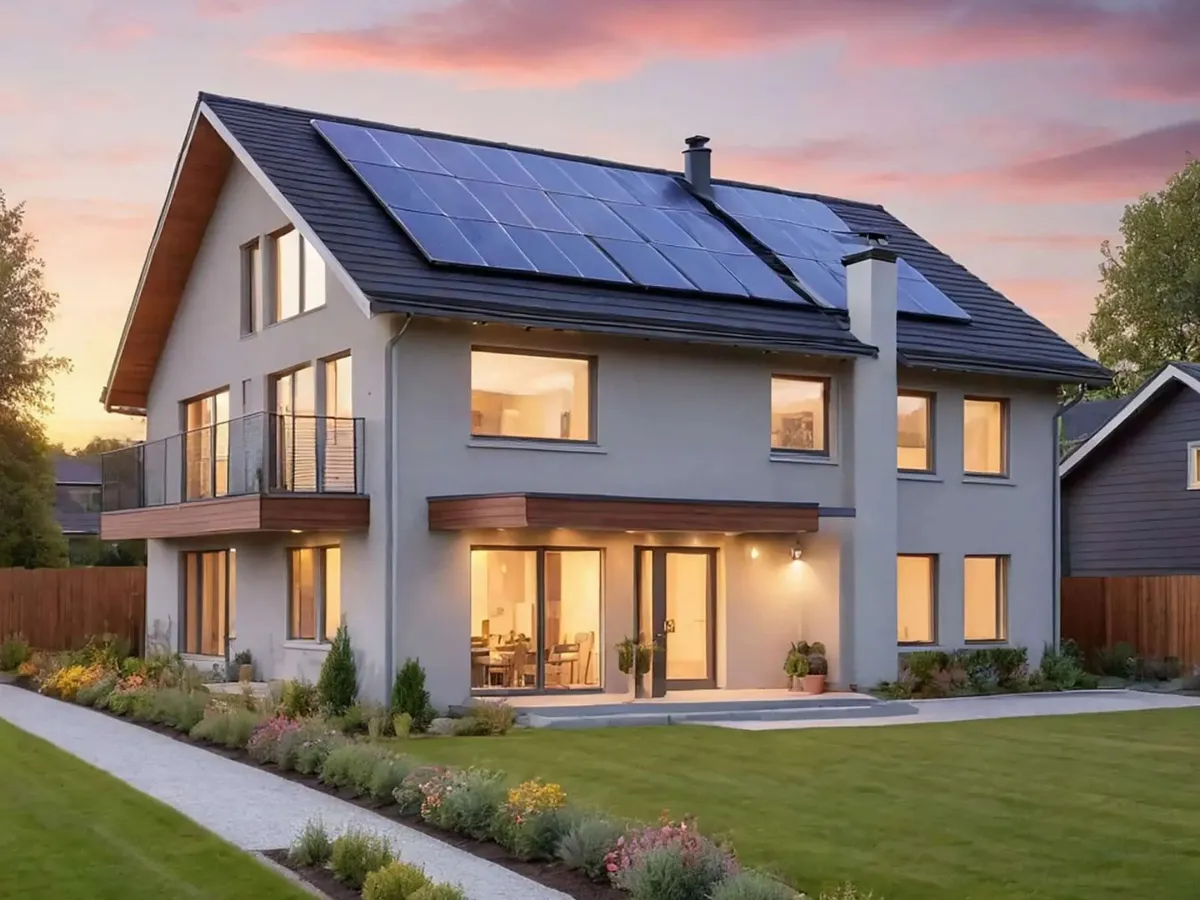
- Off-grid means no mains connection. The battery has to cover every hour of use, so the sizing is stricter than for a home that stays connected.
- Size in watt-hours: daily use, plus losses, times the days you want to last without charging, divided by the usable share of the battery.
- Check the continuous and surge power of the inverter against the biggest load you will start, such as a fridge compressor or a pump.
- UK winter output from solar panels is roughly a quarter or less of the summer peak, so winter is what decides whether solar alone is enough.
- Most lithium iron phosphate (LFP) batteries cannot be charged safely below 0 °C unless they have low-temperature protection or heating.
Last checked
Facts on this page were checked on 12 November 2026. This is a planning guide, not an electrical design: a fixed system in a building should be designed and tested by a qualified electrician.
What an off-grid battery means
People use the phrase for three quite different setups, and the right choice depends on which one you are building.
A portable power station is a battery, inverter and charger in one box that you plug devices and solar panels into. It suits a shed, a camper, a day outdoors or a small cabin. A modular battery bank is a separate battery, inverter and solar charge controller wired together, which is more flexible and can be larger. A full off-grid home system is designed for a whole property, normally by an installer, often with a generator as backup.
Browse power stations for the first kind and home battery storage for installed batteries. Many grid-connected home batteries need the grid to operate, so check that the inverter has an off-grid mode before you buy one for this purpose.
If you stay connected to the grid and only want power during outages, you do not need an off-grid system: see Home batteries for emergency power.
Work out what you use
Start with a list of every device, its power in watts and the hours you run it each day. Multiply watts by hours to get watt-hours (Wh) per day, then add them up. As a simple example, a 60 W laptop used for 5 hours a day needs 300 Wh a day.
Also note the highest total power of the devices that can run at the same time. That figure, not the daily energy, decides the size of the inverter.
Check labels and manuals rather than guessing. Heating devices such as kettles, heaters and hobs draw very high power and drain a battery quickly, so many off-grid homes use gas or a wood stove for heat instead.
Size the battery
The usual method is: daily watt-hours, divided by an efficiency factor to cover inverter and wiring losses, multiplied by the days of autonomy you want, divided by the share of the battery you will actually use.
Days of autonomy is how many days the battery should cover without any charging. Many designs plan for 1 to 3 days, and more where winters are dark or the site is remote.
Illustrative example, not a recommendation: with 2,000 Wh a day, 85% efficiency, 2 days of autonomy and 80% usable capacity, the sum is 2,000 ÷ 0.85 × 2 ÷ 0.8, which is about 5,900 Wh, or 5.9 kWh of battery. Use your own numbers and add headroom, because batteries lose capacity with age and cold.
The same logic works for a power station: compare its watt-hour rating with your daily use. Our Compare For Yourself tool shows the capacity and output of power stations side by side.
Inverter power and surge
The inverter's continuous rating must cover the total of everything running at once. Motors, compressors and pumps also draw a short burst of power when they start, often several times their running power, so the inverter's surge rating matters too.
On a power station the maker lists the continuous AC output and often a surge figure. If the biggest device exceeds either, the unit will cut out. The battery has to be able to supply that current as well, so check its maximum discharge power, not only the inverter.
Charging, and why winter decides it
Off-grid batteries are normally charged by solar panels, and often also by a generator, a vehicle alternator or, when you have it, a mains hookup. Match the charger or charge controller to the panels and the battery, and check the maximum solar input of a power station.
In Britain, UK installer data typically puts winter output at roughly 20 to 30% of the summer peak, and December can be much lower. A panel array that comfortably fills the battery in summer may fall well short in December. Size the array for the months you actually need the power, and plan for a generator or reduced use in the darkest weeks.
Keep realistic expectations: solar alone rarely carries a full-time off-grid home through a British winter without a large array, a large battery or another source.
Cold weather and battery chemistry
Most newer power stations and battery banks use lithium iron phosphate (LFP), which is valued for long cycle life and good thermal stability. LFP cells can usually still discharge in the cold, with reduced capacity, but charging below 0 °C can permanently damage them.
Many batteries therefore include a low-temperature charge cut-off, and some have built-in heating. If the battery sits in an unheated shed or van, check for this feature, or insulate it or keep it indoors.
Voltage, wiring and safety
Higher system voltage (24 V or 48 V instead of 12 V) carries the same power at lower current, which allows thinner cable and loses less energy as heat. Larger off-grid systems usually use 48 V for this reason.
Battery banks need correctly rated fuses and cable close to the battery, secure terminals and sensible placement. Do not mix different battery types, ages or brands in one bank unless the maker says it is allowed.
In the UK, fixed wiring in a building, including an off-grid system feeding a consumer unit, should be designed and tested by a qualified electrician to BS 7671. Never feed a battery or generator into a normal socket to power a house, because it can back-feed and endanger people.
If the system could ever connect to the grid or export, tell your network operator and follow the grid rules. If it never connects, those grid rules do not apply, but the electrical safety rules still do.
Choosing between a power station and a battery bank
A power station is the simplest start: it arrives assembled, has sockets and a display, and can be carried. The trade-offs are a fixed set of outputs, a limit on how many solar panels it accepts, and less scope to expand than a bank built around a separate inverter.
A modular bank costs more effort to design and wire, but you can choose the inverter, the voltage and the expansion path, and size it for a whole property.
If you only need power for a shed, a camper or a few devices, start with power stations. For a cabin or home, start with the sizing above and get a design from a qualified installer.
Common questions about off-grid batteries
What size battery do I need off-grid?
Work out your daily watt-hours, allow for losses, multiply by the days you want to last without charging, and divide by the usable share of the battery. The sizing section above shows an illustrative example.
Can a power station run a house off-grid?
Rarely. Power stations are built for portable and light use. A whole house needs more power and capacity than most of them offer, plus proper wiring, so it normally means a designed system.
Can solar panels charge a power station in the UK in winter?
Yes, but slowly. UK installer data typically puts December to February output at roughly 20 to 30% of the summer peak, so plan for extra panels, a larger battery or another charging source.
Which battery chemistry is best off-grid?
Lithium iron phosphate (LFP) is widely used for its long cycle life and stability. Check low-temperature charge protection if the battery will be in the cold.
Can I use a home battery off-grid?
Only if its inverter supports an off-grid mode. Many grid-connected home batteries need the grid to operate, so check the inverter specification and ask the manufacturer or installer.
Do I need a qualified electrician?
For fixed wiring in a building, yes. In the UK it should be designed and tested to BS 7671. A power station you plug devices into is different, but follow the maker's instructions.
Related guides
Compare power stations
See capacity, output and solar input side by side. Compare For Yourself or browse the power stations.