
Anker SOLIX vs EcoFlow
Two of the most searched-for brands in portable power and plug-in batteries, compared in five matched pairs using only figures the makers publish.
- 5 matched pairs
- Maker data only
- Checked 12 Nov 2026

- We matched five Anker SOLIX and EcoFlow products by capacity: four portable power stations from 288 Wh to about 4 kWh and one plug-in battery, and compared them using only figures the makers publish.
- In the 26 rows where a higher or lower number is clearly better or exactly level, Anker SOLIX leads in 13 and EcoFlow in 5; 8 are level.
- Anker SOLIX is stronger on charging speed at 1 kWh, on output in the largest pair and on weight at 2 kWh. EcoFlow is stronger on surge output, solar input at 2 kWh and the amount of detail it publishes.
- Anker's pages leave more figures out: 9 cells on its side read 'not stated' against 4 on EcoFlow's.
- We have not tested any of these products. Where a maker does not publish a figure, we say so instead of guessing.
Not tested by us, and no prices
Every figure on this page comes from Anker SOLIX's and EcoFlow's own product pages and manuals, last checked on 12 November 2026. We have not tested these products, so we do not score them or crown a winner on feel, noise in daily use or app quality. We show no prices because they change often and differ between sellers: compare the same model and bundle before you buy.
The short answer
There is no overall winner. Across our five pairs, Anker SOLIX leads in 13 of the 26 clear-cut rows and EcoFlow in 5, with 8 level. The split says more about which numbers each maker publishes than about which product is better.
Anker's C1000 Gen 2 is the standout in the 1 kWh pair: it quotes a full recharge in 49 minutes with its UltraFast mode on, against 80 minutes for the DELTA 2, and more solar input and output. EcoFlow's DELTA 2 Max has the higher surge rating and the higher solar input at 2 kWh, while Anker's C2000 Gen 2 is lighter and quotes the quicker charge to 80%. At the top, the Anker SOLIX F3800 quotes 6,000 W against 4,000 W for the DELTA Pro 3, but Anker's page gives no surge, charging, weight or noise figure for it.
Do not read the row count as a score. Fast charging matters if you top up between uses and not at all if you charge overnight. Use the pair tables below for the size you need, then check Which should you choose? for the situations where each fits better.
How we matched the models
We paired products by capacity, because that is how people shop: they pick a size, then compare brands. Each pair is the closest match in our catalogue, not a statement that the two products are the same price or the same age. The first pair is 288 Wh against 256 Wh, and the fourth is 3,840 Wh against 4,096 Wh. The last pair is not a like-for-like power station comparison: it matches Anker's Solarbank 2 E1600 Pro with EcoFlow's STREAM Pro, two plug-in or balcony batteries of about 1.6 and 1.9 kWh, which are built to work with solar panels and the home rather than to be carried.
| Specification | Anker SOLIX | EcoFlow |
|---|---|---|
| The small pair (about 250 to 290 Wh) | Anker SOLIX C300 | EcoFlow RIVER 2 |
| The popular mid-size pair (1,024 Wh) | Anker SOLIX C1000 Gen 2 | EcoFlow DELTA 2 |
| The larger portable pair (2,048 Wh) | Anker SOLIX C2000 Gen 2 | EcoFlow DELTA 2 Max |
| The home backup pair (about 4 kWh) | Anker SOLIX F3800 | EcoFlow DELTA Pro 3 |
| The plug-in and balcony pair (about 1.6 to 1.9 kWh) | Anker SOLIX Solarbank 2 E1600 Pro | EcoFlow STREAM Pro |
Anker SOLIX and EcoFlow at brand level
Before the model pairs, here is how the two companies differ. See our full brand guides to Anker SOLIX and EcoFlow.
| Specification | Anker SOLIX | EcoFlow |
|---|---|---|
| Models in our catalogue | 14 | 20 |
| Cell chemistry in our pairs | LFP in all five (the Solarbank 2 E1600 Pro lists LiFePO4) | LFP in all five |
| Warranty in our pairs | 5 years on the C300 and F3800; the C1000 Gen 2 falls under Anker's 5-year UK policy for LiFePO4 models; not stated for the C2000 Gen 2; 10 years on the Solarbank 2 E1600 Pro | 5 years on the four portable models; 10 years on the STREAM Pro |
| Expansion in our pairs | The C2000 Gen 2, F3800 and Solarbank 2 E1600 Pro take extra batteries; the C300 and C1000 Gen 2 do not | The DELTA 2, DELTA 2 Max, DELTA Pro 3 and STREAM Pro take extra batteries; not stated for the RIVER 2 |
| Fixed and plug-in range in our catalogue | Solarbank 2, 3 and 4 plug-in batteries and the X1 and E10 home batteries | STREAM plug-in batteries and the DELTA Pro Ultra home battery |
| Portable range in our catalogue | C300, C300 DC, C1000 Gen 2, C2000 Gen 2, F3000, F3800 and S2000 | RIVER 2, 2 Max, 2 Pro, 3 and 3 Plus; DELTA 2, 2 Max, 3 Classic, 3 Plus, 3 Max, Pro and Pro 3 |
Anker SOLIX C300 vs EcoFlow RIVER 2
Both are small LFP power stations for phones, laptops and a few hours of light use. The C300 holds 288 Wh and the RIVER 2 holds 256 Wh, so the Anker has a small head start on capacity.
The small pair (about 250 to 290 Wh)
| Specification | 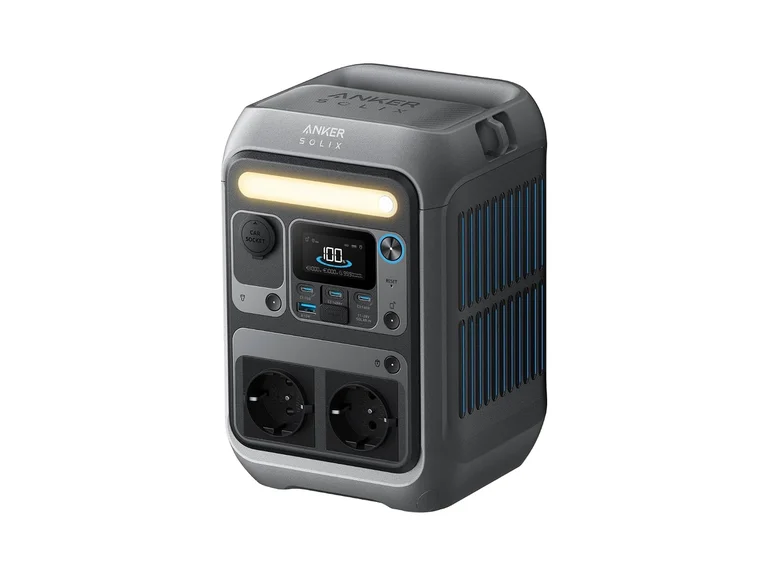 Anker SOLIX C300 | 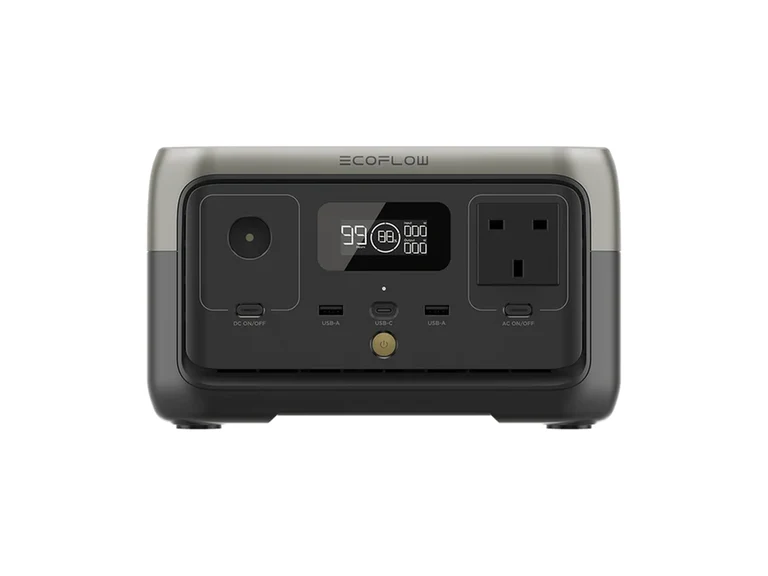 EcoFlow RIVER 2 |
|---|---|---|
| Capacity | 288 Wh | 256 Wh |
| AC output (continuous) | 300 W | 300 W in total |
| AC output (surge) | 600 W | 600 W |
| AC charging | 330 W (US page, 120 V model) | 360 W max |
| Mains charging time | 80% in 50 minutes | 0-80% in 48 minutes; 0-100% in 60 minutes |
| Solar input | 100 W max | 110 W max |
| Weight | About 4.1 kg (9.1 lb, US page) | Approximately 3.5 kg (better value) |
| Backup switchover (EPS) | Under 10 ms (UPS function, US comparison table) (better value) | Under 30 ms, automatic |
| Noise level | 25 dB at 1 m | Not stated |
| Cycle life | Not published by Anker | 80%+ capacity after 3,000 cycles |
| Expansion | No: Anker lists no expansion battery | Not stated |
| Warranty | 5 years | 5 years |
Green cells mark the clearly better value where a higher or lower number is better. Capacity is never marked, because more is not automatically better. Level rows and rows without a clear direction are not marked. Differences smaller than about a tenth are not marked.
Our read
On output the two are level (300 W continuous, 600 W surge) and both state 5 years of warranty. The practical differences are small: the RIVER 2 is lighter (3.5 kg against about 4.1 kg), while Anker quotes a faster switchover (under 10 ms against under 30 ms) and a noise figure of 25 dB that EcoFlow does not give. EcoFlow publishes a cycle life (3,000 cycles to 80%) that Anker does not. Note that several Anker figures here (charging power, weight, switchover) come from its US pages and comparison table, which describe the 120 V model.
Full pages: Anker SOLIX C300 · EcoFlow RIVER 2 · Compare these two in the tool
Anker SOLIX C1000 Gen 2 vs EcoFlow DELTA 2
Both hold exactly 1,024 Wh of LFP, the size most people search for. This is the closest like-for-like pair in the comparison, and the one where the two makers' designs differ most clearly.
The popular mid-size pair (1,024 Wh)
| Specification | 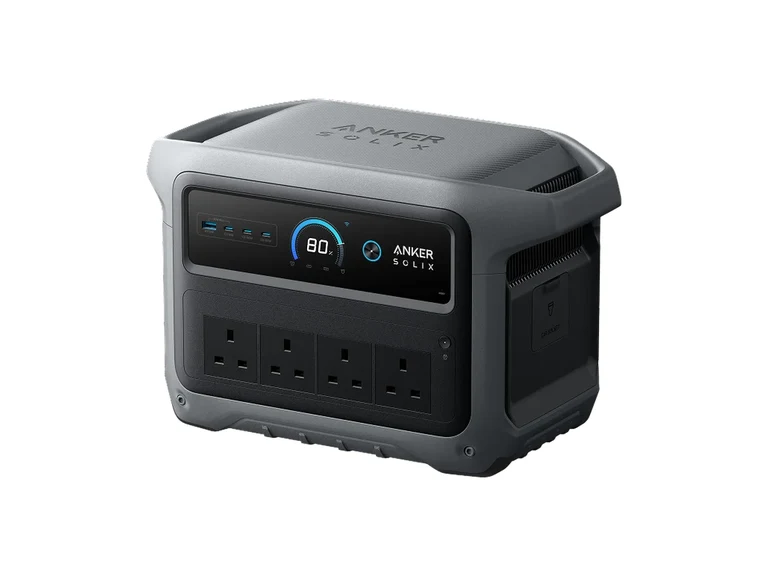 Anker SOLIX C1000 Gen 2 | 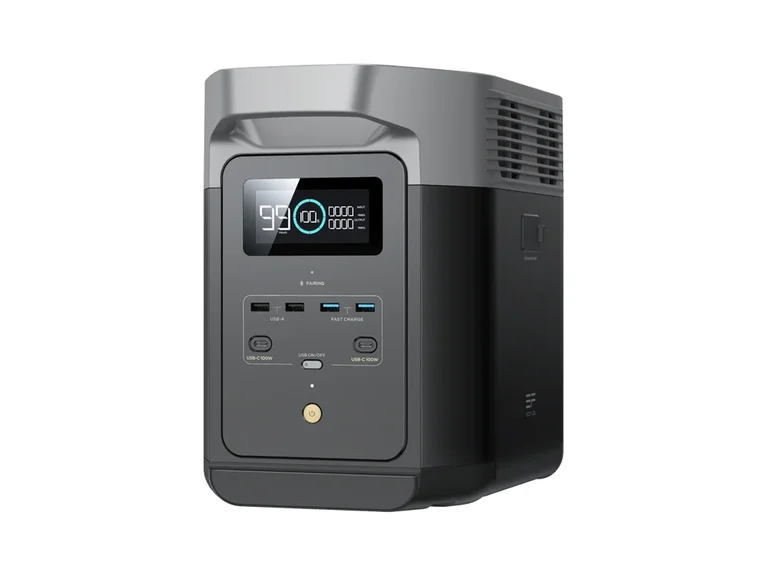 EcoFlow DELTA 2 |
|---|---|---|
| Capacity | 1,024 Wh | 1,024 Wh |
| AC output (continuous) | 2,000 W in total, 3 outlets (better value) | 1,800 W in total, 4 outlets |
| AC output (surge) | 3,000 W peak (better value) | 2,700 W |
| AC charging | 1,600 W with UltraFast on; 1,200 W standard (better value) | 1,200 W |
| Mains charging time | 100% in 49 minutes with UltraFast on (above 20 °C) (better value) | 0-100% in 80 minutes |
| Solar input | 600 W max (better value) | 500 W max |
| Weight | 11.29 kg | 12 kg |
| Backup switchover (EPS) | UPS, 10 ms (better value) | Within 30 ms, a basic UPS function and not 0 ms |
| Noise level | Under 20 dB | Not published by EcoFlow |
| Cycle life | 4,000 cycles to at least 80% capacity (better value) | 3,000 cycles to 80+% capacity |
| Expansion | Not expandable | Up to 3,040 Wh with a DELTA Max extra battery |
| Warranty | 5 years under Anker's UK policy for LiFePO4 models (this model is not yet named in it) | 5 years |
Green cells mark the clearly better value where a higher or lower number is better. Capacity is never marked, because more is not automatically better. Level rows and rows without a clear direction are not marked. Differences smaller than about a tenth are not marked.
Our read
On paper the C1000 Gen 2 leads on most of what is published: more continuous output (2,000 W against 1,800 W), a higher peak rating, 1,600 W of mains charging against 1,200 W and a full recharge in 49 minutes against 80, 600 W of solar input against 500 W, a faster switchover and a higher cycle rating. Two caveats. The 49 minutes needs UltraFast switched on in the app and works well only above 20 °C. And the DELTA 2 offers four outlets against three and can be expanded, up to 3,040 Wh with a DELTA Max extra battery, where the C1000 Gen 2 cannot. Weight is within 6% and not marked.
Full pages: Anker SOLIX C1000 Gen 2 · EcoFlow DELTA 2 · Compare these two in the tool
Anker SOLIX C2000 Gen 2 vs EcoFlow DELTA 2 Max
At 2,048 Wh both can run several appliances at once, where output limits start to matter more than capacity. The two match on capacity, continuous output and charging power, and differ on weight, surge and solar.
The larger portable pair (2,048 Wh)
| Specification | 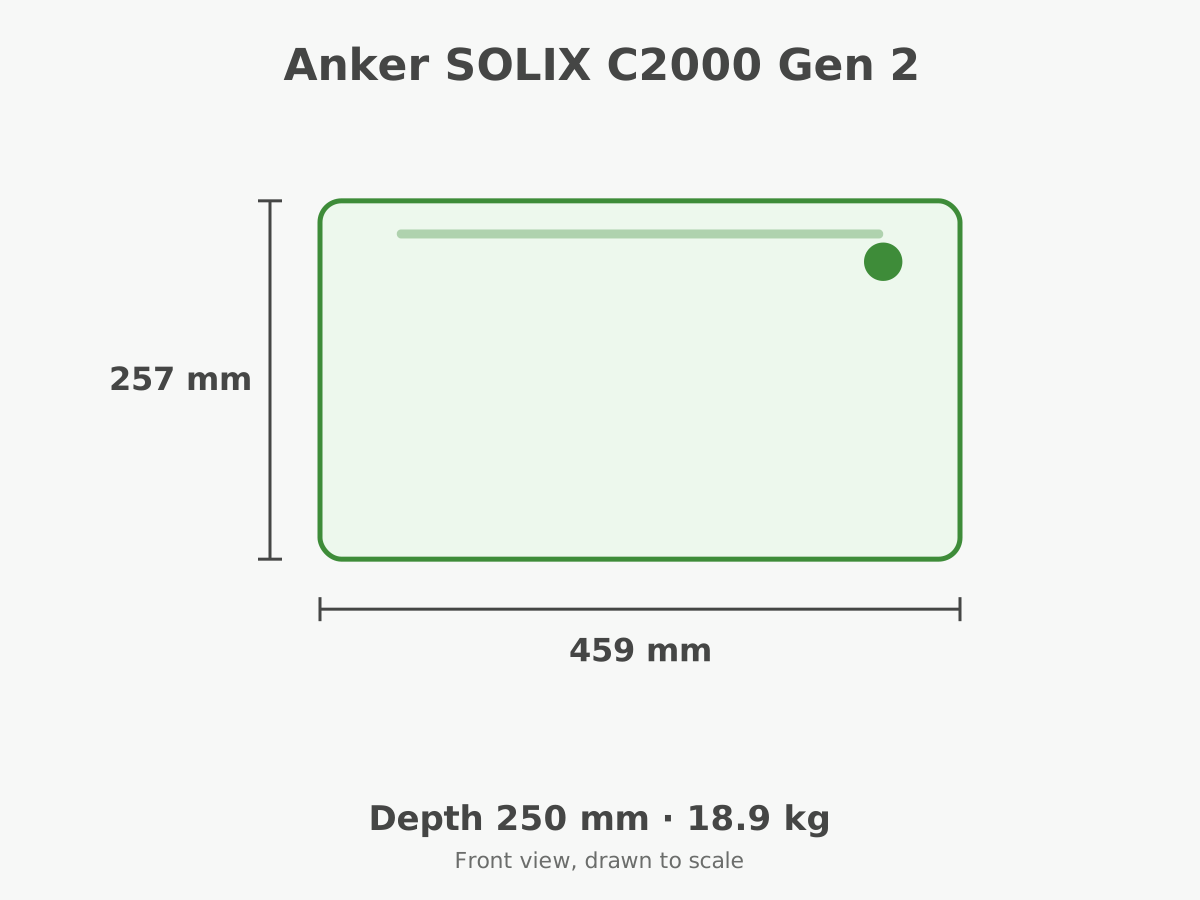 Anker SOLIX C2000 Gen 2 | 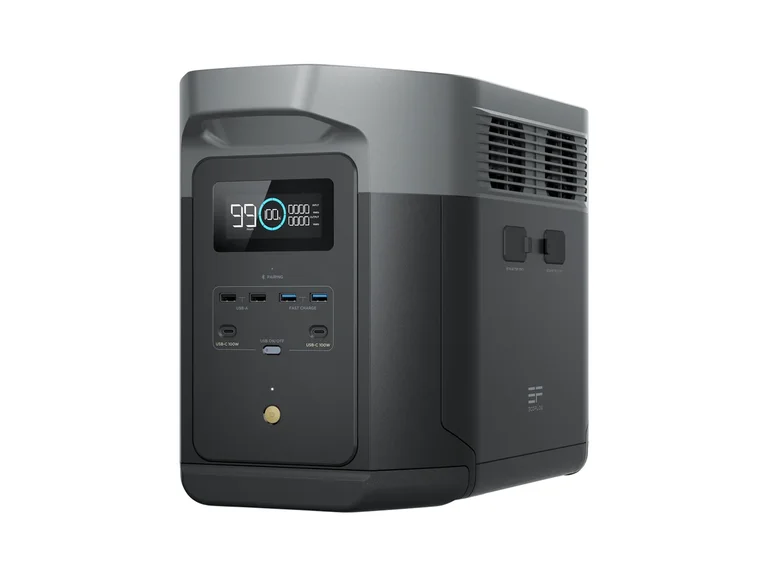 EcoFlow DELTA 2 Max |
|---|---|---|
| Capacity | 2,048 Wh | 2,048 Wh |
| AC output (continuous) | 2,400 W in inverter mode | 2,400 W in total, 4 outlets |
| AC output (surge) | 4,000 W peak | 4,800 W (better value) |
| AC charging | 2,300 W max | 2,300 W (X-Stream) |
| Mains charging time | 80% in 45 minutes (58 minutes full with AC and solar together) (better value) | 80% in 53 minutes on AC alone |
| Solar input | 800 W max | 500 W on one port, 1,000 W on dual ports (better value) |
| Weight | 18.9 kg (better value) | 23 kg |
| Backup switchover (EPS) | 10 ms (listed as UPS) | Not stated |
| Noise level | 30 dB below 1,000 W | 30 dB at low input and 500 W output |
| Cycle life | 4,000 cycles to 80% capacity (better value) | 3,000 cycles to over 80% capacity |
| Expansion | One BP2000 expansion battery, up to 4 kWh in total | Up to 6,144 Wh with two Smart Extra Batteries |
| Warranty | Not stated | 5 years |
Green cells mark the clearly better value where a higher or lower number is better. Capacity is never marked, because more is not automatically better. Level rows and rows without a clear direction are not marked. Differences smaller than about a tenth are not marked.
Our read
The two are level on continuous output (2,400 W) and on mains charging power (2,300 W). Anker's unit is clearly lighter (18.9 kg against 23 kg), quotes a higher cycle rating (4,000 against 3,000 cycles) and reaches 80% from the mains 8 minutes sooner. EcoFlow's has the higher surge rating (4,800 W against 4,000 W), more solar input when both ports are used (1,000 W against 800 W) and room to expand to 6,144 Wh, against 4 kWh for the Anker. Anker's page gives no warranty period for this model, where EcoFlow states 5 years. The noise figures use different conditions (below 1,000 W against a 500 W load) and are not ranked.
Full pages: Anker SOLIX C2000 Gen 2 · EcoFlow DELTA 2 Max · Compare these two in the tool
Anker SOLIX F3800 vs EcoFlow DELTA Pro 3
These are the large, expandable units each brand pitches for outages and off-grid cabins. They are close on capacity (3,840 Wh against 4,096 Wh) but not on what each maker publishes: Anker's F3800 page leaves out many figures.
The home backup pair (about 4 kWh)
| Specification |  Anker SOLIX F3800 | 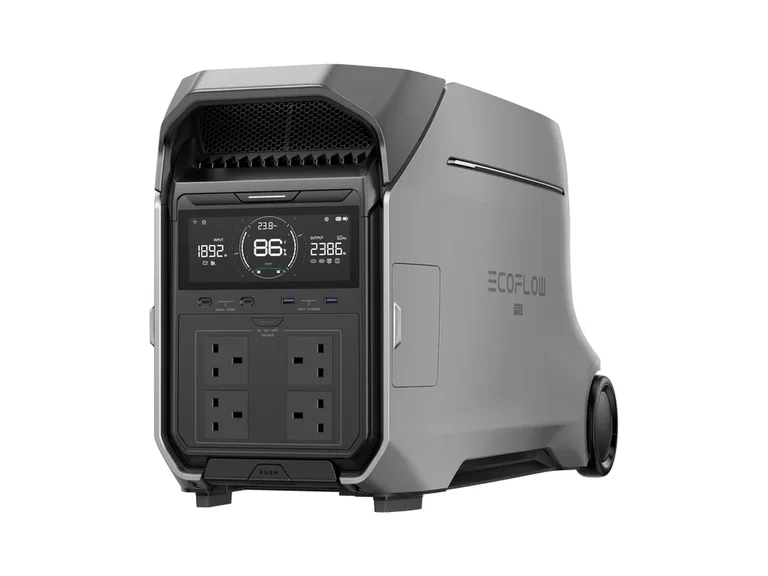 EcoFlow DELTA Pro 3 |
|---|---|---|
| Capacity | 3,840 Wh | 4,096 Wh |
| AC output (continuous) | 6,000 W (better value) | 5 outlets, 4,000 W max |
| AC output (surge) | Not stated | 8,000 W |
| AC charging | Not stated | 2,900 W max |
| Mains charging time | Not stated | 0-80% in one hour |
| Solar input | 2,400 W | 2,600 W across two ports |
| Weight | Not stated | 51.5 kg |
| Backup switchover (EPS) | A UPS mode exists; no switchover time is given | 10 ms |
| Noise level | Not stated | 30 dB at 2,000 W |
| Cycle life | 3,000 cycles, at least 80% capacity left | 4,000 cycles to 80% capacity (better value) |
| Expansion | Up to six expansion batteries, up to 26,880 Wh | Up to 12 kWh with two Smart Extra Batteries |
| Warranty | 5 years | 5 years |
Green cells mark the clearly better value where a higher or lower number is better. Capacity is never marked, because more is not automatically better. Level rows and rows without a clear direction are not marked. Differences smaller than about a tenth are not marked.
Our read
The F3800 quotes the higher continuous output (6,000 W against 4,000 W) and can be expanded much further (up to six extra batteries and 26,880 Wh, against two and 12 kWh). The DELTA Pro 3 has the higher cycle rating (4,000 against 3,000 cycles), and EcoFlow publishes surge, charging power and charging time, weight, noise and switchover time where Anker's UK page gives none. Both state 5 years of warranty. Anker's F3800 page does not give the voltage of its 6,000 W output (its FAQ mentions 120 V and 240 V ports), so check the model sold in your country. Neither is a fixed home battery: feeding house circuits from either is electrical work for a qualified electrician.
Full pages: Anker SOLIX F3800 · EcoFlow DELTA Pro 3 · Compare these two in the tool
Anker SOLIX Solarbank 2 E1600 Pro vs EcoFlow STREAM Pro
This pair is different: neither is a portable power station. Both are solar batteries for a balcony or garden system, with panels, a built-in microinverter and a connection to the home. They are the nearest match in our catalogue, with 1,600 Wh against 1,920 Wh.
The plug-in and balcony pair (about 1.6 to 1.9 kWh)
| Specification | 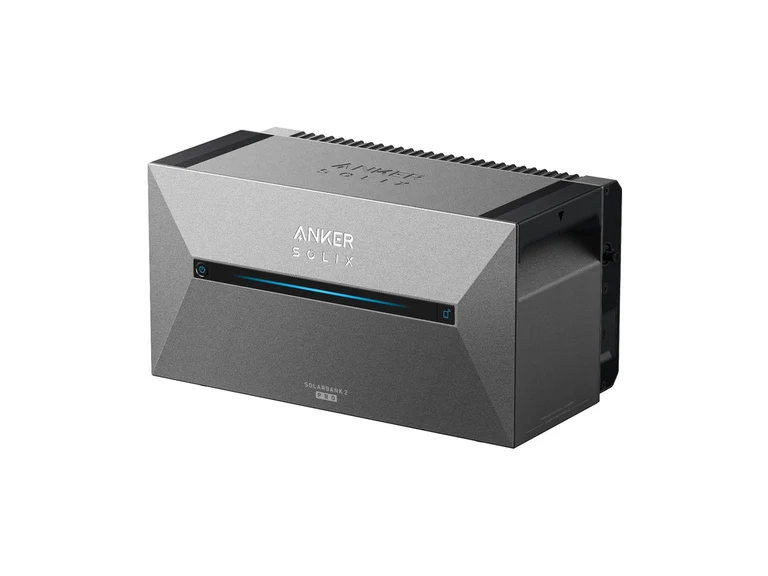 Anker SOLIX Solarbank 2 E1600 Pro | 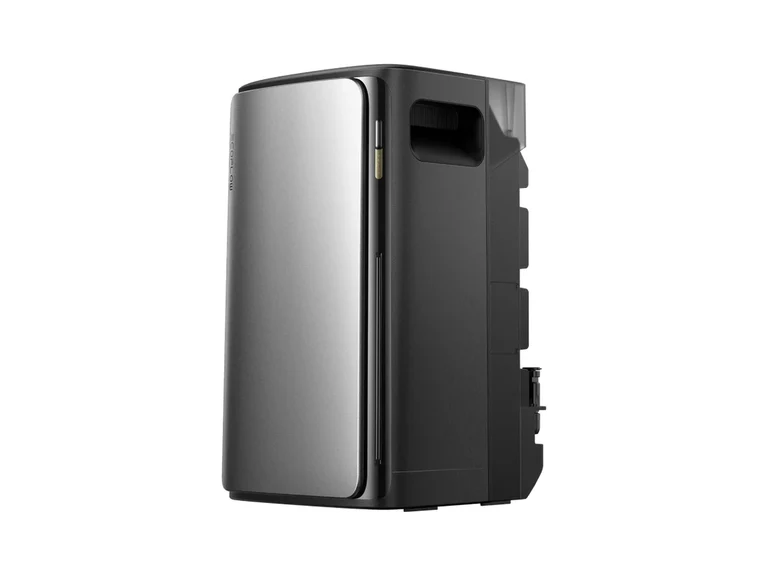 EcoFlow STREAM Pro |
|---|---|---|
| Capacity | 1,600 Wh | 1.92 kWh |
| Expansion | Up to five BP1600 batteries: 9,600 Wh in total | Up to 11.52 kWh with up to six units |
| Solar input | 2,400 W max, 4 MPPT inputs (better value) | 1,500 W max, 3 MPPT inputs |
| AC output, grid-connected | 800 W | 800 W |
| Backup or off-grid output | Up to 1,000 W from a separate off-grid socket | 1,200 W (better value) |
| Weight | 21.8 kg | 22.8 kg |
| Protection rating | IP65, outdoor use | IP65 |
| Noise level | Not stated in the sources we read | Below 30 dB |
| Cycle life | Not stated in the sources we read | 6,000 cycles |
| Warranty | 10 years | 10 years |
Green cells mark the clearly better value where a higher or lower number is better. Capacity is never marked, because more is not automatically better. Level rows and rows without a clear direction are not marked. Differences smaller than about a tenth are not marked.
Our read
Both feed 800 W into the home and state 10 years of warranty, and both stack extra batteries (up to 9,600 Wh for Anker, up to 11.52 kWh for EcoFlow). Anker's published solar input is higher (2,400 W against 1,500 W) because it has four inputs against three; EcoFlow quotes a higher backup output (1,200 W against 1,000 W), a noise figure (below 30 dB) and a cycle life (6,000 cycles) that Anker's pages do not give. Rules matter more than specifications here: EcoFlow's UK page says the STREAM must be hardwired by a registered electrician, and Anker's user guide lists a continental European plug. In Great Britain, plug-in batteries are excluded from the plug-in solar rules that took effect on 27 August 2026. See our <a href="/country-guides/">country guides</a> for your country.
Full pages: Anker SOLIX Solarbank 2 E1600 Pro · EcoFlow STREAM Pro · Compare these two in the tool
Side by side in words
Numbers in a table miss the bigger picture. Here is how the two brands differ on the points that matter when you choose.
| Specification | Anker SOLIX | EcoFlow |
|---|---|---|
| Range and sizes | Portable models run from 288 Wh (C300) through 1,024 and 2,048 Wh (C1000 and C2000 Gen 2) to 3,072 and 3,840 Wh (F3000 and F3800), with expansion batteries on the larger ones. The SOLIX Solarbank line is a separate range of balcony and plug-in solar batteries. | The RIVER line is the small, portable range (256 Wh upwards), and the DELTA line runs from 1,024 Wh to 4,096 Wh in the DELTA Pro 3, with extra batteries for the larger ones. The STREAM line is the plug-in solar battery range. |
| Fast mains charging | Anker's UltraFast mode charges the C1000 Gen 2 at up to 1,600 W for a full recharge in 49 minutes. It is switched on in the Anker app and works well only above 20 °C. The C2000 Gen 2 reaches 80% in 45 minutes. | EcoFlow's fast charging is called X-Stream: the DELTA 2 Max charges at 2,300 W to 80% in 53 minutes and the DELTA Pro 3 at up to 2,900 W to 80% in an hour. The DELTA 2 charges at 1,200 W. |
| Solar input | From 100 W on the C300 to 600 W on the C1000 Gen 2, 800 W on the C2000 Gen 2 and 2,400 W on the F3800. The Solarbank 2 E1600 Pro takes 2,400 W across four inputs. | From 110 W on the RIVER 2 to 500 W on the DELTA 2, 1,000 W on the DELTA 2 Max (two ports) and 2,600 W on the DELTA Pro 3 (two ports). The STREAM Pro takes 1,500 W across three inputs. |
| Surge output | Anker publishes a peak rating on the C300, C1000 Gen 2 and C2000 Gen 2 (600, 3,000 and 4,000 W), but not on the F3800. | EcoFlow publishes a surge rating on every portable model in our pairs, up to 8,000 W on the DELTA Pro 3. |
| Warranty | A plain 5 years on the C300 and F3800 pages. The C1000 Gen 2 page does not name a warranty; Anker's UK policy gives 5 years for LiFePO4 models. Not stated for the C2000 Gen 2. The Solarbank 2 E1600 Pro states 10 years. | 5 years on all four portable models in our pairs, and 10 years on the STREAM Pro, stated on the product pages. |
| Published detail | Several Anker pages give less: the F3800 has no surge, charging, weight or noise figure in the sources we read, and the C300's charging power and weight come from US pages. | EcoFlow publishes most of the figures in our rows on every portable model in the pairs, with a few gaps such as the noise level of the DELTA 2 and the switchover time of the DELTA 2 Max. |
| App and smart features | The Anker app controls features such as UltraFast charging and, on the C1000 Gen 2, a Time-of-Use mode, per the product pages. | The EcoFlow app over Wi-Fi and Bluetooth on the models that list it. |
Which should you choose?
Neither brand is the right answer for everyone. These are the situations where each one fits better, based on the published figures above.
Choose Anker SOLIX if
- You want the fastest recharge at 1 kWh: Anker quotes 49 minutes to full for the C1000 Gen 2 with UltraFast on, against 80 minutes for the DELTA 2.
- You want more continuous output at the top end: the F3800 quotes 6,000 W against 4,000 W for the DELTA Pro 3.
- You carry it around: Anker's C2000 Gen 2 is 18.9 kg against 23 kg for the DELTA 2 Max.
- You want a long cycle rating on paper: Anker quotes 4,000 cycles on the C1000 Gen 2 and C2000 Gen 2, against 3,000 for the matching DELTA models.
Choose EcoFlow if
- You want complete published figures: EcoFlow states surge, charging power and charging time, weight and noise for the DELTA Pro 3 where Anker's page for the F3800 gives none.
- You need a higher surge rating or more solar input at 2 kWh: the DELTA 2 Max quotes 4,800 W surge and 1,000 W of solar.
- You want to expand further at 2 kWh: the DELTA 2 Max goes to 6,144 Wh against 4 kWh for the C2000 Gen 2.
- You want a warranty length stated on every model in the pairs: EcoFlow states it on all five, Anker does not for the C2000 Gen 2 and the C1000 Gen 2.
What we could not compare
A comparison is only as good as its data. Here is where the published information ran out, so you know what the tables cannot tell you.
- Several cells show 'Not stated': 9 of 58 on Anker SOLIX's side and 4 on EcoFlow's. That means the maker's page text we read gives no figure, not that the product lacks the feature.
- Several Anker figures for the C300 (charging power, weight, switchover time) come from Anker's US pages and comparison table, which describe the 120 V model. The UK page does not give them.
- The F3800 is the thinnest page: Anker's UK page gives no surge output, charging power or time, weight, noise or switchover time.
- Anker's 49-minute figure for the C1000 Gen 2 is with UltraFast on and works well only above 20 °C. EcoFlow's charging times are its own figures under its own conditions, so the minutes are not measured side by side.
- We did not compare price, real-world run time, noise in daily use, app quality or after-sales support. These matter and we have not tested them.
Common questions about Anker SOLIX vs EcoFlow
Is Anker SOLIX or EcoFlow better?
Neither is better across the board. In our five matched pairs Anker quotes the faster recharge at 1 kWh, the higher output at the top end and lighter units at 2 kWh, while EcoFlow publishes more of the figures, quotes higher surge ratings and states a warranty on every model. Pick by the size you need and what you will use it for, not by brand.
Which charges faster, Anker SOLIX or EcoFlow?
At 1,024 Wh Anker's C1000 Gen 2 quotes a full recharge in 49 minutes with UltraFast on, against 80 minutes for the EcoFlow DELTA 2. At 2,048 Wh the two charge at the same 2,300 W, and Anker quotes 80% in 45 minutes against 53. These are the makers' own figures under their own conditions.
Which brand has the longer warranty?
On the portable models in our pairs EcoFlow states 5 years on all four, and Anker states 5 years on the C300 and F3800. The C1000 Gen 2 page does not name a warranty, though Anker's UK policy gives 5 years for LiFePO4 models, and the C2000 Gen 2 page states none. Both state 10 years on the plug-in batteries in our last pair.
Can an Anker SOLIX or EcoFlow power station run my whole home?
Both brands pitch their largest units for home backup, but the F3800 and DELTA Pro 3 are portable power stations, not fixed home batteries. Connecting either to house circuits is electrical work for a qualified electrician, and the rules differ by country: see our country guides.
Can I use the Solarbank 2 E1600 Pro or the STREAM Pro as a plug-in battery?
It depends on your country. In Great Britain, plug-in solar kits of up to 800 VA have been legal since 27 August 2026, but plug-in batteries were excluded, and EcoFlow's UK page says the STREAM must be hardwired by a registered electrician. Check the rules where you live in our country guides.
Why these five pairs?
We matched each Anker SOLIX product to the closest EcoFlow product in capacity from the models in our catalogue, because people shop by size first. If you would like a different pairing, build your own with Compare For Yourself.
Related guides
Want to size a battery for your own home?
Our calculator uses your own usage and tariff to estimate what a home battery could save, with conservative assumptions.