
France
What a household in France should know before buying a home battery: tariffs, tax, the changes to solar support in 2026, grid and safety rules, and plug-in kits, checked against official sources where we could.
- Mainland France
- Official sources
- Checked 6 November 2026
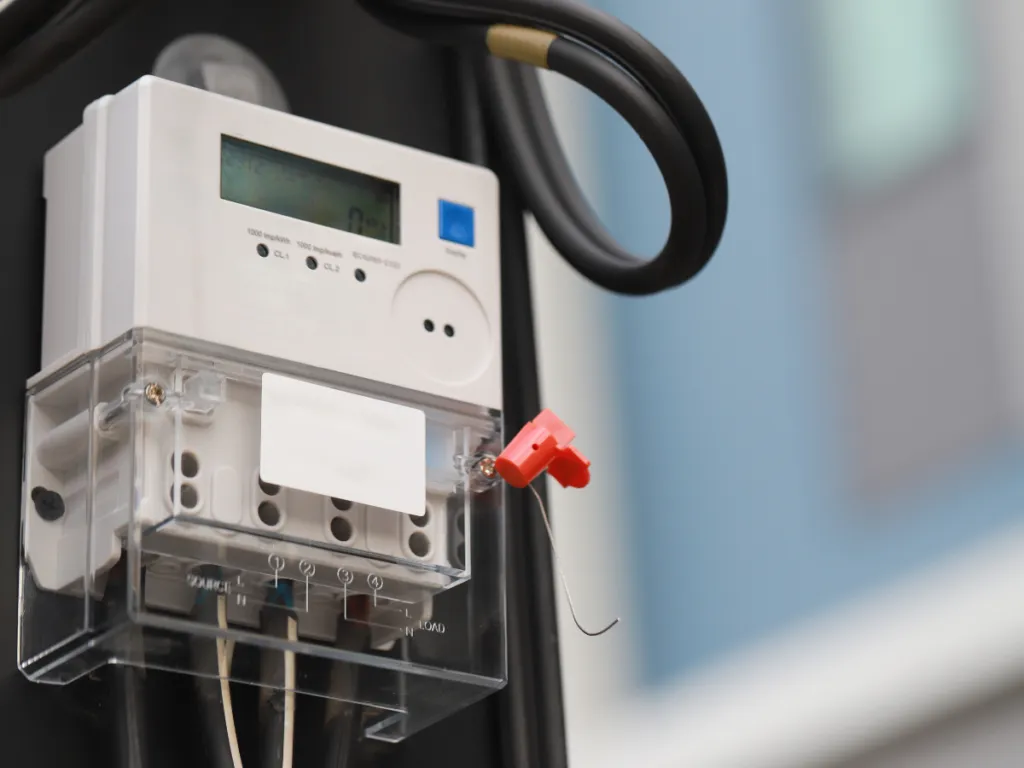
- The regulated electricity tariff (Tarif Bleu) rose by +2.5% on average on 1 August 2026; one published calculation puts the 6 kVA Base price at about €0.2001 per kWh including taxes.
- The self-consumption premium (prime à l'autoconsommation) no longer applies to connection requests filed from 5 June 2026, and surplus is bought at 1.1 c€ per kWh excluding VAT. There is no total-sale option for new small systems.
- A 5.5% VAT rate exists for residential solar up to 9 kWc, with conditions. We could not confirm from the official texts that a battery qualifies, so ask your installer which rate is on your quote.
- Every self-consumption system should be declared to Enedis, even without injection, and a battery changes the paperwork (electrical conformity certificate). We found no national grant for a battery on its own.
- There is no legal 800 W plug-in regime in France. A ministerial answer reportedly treats plug-in sockets as prohibited by the wiring standard, so a dedicated circuit is the safe route.
Last checked
Figures and rules on this page were checked on 6 November 2026 against the sources linked in each section. Prices, schemes and rules change, so open the linked source before you act.
How the French market works
The energy regulator is the Commission de régulation de l'énergie (CRE). It proposes the regulated electricity tariffs, sets the network charges (TURPE) and publishes the rules for solar purchase tariffs. The ministries in charge of energy and the economy take the final decisions on tariffs and support schemes.
Most of the distribution network is run by Enedis. A smaller share of the country is served by local distribution companies. Your supplier (EDF, another national supplier or a local one) sells you the electricity, while the network operator decides how your system connects. Whether you add solar, a battery or both, the operator and your supplier are two separate conversations.
Reliability is a real topic too. Our report on the 68,000 French households left without power during an extreme heatwave shows why some households ask about backup, and how long a home battery lasts in a power cut explains what a battery can and cannot do.
Electricity prices and the regulated tariff
French households can choose between the regulated tariff (Tarif Réglementé de Vente d'Électricité, TRVE) and a market offer. The CRE proposed an average +2.5% increase in the regulated tariff for 1 August 2026, about 0.6 c€ per kWh, and the deliberation is public (CRE press release, deliberation n°2026-147). The official price schedule is in the CRE tariff annex, which lists prices excluding taxes.
A published calculation based on the CRE tariffs puts the Base option for a 6 kVA subscription at about €0.2001 per kWh including taxes since 1 August 2026. That figure comes from a comparison site, not from the CRE, so treat it as a guide and read your own bill. The figures above exclude any market offer, and many suppliers price differently from the regulated tariff.
A battery does not change your subscription (abonnement). What it can change is the price of the electricity you buy: it lets you use cheaper hours later. The saving is limited by what your home actually uses in the evening and at night, so we size a battery to your own use rather than to the largest unit available.
€0.2001
Regulated Base price per kWh incl. taxes, 6 kVA (comparison-site calculation)
+2.5%
Average regulated tariff change on 1 August 2026 (CRE)
1.1 c€
Surplus purchase tariff per kWh excl. VAT, new requests
Tariffs that suit a battery
The regulated tariff has a peak and off-peak option (Heures Pleines / Heures Creuses). In the CRE schedule for a 6 kVA subscription, the off-peak energy price is clearly lower than the peak price, which is the gap a battery could use. One guide says the option is only worth it if more than about 35% of your consumption falls in the off-peak hours, so check your own profile first.
Several suppliers also sell offers indexed to wholesale prices, which move hour by hour. They can suit a battery but carry price risk, and we have not compared French offers. The arithmetic behind these tariffs is in dynamic energy contracts and how to actually save and negative electricity prices explained. Compare current offers on the supplier's own site before you plan around one.
Selling surplus: purchase tariff and the end of the premium
Small solar systems on a building can sell their surplus under the purchase obligation (obligation d'achat), run by EDF OA or a local distributor. An arrêté dated 1 June 2026 amended the 2021 tariff order (known as S21). For connection requests that are complete from 5 June 2026, photovoltaique.info reports a single purchase tariff of 1.1 c€ per kWh excluding VAT (photovoltaique.info, Légifrance).
Secondary sources add that the tariff is indexed (2% a year for 20 years), that for systems up to 9 kWc only the surplus can be sold (no total sale), and that the self-consumption premium, which paid €80 per kWc up to €720 for a 9 kWc system, no longer applies to requests filed from 5 June 2026. Contracts signed under the old rules are said to stay in force. We could not read the full arrêté, so confirm the tariff, the 1,600-hour production cap some guides mention, and the premium on Légifrance or with EDF OA before you rely on them.
The practical effect is simple: at about 1.1 c€ per kWh for exported surplus, against a regulated purchase price roughly eighteen times higher, the value of electricity you use yourself is far greater than the value of what you export. A battery that stores surplus for your own evening use is therefore compared with that low export price, not with the retail price.
VAT and tax
A reduced VAT rate of 5.5% applies to residential solar installations up to 9 kWc that meet technical conditions. The conditions were published by an arrêté of 8 September 2025, and photovoltaique.info says eligibility started on 1 October 2025 (photovoltaique.info). BOFiP, the tax authority's doctrine, says the 2026 finance law (article 94) adds a requirement to use a certified or qualified installer and that this will be commented on later (BOFiP).
We could not confirm from an official text whether a battery sold with the system gets the 5.5% rate. Several installer guides say the standard 20% rate applies to batteries and that selling a battery with the panels can push the whole quote to 20% (see for example this guide), but that guide does not cite the tax authority. Ask your installer to show the VAT rate for each line of the quote, in writing, and check it against BOFiP before you sign.
On tax, selling surplus produces a small income. One guide says income from systems up to 3 kWc with at most two connection points and no professional use is exempt, with a micro-BIC regime above that, but we have not checked this against the tax code. At a surplus price near 1 c€ per kWh the sums are small either way.
Grants, loans and support
We found no national grant for a home battery on its own in France. MaPrimeRénov' has not financed photovoltaic panels, and one guide says the zero-interest eco-loan (éco-PTZ) is not available for photovoltaic work, though we have not checked the loan's current rules.
Local aid exists in some places, usually from a municipality or a group of municipalities rather than a region, with amounts that range from a few hundred euros to a few thousand. The same guide warns that much local aid cannot be combined with the EDF OA surplus contract (guide, updated 4 November 2026). That guide is a commercial source, so ask your mairie or the energy advice service (France Rénov') what is open to you.
The things that do exist are the reduced VAT above and the surplus tariff. Because the 2026 changes were large, see how a home battery saves money before counting on any saving from the old premium.
Connecting and registering your system
Enedis says its connection process has five steps: learn the essentials, file the connection request, accept Enedis's proposal, wait for the work, then request commissioning (Enedis: connecting panels). The page does not cover batteries or declarations in detail, so ask your installer which file applies to your case.
For a battery, photovoltaique.info has a dedicated page for storage devices on connections up to 36 kVA (photovoltaique.info: storage devices). One independent guide says every self-consumption installation must be declared to Enedis, even with no injection, through a free self-consumption agreement without injection (CACSI) filed online, and that adding a battery requires a conformity certificate from Consuel (Potentiel Solaire). We could not check this against Enedis's own text.
A Linky smart meter is reportedly needed. If you do not declare, the same guide says your home insurer may reduce or refuse a claim after an electrical incident. Whatever the route, ask your installer to give you the declaration and certificate copies when the job ends, and keep them with your home documents.
Safety, wiring and building rules
The French wiring standard for homes is NF C 15-100. Its 2024 version is described as applying to installations new or modified since 1 September 2025 and as ruling out connecting a generator through an ordinary plug socket. Battery cells themselves are covered by product standards such as NF EN 62619, and installers also follow the manufacturer's instructions on clearances and ventilation.
We could not find a French rule that says where in the house a battery must go. Our general guidance is in are home batteries safe: fire risk and chemistry explained and can you put a home battery outside. One guide says a separate outdoor shelter needs no authorisation under 5 m², a prior declaration between 5 and 20 m² and a building permit above 20 m², but we have not checked this against the planning code, so ask your mairie for any outdoor unit.
In an apartment block, a panel or battery on shared parts of the building can need the approval of the owners' meeting. Heritage areas can add a further consent. Tell your home insurer before installation and ask in writing whether the location of the battery affects your cover.
Plug-in solar and plug-in batteries
France has no legal 800 W plug-in regime like Germany's. One independent guide says there is no legal 800 W limit in French law, that declaring to Enedis is required at any power, and that a ministerial answer of 26 May 2026 (question no. 6574) treats connecting a generator to a plug socket as prohibited because of electrocution and overheating risks (Potentiel Solaire). The same guide describes a grey zone where plug-in kits are widely used, and says the unambiguous route is a dedicated circuit installed by an electrician. We could not check the ministerial answer ourselves.
ADEME, the state energy agency, reportedly decided not to ban plug-in kits and advises keeping each circuit under about 1,000 W (Mac4Ever, February 2025); the same report says ADEME is more cautious about home batteries. A plug-in battery that you connect to a normal socket is not covered by any dedicated rule we could find. Our comparison of plug-in and installed home batteries and our balcony power plant guide explain the technical differences, and the plug-in battery revolution follows how the rules develop across Europe.
Outside France
Overseas departments and Corsica have different electricity systems, tariffs and support, and the purchase tariffs and some aid described above are written for mainland France. Rules in other countries also differ, so do not apply the figures on this page to a home elsewhere. We are adding guides for other countries to this section. EU rules on batteries apply across member states; see our explainer on the February 2027 battery registration rule.
Common questions about France
Is there a grant for a home battery in France?
We found no national grant for a home battery on its own. The self-consumption premium for solar no longer applies to connection requests filed from 5 June 2026, and MaPrimeRénov' has not financed photovoltaic panels. Some municipalities offer small local aid, so ask your mairie.
Is there VAT relief on a home battery in France?
A 5.5% rate exists for residential solar up to 9 kWc if conditions are met, including a certified installer under the 2026 finance law. We could not confirm from an official text that a battery qualifies, and some installer guides say a battery is charged at 20%. Ask for the VAT rate per line on the quote.
What does the utility pay for surplus solar electricity in 2026?
For new connection requests complete from 5 June 2026, photovoltaique.info reports 1.1 c€ per kWh excluding VAT under the purchase obligation, and secondary sources say it is indexed at 2% a year for 20 years. Check the arrêté of 1 June 2026 or EDF OA before you rely on it.
Do I need to tell Enedis about a home battery?
You should declare any self-consumption installation, and a battery changes the paperwork. One independent guide says a conformity certificate from Consuel is required when a battery is added. Your installer should file the declaration; ask for copies of the documents.
Can I plug a battery or solar kit into a normal socket in France?
There is no legal plug-in regime. A ministerial answer of 26 May 2026 reportedly treats socket connection as prohibited, although kits are widely used. A dedicated circuit installed by an electrician is the unambiguous route, and we found no rule for plug-in batteries.
How has the regulated electricity tariff changed?
The CRE proposed an average increase of 2.5% including taxes for 1 August 2026. A comparison-site calculation puts the 6 kVA Base price at about €0.2001 per kWh including taxes. Check your own bill and compare it with market offers.
Can a battery earn money in France?
Not through the surplus tariff, which is about 1.1 c€ per kWh for new requests. A battery mainly lets you use more of your own solar later, or shift to cheaper hours on a peak and off-peak or wholesale-indexed contract, so the saving depends on your own consumption.
Work out what a battery would do in your home
Run your own numbers through the same hourly model our guides use, then compare the result with what installers quote.