
Dynamic Energy Contracts: How to Actually Save
Dynamic energy contracts promise savings by letting you pay the real, hour-by-hour price of electricity. But the contract itself saves you nothing. Here's why most people don't profit, and what actually works.
- Dynamic Tariffs
- Energy Bills
- Home Batteries

- A dynamic contract lets your electricity price follow the hourly wholesale market instead of a fixed rate
- Switching to a dynamic tariff doesn't lower your bill on its own. You only win if you actually move your usage to the cheap hours
- Only part of your bill moves with wholesale prices. Network charges and taxes sit on top and don't swing with the market
- Shifting flexible appliances (EV charging, the dishwasher, your hot water) helps, but there's a ceiling to how much that alone can do
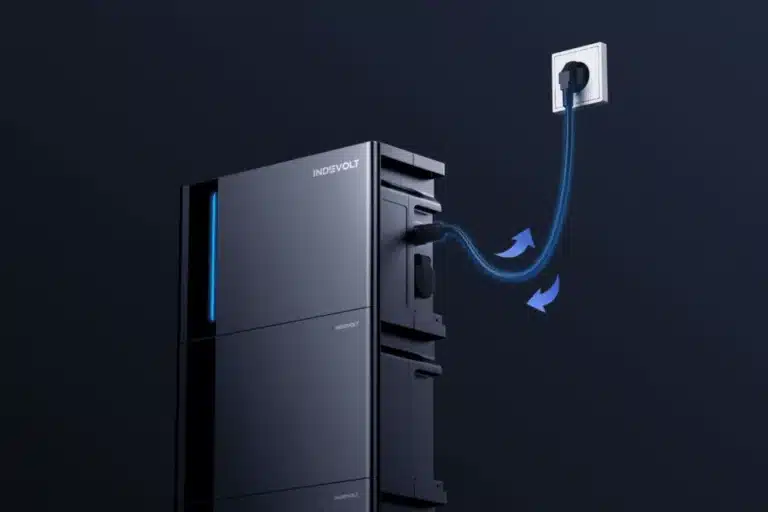
- A home battery is the real multiplier: it fills up automatically in the cheap hours and runs your whole house through the expensive ones
- A dynamic contract cuts both ways. On a cold, still evening with high prices, your bill can also spike if you can't shift away from it
You have probably been told that a dynamic energy contract will save you money. That instead of paying a fixed rate, you pay the real price of electricity hour by hour, and just ride the cheap moments. For some households, it genuinely works. But here’s the uncomfortable truth: a lot of people switch to a dynamic contract and barely save a thing, or worse, get a nasty bill after a cold week. So let’s do it properly.
What a dynamic contract really is
Instead of paying the same price all year, your rate follows the wholesale market, the same market energy companies buy from. Every afternoon, the next day’s prices are set, so you can literally see tomorrow’s 24-hour prices in advance. When there’s a lot of wind and sun, power is cheap, sometimes almost free. When everyone gets home and demand spikes, it’s expensive. Your job, in theory, is simple: use more when it’s cheap, less when it’s expensive.
Only part of your bill actually moves
The hourly wholesale price is one slice of your bill. On top of it sit your network charges and taxes, and those don't rise and fall with the market. So when you see a headline that power went negative, that's the wholesale slice only, not your whole bill.
These contracts are suddenly everywhere for two reasons. First, renewables: the more wind and solar on the grid, the more prices swing between cheap and expensive, which is exactly the gap a dynamic contract lets you tap into. Second, the law: under EU rules, large suppliers have to offer you a dynamic contract if you have a smart meter and ask for one. Some countries go further still. And those same rules require your supplier to warn you about the risk and get your explicit consent before switching you, which tells you something: even the regulators treat this as an opportunity with a catch, not free money.
Switching to a dynamic tariff doesn’t lower your bill by one cent on its own.
Why most people don’t actually save
Your meter still ticks at the same moments it always did. You only win if you move your electricity use to the cheap hours. And that’s where it falls apart for most people, because the cheapest hours are usually the middle of the night or the middle of the day, when you’re at work and the house is empty. You can’t do laundry at three in the morning every day. Not many people can live their life around the price chart.
How you actually profit
There are two levers.
Shift and automate your flexible loads
Charging your EV, running the dishwasher or washing machine, heating your hot water, running a heat pump: let a timer or smart charger do it automatically in the cheap window while you're asleep. Doing it by hand, day after day, is where most people give up.
Add a home battery
This is the real multiplier. A battery quietly fills up during the cheapest hours, the windy night, the sunny afternoon, completely automated. When prices hit their evening peak, your home runs off the battery instead of buying at the top of the market. You're not shifting one appliance, you're shifting your whole house, including the hours you're asleep or out the door.
Shifting flexible loads has a ceiling: you can only shift what you happen to be using, and for most of the day your biggest flexible loads aren’t running at all. A battery is the difference between saving a little and saving a lot.
Be honest about the risks
Pros
- Access to genuinely cheap, sometimes near-free, hours when renewables oversupply the grid
- Automating flexible appliances captures some savings without you noticing
- A home battery turns the cheap hours into savings across your whole house, day and night
- Suppliers are legally required to warn you about the risk before switching you
Cons
- A dynamic contract can cut both ways, a cold, still winter evening can spike prices hard
- If your electricity use is small and inflexible, the savings may not be worth the exposure
- You need a smart meter for the battery and contract to work together
- Headline savings figures (30 to 40 percent) usually come from households that shift aggressively with an EV, heat pump or battery, not everyone
A fixed rate is still a valid choice
If you don't want to automate anything and your usage is small and inflexible, a dynamic contract might not be worth it for you. A fixed rate still buys peace of mind, and there's nothing wrong with that.
Dynamic energy contracts, common questions
Does switching to a dynamic contract save money by itself?
No. The contract only lets you see and pay the real hourly price. You only save if you actually move your electricity use into the cheap hours, otherwise your usage pattern stays the same and so does your spending.
What's the easiest way to benefit from a dynamic contract?
Automate what you can, EV charging, the dishwasher, hot water, with a timer or smart charger set to the cheap hours. For the biggest effect, add a home battery, which captures cheap hours automatically across your whole house, including when you're not home.
Is a dynamic contract risky?
It can cut both ways. On a cold, still evening with high demand and low renewable output, prices can spike. If you can't shift your usage away from those hours, your bill can be higher than on a fixed rate.
Do I need a smart meter for a dynamic contract?
Yes. Dynamic pricing and battery automation both rely on hour-by-hour (or 15-minute) readings from a smart meter.
Could a battery make your dynamic contract pay off?
Work out your ideal battery size and estimated savings with our free calculator.
Latest articles
Dynamic Energy Contracts: How to Actually Save
19/10/2026

Plug-In Solar Is Now Legal in the UK
16/10/2026

Portable Power Station vs Plug-In Battery
14/10/2026

Do I need a home battery for my solar panels?
07/10/2026

Home battery storage without solar panels: does it actually pay in the UK?
06/10/2026
AC or DC-coupled plug-in home battery: Which setup suits your home?
05/10/2026