
Solar Batteries Explained: How They Work and What to Check Before You Buy
A solar battery stores the electricity your panels make while you are out and gives it back in the evening. Here is what it can and cannot do, and what to check before you buy.
- Solar Battery
- Great Britain Rules
- Buying Guide
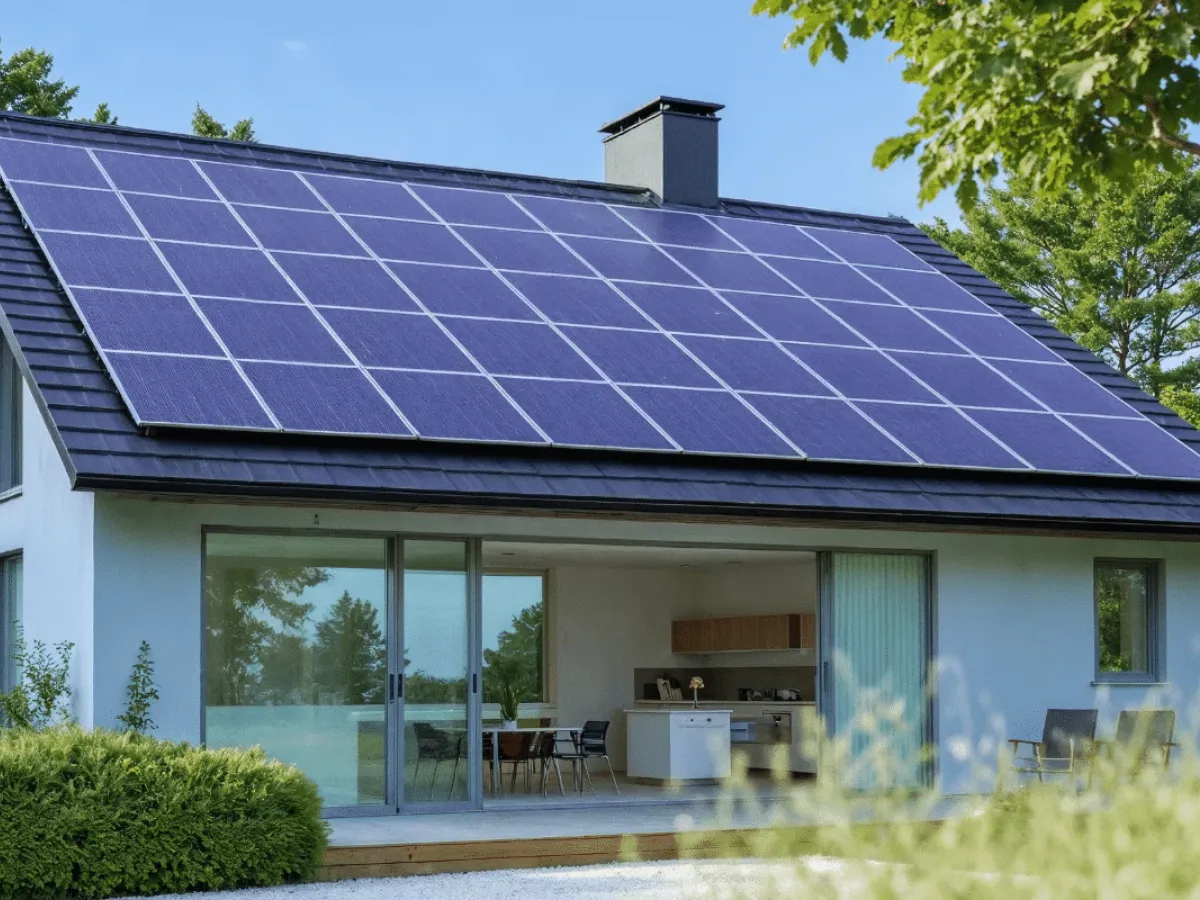
- A solar battery is a home battery used together with solar panels. It does not make more electricity, it moves your own solar power from the day to the evening.
- The Energy Saving Trust describes a typical home battery as about 10 kWh, with a lifespan of around 10 to 12 years, which is shorter than the panels. Energy Saving Trust
- Panels make roughly a quarter or less of their summer output from December to February, so a solar battery is usually full in summer and has little to store in winter.
- A battery does not automatically keep the lights on in a power cut. Backup has to be designed in and costs extra.
- Installed home batteries are zero-rated for VAT until 31 March 2027, and the rate returns to 5% from 1 April 2027.
Last checked
Rules and figures on this page were checked on 12 November 2026 against the sources linked in each section. Schemes, rates and prices change, so open the linked source before you sign a quote.
What a solar battery does
Solar panels make most of their electricity at midday, while many households use most of theirs in the morning and evening. A solar battery bridges that gap. Surplus solar power charges the battery instead of flowing out to the grid, and the battery supplies the house when the panels are not producing enough.
Once the battery is full, any further surplus is exported to the grid, and in Great Britain you can be paid for it through a Smart Export Guarantee tariff (see the rules section below). The Energy Saving Trust also notes that storing energy is less efficient than using it straight from the panels or the grid, because some is lost in the battery and inverter. Energy Saving Trust: solar panel battery storage
The same battery can also charge from the grid when a time-of-use tariff is cheap, which matters in winter when the panels give little. That is how a home battery works without panels as well, covered in our guide to using a home battery without solar panels.
Do you need a battery with solar panels?
Not always. Panels work fine without a battery, and the value of adding one depends mostly on when your household uses electricity. If someone is home during the day and you run appliances while the sun is out, much of your solar power is used as it is made, and a battery adds less. If the house is empty all day and the demand comes in the evening, a battery lets you use far more of what you generate.
Installer estimates of how much solar power a home uses directly, without a battery, range from well under half to about half, which is too wide to rely on. Use your own meter data for a few sunny days, or run your numbers in the calculator, before deciding.
For a longer look at this question, read Do I need a home battery for my solar panels? and then test your own situation in the home battery calculator.
What happens in winter
UK installer data typically puts December to February output at roughly 20 to 30% of the summer peak, with the shortest days producing very little. In practice that means the battery fills easily on a sunny summer day and often stays nearly empty in midwinter, because the panels barely cover daytime use.
This is why many owners pair a solar battery with a cheap overnight or dynamic tariff: the battery charges from the grid when electricity is cheapest and covers the expensive evening hours. Our guide to home battery arbitrage in the UK explains the idea, and the dynamic energy contracts guide covers the tariffs.
AC-coupled or DC-coupled: which fits your panels
This is the main technical choice, and it mostly depends on whether you already have panels.
In an AC-coupled system the existing solar inverter stays as it is, and a separate battery inverter is added alongside it. This is the usual route when you add a battery to panels you already have, because it leaves the solar wiring and inverter untouched.
In a DC-coupled system the panels and battery share one hybrid inverter. This is usually neater and slightly more efficient when charging from the panels, and it is a common choice when you install panels and battery together. Adding it later usually means replacing the existing inverter.
Ask your installer which route they propose and why, and whether your current inverter can stay.
How big a solar battery you need
Battery size is quoted in kilowatt-hours (kWh). The Energy Saving Trust describes a typical home system as about 10 kWh, and notes that the battery stops discharging at a set minimum level, possibly around 20% of its total, so the usable capacity is lower than the headline number. Energy Saving Trust
Size the battery to the electricity you use in the evening and overnight, not to the size of your panels. A battery larger than your summer surplus plus your evening demand rarely fills and rarely pays back.
Our guide to home battery size and the capacity guides from 5 kWh to 30 kWh walk through the sums.
Power cuts: will it keep the lights on?
Usually not by default. A grid-connected solar system shuts down during a power cut as a safety measure, and a battery on its own does not change that. To supply the house in a cut, the system needs a battery inverter with a backup (emergency power supply) function and a changeover arrangement, often called a backup gateway, which disconnects your home from the grid safely.
Backup is often limited to selected circuits and costs extra. If keeping the fridge, router and lights running matters to you, ask for it in writing in the quote, and confirm which circuits are covered and for how long.
Read Whole home battery backup: how does it work? and How long will a home battery last in a power cut? for the detail. A battery is not a substitute for equipment that someone relies on medically.
Rules, export payments and VAT in Great Britain
The Smart Export Guarantee (SEG) is the Ofgem-overseen scheme that obliges larger suppliers to pay for electricity you export from eligible small-scale generation. It is for England, Scotland and Wales, not Northern Ireland. The generator and installer normally need to be MCS-certified (or equivalent), and you need a smart meter that records your export. Each supplier sets its own rate, so compare tariffs and check any condition about batteries. Ofgem: Smart Export Guarantee
A battery that can export to the grid must be notified to your network operator (the DNO): within 28 days after installation up to 3.68 kW per phase, with approval first above that.
Installed home batteries are zero-rated for VAT until 31 March 2027. The 28 October 2026 Budget did not extend that, so the rate returns to 5% from 1 April 2027. The Warm Homes Loan Scheme can reduce the interest on a battery loan of up to £15,000 by up to five percentage points. Details and sources are in our United Kingdom country guide and the Warm Homes Loan article.
Plug-in solar kits up to 800 VA are legal in Great Britain since 27 August 2026, but plug-in batteries are not allowed, so a solar battery on a normal home still means an installed system.
Cost and lifespan
The Energy Saving Trust gives a range of £1,500 to £10,000 for a home battery, with about £4,600 for a 5 kWh system, and says installing a battery at the same time as solar panels or a heat pump may reduce the cost. It puts typical lifespan at about 10 to 12 years and advises asking about warranties for both the battery and its installation. Energy Saving Trust
For UK prices by size and what is included in a quote, see How much does a home battery cost in the UK?
What to check before you buy
Use this list when you compare quotes. The answer to each should be in writing.
- Usable capacity in kWh, not just the headline number.
- Charge and discharge power in kW, which decides how much of the house the battery can run at once.
- Compatibility with your existing solar inverter, or the hybrid inverter that comes with it, and whether you need AC or DC coupling.
- Backup: whether it is included, which circuits it covers and how it switches over.
- Warranty: years, the energy it is guaranteed to deliver and what it guarantees as capacity left at the end.
- MCS-certified installer for battery storage and the paperwork you will receive for the DNO and your SEG tariff.
- Tariff and app support: whether it works with the smart tariff you want to use.
- Location: where it is installed and what the installer's fire and ventilation guidance says.
Which type of product is a solar battery?
In Britain a solar battery for a home is an installed battery: browse home battery storage and compare models side by side with Compare For Yourself.
Plug-in batteries are sold for balcony solar in some countries, but the 2026 British rules for plug-in solar do not cover batteries, so see plug-in batteries for how that works elsewhere. Power stations can store solar power, but they are portable units for camping and outages, not a way to run a house from your roof. If that is the use you have in mind, read our guide to off-grid batteries and power stations.
Common questions about solar batteries
Do I need a battery with solar panels?
Not necessarily. A battery helps most when you use little electricity while the panels are producing and a lot in the evening. Test it with your own usage in the calculator.
Can I add a battery to existing solar panels?
Yes. The Energy Saving Trust says a battery can be added to existing panels and the installer connects the two systems. This is normally done with an AC-coupled battery that keeps your current inverter.
Will a solar battery work in a power cut?
Only if the system has a backup function and a changeover arrangement fitted. Without it, a grid-connected solar system and its battery shut down during a cut.
Can a solar battery charge from the grid?
Yes. It can charge when the tariff is cheap and discharge when it is expensive, which is the main benefit in winter, when panels produce little.
How long does a solar battery last?
The Energy Saving Trust gives a typical lifespan of about 10 to 12 years, which is shorter than the panels. Ask about warranty terms for both the battery and the installation.
How big a solar battery do I need?
Size it to your evening and overnight use, remembering that usable capacity is lower than the headline kWh. About 10 kWh is described as typical for a home, but the right size depends on how much you use.
Related guides
Check your own numbers
See what a battery could do for your usage and panels, then compare models. Browse home batteries or run the calculator.