Do I need a home battery for my solar panels?

- A home battery lets you store surplus solar power and use it later, instead of sending most of it back to the grid.
- The right battery size depends mainly on your electricity use, solar generation and how much power you export.
- An AC-coupled battery is usually the easiest option if you already have solar panels, because you often do not need to replace your existing inverter.
- A battery is not always the best choice: if you already use most of your solar power directly or want a very short payback period, the benefits may be smaller.
The average household uses only around 30% of the solar power it generates directly. The rest is usually sent back to the grid. A home battery lets you store part of that surplus, so you can use it later in the day when your solar panels are producing less.
That does not mean a battery is the right choice for every home. It mainly depends on how much electricity you use, how much solar power you export, your energy tariff and what you want to achieve with the battery.
How does solar battery storage work?
Using a home battery is very simple. When you have solar panels, you normally use only a small part of the generated solar power directly in your home. Around 30% is used straight away, which means that roughly 70% is sent back to the grid.
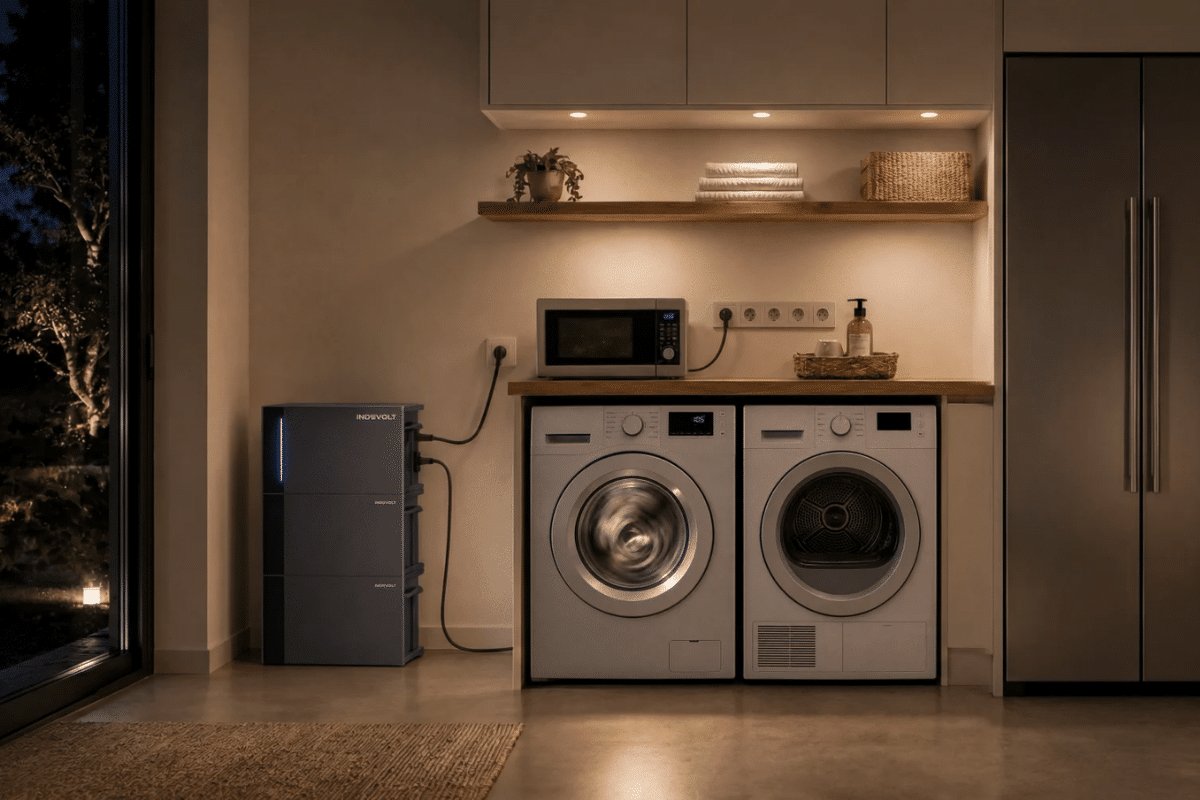
Your solar panels first generate power for the appliances in your home. If you generate more power than you are using at that moment, the surplus would normally be sent back to the grid. With a home battery, that surplus is stored instead. You can then use that stored power later in the day, when your solar panels are generating little or no electricity.
With a home battery, you can often increase the self-consumption of your solar power from around 30% to roughly 70% or even 80%.
What are the advantages and disadvantages of a solar battery?
A solar battery comes with several benefits, but there are also a few drawbacks to consider before deciding if it is the right choice for your home.
Pros
- Store excess solar energy and use it later.
- Increase the amount of solar power you use yourself.
- Reduce the amount of electricity you need to buy from the grid.
- Make better use of your solar panels in the evening and at night.
- Some batteries can keep essential appliances running during a power cut.
Cons
- A home battery is still a relatively large investment.
- The financial return depends heavily on your energy use and electricity prices.
- Installation can add extra costs, especially with fixed systems.
What size battery do I need for my solar panels?
The right battery size mainly depends on how much electricity you use and how much solar power you send back to the grid. Your annual consumption gives a good first indication, but it is also important to look at how much surplus solar energy you usually have available to store. If you export a lot of electricity during the day, a larger battery can make sense. If you already use most of your solar power directly, you may need less capacity.
| Annual consumption | Situation | Recommended capacity |
|---|---|---|
| Under 2,000 kWh | One or two people, small apartment | 3 – 5 kWh |
| 2,000 – 4,000 kWh | Family, no EV or heat pump | 5 – 10 kWh |
| 4,000 – 6,000 kWh | Family with an EV or heat pump | 10 – 15 kWh |
| Over 6,000 kWh | Large family with EV and heat pump | 15 – 25 kWh |
This table is a useful starting point, but your actual solar generation and export are just as important when choosing the right capacity. Want a more accurate estimate for your home? Use our home battery calculator.
Can I add a battery to my existing solar panels?
Adding a home battery to an existing solar panel system is actually the easiest way to install a home battery. There are two different types of home batteries, AC-coupled and DC-coupled. AC-coupled batteries are made to use with existing solar systems, because they connect to your home’s AC electricity system. This means you usually don’t need to replace your existing solar inverter
But how does this work exactly?
Your solar panels generate electricity
Solar panels produce direct current (DC) when sunlight hits them.
The solar inverter converts the electricity
Your existing solar inverter converts the DC electricity into alternating current (AC), which your household appliances can use.
Your home uses the electricity
The AC electricity enters your home's electrical system. Any electricity your appliances don't need can be stored in your battery.
The battery stores excess solar energy
The battery's built-in inverter converts the AC electricity back into DC so it can be stored in the battery cells.
You use the stored electricity later
When your solar panels produce less, the battery converts stored DC power back into AC for use in your home, reducing the amount of electricity you need from the grid.
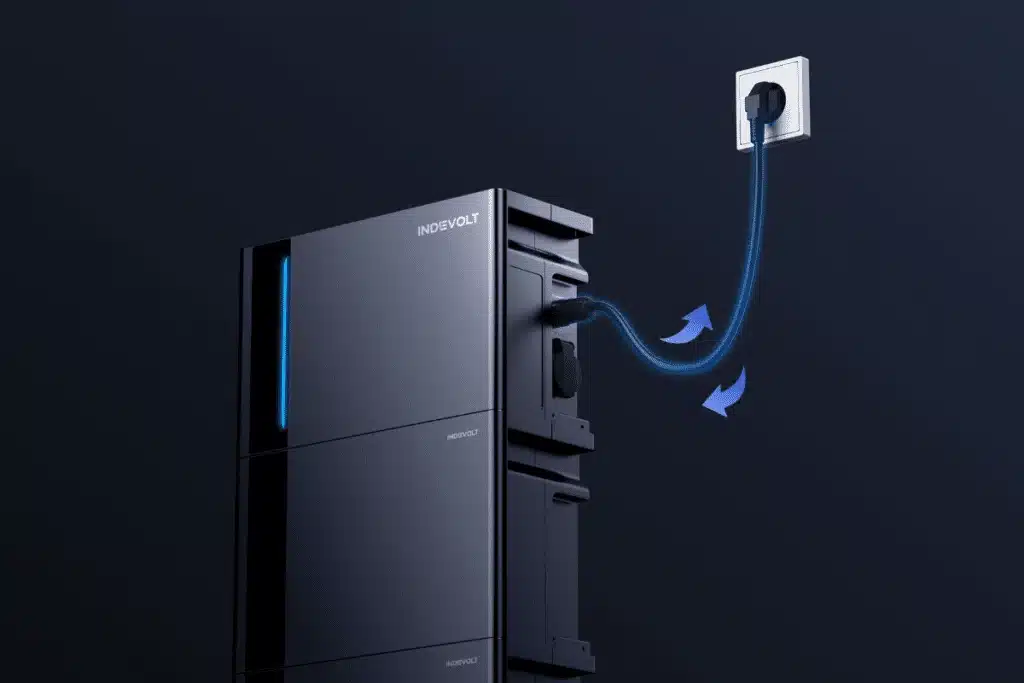
The biggest advantage is that you can add an AC-coupled battery without making major changes to your existing solar setup. Some plug-in models can even be connected to a suitable wall socket, making installation relatively straightforward. Installation batteries are usually much harder to install, this needs to be done by a profesional.
When is a solar battery not worth it?
For most people with solar panels, it is definitely worth it to get a home battery. It is a great way to store the surplus power that your home battery generates. There are also situations where getting a solar battery is probably not the best choice. For example:
If you already use most of your solar power directly
There may be too little surplus left to charge the battery.
If you want a very short payback period
Home batteries are still a relatively large investment and usually take years to pay back.
If you plan to move soon
Installation and removal cost money, and a home battery is not always easy to take with you.
Should I get a home battery for my solar panels?
A home battery can be useful if you regularly send solar power back to the grid. It lets you store that surplus energy and use it later, for example in the evening when your solar panels are producing less.
Whether it is worth it depends mainly on your electricity use, solar generation and how much power you export. If you have plenty of surplus solar energy, a battery can help you use more of your own electricity and buy less from the grid.
Still not sure?
Use our calculator and get a personal recommendation.
More articles
-

Home battery storage without solar panels: does it actually pay in the UK?
-

AC or DC-coupled plug-in home battery: Which setup suits your home?
-

Are home batteries safe? Fire risk and chemistry explained
-

Can you put a home battery outside?
-
How long will a home battery last in a power cut?
-

Plug-in battery vs installed home battery: which makes more sense?