Home battery storage without solar panels: does it actually pay in the UK?

- A home battery can work without solar panels, and since February 2024 a standalone battery has qualified for 0% VAT in the UK, until 31 March 2027
- Without solar, a battery is pure arbitrage: it only saves money if there is a real gap between your cheapest and most expensive electricity price
- On a flat tariff a battery without solar saves nothing; on a good time-of-use tariff a 5 kWh battery can save roughly £200 to £340 a year
- Payback typically runs 15 to 24 years, so EV drivers and heavy electricity users on the right tariff see the best returns
Yes, you can run a home battery without solar panels, and since February 2024 a standalone battery has qualified for 0% VAT in the UK. Whether it pays back depends almost entirely on one thing: the gap between your cheapest and most expensive electricity. For most UK homes that gap is smaller than the sales pitch suggests. Here are the real numbers.
Most battery advice assumes you already have solar. But solar is not the only reason to store electricity, and for a growing number of UK homes, it is not even the main one.
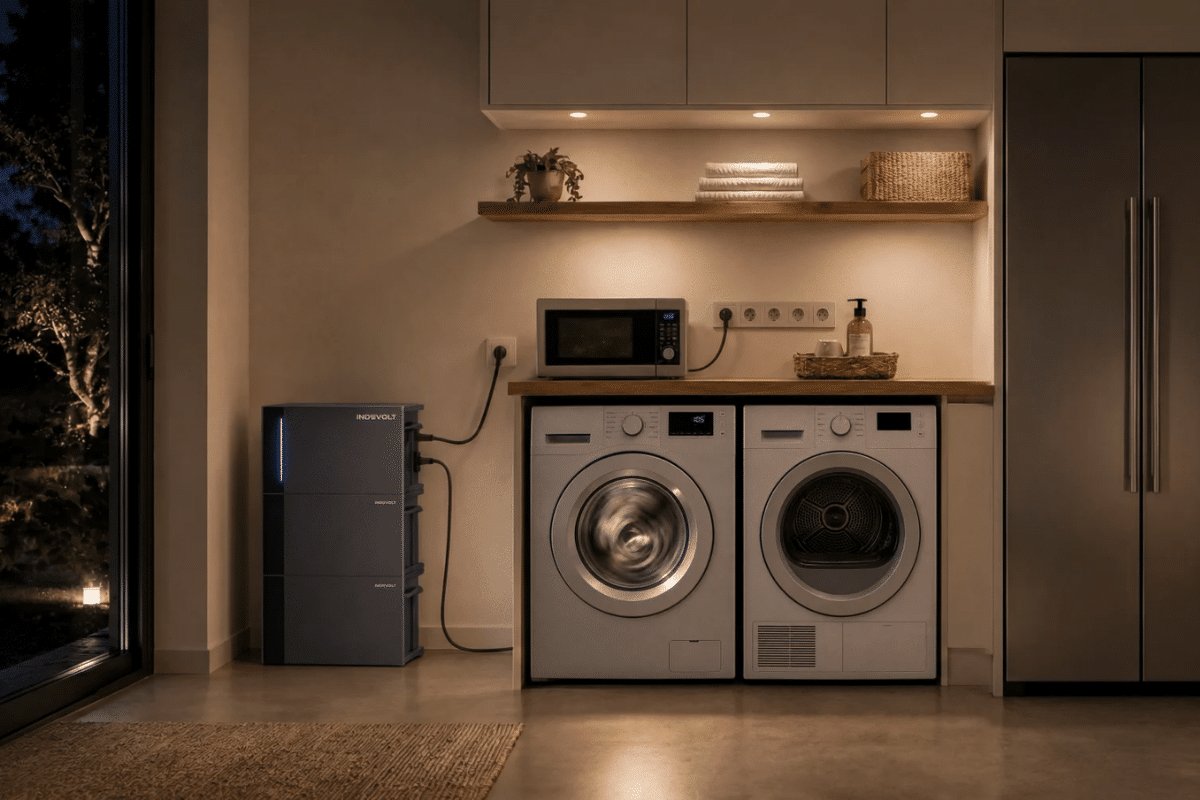
If you have a time-of-use tariff, your electricity has a price, not just a cost. A battery lets you buy at the cheap price and use at the expensive one. No panels required.
The honest part, which you will not find on most installer pages, is that without solar a battery is a pure arbitrage play. There is no free energy in the system: you are not generating anything, you are trading time. That works brilliantly for some households and barely at all for others, and the difference comes down to your tariff and how much electricity you actually use.
This page shows you which one you are.
The one thing to remember
On a flat tariff, a battery without solar saves you nothing. There is no spread to trade.
How a battery works without solar panels
The mechanism is simple:
Charge overnight
When electricity is cheap.
Discharge in the evening
When it's expensive, so the battery powers your home instead of the grid.
Repeat
One cycle per day, most days of the year.
Your savings are the spread, the difference between the two prices, multiplied by how many kWh you can move through the battery each day.
That is the whole thing. Every number on this page is a version of that one sum.
What’s different from a solar setup
| With solar | Without solar | |
|---|---|---|
| Where the stored energy comes from | Your roof (free) | The grid (cheap, not free) |
| Main saving | Self-consumption: using your own generation | Arbitrage: the price spread |
| Export income (SEG) | Yes | No, UK export tariffs require solar panels |
| Best months | Summer | Consistent year-round |
| Depends on | Weather, roof, orientation | Your tariff |
Who this actually works for
Pros
- Drive an EV, or have a compatible smart charger. This unlocks Intelligent Octopus Go at around 7p/kWh, by far the widest spread available, and the single biggest factor in whether a battery-only setup pays
- Use a lot of electricity, 4,000 kWh a year or more. More consumption means more cycling, and cycling is what earns
- Have a heat pump. Cosy Octopus gives three cheap windows a day at around 13p/kWh
- Are already on Agile or Economy 7 and shift usage deliberately
- Want backup power and treat the savings as a bonus rather than the point
Cons
- Are a low-consumption household on a standard variable tariff. Ofgem's medium benchmark is now 2,500 kWh a year, about 6.8 kWh a day, and if you cannot cycle the battery it cannot earn
- Do not have a smart meter. Every time-of-use tariff needs one (SMETS2, or a Secure-branded SMETS1)
- Are planning solar within two years. Install both together and you will pay less and get access to export tariffs
- Want a fast payback. Be honest with yourself and check the numbers below
Not sure which one you are? Our calculator sizes a battery against your actual consumption in about a minute.
The real numbers: what a battery without solar earns in 2026
Assumptions: 5 kWh cycled once daily, 365 days a year, 90% round-trip efficiency, rates as at July 2026.
| Your tariff | Off-peak import | Peak rate avoided | Spread | Annual saving |
|---|---|---|---|---|
| Intelligent Octopus Go (needs an EV or compatible charger) | ~7p | ~27.8p | ~20.8p | ~£340 |
| Cosy Octopus (needs a heat pump) | ~13p | ~27.8p | ~14.8p | ~£240 |
| Agile Octopus (July 2026 average) | ~16.9p | ~29.5p | ~12.6p | ~£210 |
| Economy 7 (varies by region) | varies | varies | ~10-14p | ~£165-230 |
| Standard variable, no TOU | – | – | ~0p | ~£0 |
That last row matters. On a flat tariff, a battery without solar saves you nothing. There is no spread to trade. If you take one thing from this page, take that.
Now the payback
A 5 kWh installed system runs roughly £4,500-£5,500 at 0% VAT. Against the savings above:
| Tariff | Annual saving | Payback (£5,000 system) |
|---|---|---|
| Intelligent Octopus Go | ~£340 | ~15 years |
| Cosy Octopus | ~£240 | ~21 years |
| Agile | ~£210 | ~24 years |
| Standard variable | ~£0 | never |
Those are long paybacks. We are not going to pretend otherwise, and you should be suspicious of any page that quotes you five years for a battery-only install.
But three things change the picture:
- Bigger spreads change everything. The gap between the best and worst row above is a factor of three. Your tariff is worth more than your battery brand.
- You can’t cycle what you don’t use. A medium household uses 6.8 kWh a day in total, and only part of that lands in the peak window. A 10 kWh battery won’t earn twice what a 5 kWh one does. It will earn barely more, for £1,500 more. Oversizing is the most expensive mistake in this market.
- Prices only go one way at the moment. Ofgem’s price cap rose on 1 July 2026. Every rise widens the spread and shortens the payback. A battery is partly a hedge against the next one.
For the full cost breakdown behind these numbers, see our guide to what a home battery costs in the UK.
The calculator runs this sum against your own consumption and tariff, not a benchmark household.
The 0% VAT window: the strongest reason to act in 2026
This is the part most people do not know about, and it is specific to standalone batteries.
Since 1 February 2024, a battery installed without solar panels qualifies for 0% VAT under HMRC’s energy-saving materials relief. Before that date, you only got the relief if the battery went in alongside a new solar system.
The VAT window is closing
The window closes on 31 March 2027. From 1 April 2027 the rate goes to 5%.
What qualifies: standalone batteries, retrofits, and batteries fitted with solar, on a residential property, fitted by a VAT-registered installer on a supply-and-fit basis.
What doesn’t: hardware bought at retail with no installation, commercial premises, and standalone EV chargers.
What you have to do: nothing. Your installer applies it to the invoice, with no forms and no claim.
What it’s worth: roughly £225-£275 on a £5,000 system versus the scheduled 5% rate.
Two practical warnings:
- VAT is set at the tax point, usually invoice or completion, not the date you signed. A job completing after 1 April 2027 gets charged at 5%. With survey-to-install lead times running several weeks, and a DNO application on top for larger systems, committing by late 2026 is the safer play.
- Watch the quote. Some installers quote with VAT and then “discount” it. That is not a discount, it is VAT they should never have charged. A qualifying residential quote shows 0%, plainly.
For the mechanics of claiming it, see our dedicated guide to 0% VAT on a home battery in the UK.
What you need to install one
- Smart meter: non-negotiable. SMETS2, or a Secure-branded SMETS1. No smart meter, no time-of-use tariff, no savings.
- A time-of-use tariff: Agile, Economy 7, Cosy or Intelligent Go. Switching is free and takes about five working days.
- Space: garage, utility room, or an outdoor wall with a suitable IP rating. Roughly a large suitcase for a 5 kWh unit.
- An inverter: standalone batteries need one to convert DC to AC. Usually integrated in the unit, but check the quote.
- DNO notification: your installer handles it. Larger systems may need approval before commissioning, which adds time.
- A qualified installer: battery wiring is covered by the April 2026 wiring-rules update. Not a DIY job.
On plug-in batteries
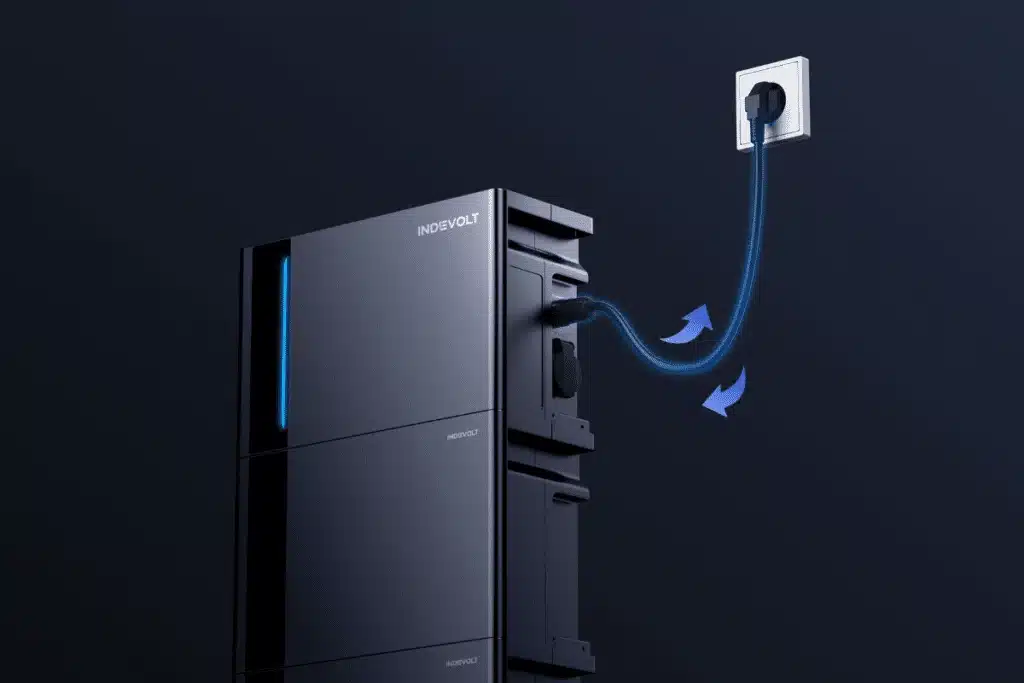
You will see plug-in units advertised across Germany and the Netherlands that go straight into a wall socket, with no installer needed. They are not yet legal to socket-connect in the UK. DESNZ published an interim product specification in June 2026 and a government response is expected shortly, but the rule barring socket-connected generation still stands. We track this market across Europe and will update this page when it changes. For now, a UK battery means an installed one.
Pros and cons
Pros
- Works without a roof: suits flats, north-facing homes, listed buildings and rentals with permission
- 0% VAT on standalone units until 31 March 2027
- Predictable, year-round savings, with no weather dependency
- Backup power during a cut, if you spec it that way
- A hedge against price cap rises
- Solar-ready: add panels later and the battery gets more valuable
Cons
- No export income. SEG needs solar panels
- Payback is long: 15+ years even in the best tariff case
- Useless on a flat tariff. The spread is the entire business case
- Needs a smart meter and a tariff switch
- The best rates (Intelligent Octopus Go) need an EV you may not own
- Oversizing wastes money: you can only earn on what you cycle
Outside the UK: what changes, what doesn’t
The mechanism travels. The arithmetic doesn’t.
What’s the same everywhere: a battery without solar earns on the spread between your cheapest and most expensive electricity, times the kWh you can cycle. Flat tariff, no savings. That is physics and pricing, not policy.
What changes by country:
- The size of the spread. This is the whole game. Markets with aggressive time-of-use pricing, such as much of Australia and California, make battery-only setups work far better than markets with flat or narrowly-banded regulated rates, which is most of Canada.
- Export rules. The UK’s no-solar-no-export-tariff rule is a UK rule. Some markets let you export from storage, some don’t, and some pay so little it’s moot.
- Incentives. Rebates, tax credits and VAT relief vary by country and often by state or province, and they change on short notice. Check what’s live where you are before you run any payback sum.
- Connection rules. Every grid has its own notification and approval process.
So: use the framework on this page. Find your spread, work out what you can realistically cycle, then price it. Just don’t use our pence figures.
If you are weighing this against waiting for a solar-plus-battery system instead, our guide to whether a home battery is worth it covers that comparison.
Frequently asked questions
Can you have a home battery without solar panels?
Yes. A battery doesn't need solar to work, it needs a reason to store cheap electricity. On a time-of-use tariff, it charges from the grid overnight and powers your home during expensive evening hours. Since February 2024, standalone batteries also qualify for 0% VAT in the UK.
Is a home battery worth it without solar?
It depends entirely on your tariff. On Intelligent Octopus Go, around 7p/kWh overnight, a 5 kWh battery saves roughly £340 a year, about 15 years to pay back. On Agile it's closer to £210. On a flat standard tariff it saves nothing at all, because there's no price spread to trade. Check your tariff before you check battery prices.
Can you get SEG payments without solar panels?
No. UK export tariffs, including the Smart Export Guarantee, require solar panels and a smart meter. A battery-only home can shift when it buys electricity, but it can't sell any back.
What size battery do I need without solar?
Smaller than you'd think. Ofgem's medium household uses about 2,500 kWh a year, roughly 6.8 kWh a day, and only part of that falls in the peak window. For most homes without solar, 5 kWh does the earning and 10 kWh mostly adds cost. Size to what you can actually cycle, not to what you might use one day.
Work out your own numbers
Our calculator takes your consumption and tariff and sizes a battery against them: no benchmark households, no assumed spreads.
More articles
-

AC or DC-coupled plug-in home battery: Which setup suits your home?
-

Are home batteries safe? Fire risk and chemistry explained
-

Can you put a home battery outside?
-
How long will a home battery last in a power cut?
-

Plug-in battery vs installed home battery: which makes more sense?
-

How to choose a home battery: a step-by-step guide