Whole Home Battery Backup: How Does It Work?

- A battery can keep the essentials running in a power cut, but whole home backup takes the right design
- A standard grid-connected battery does not automatically provide backup power
- Options range from a simple emergency power socket to selected-circuit backup to full whole-home backup
- Compare usable capacity and maximum inverter power together, not kWh alone, when choosing a backup system
A home battery can do more than store electricity for later. With the right equipment, it can also keep important parts of your home powered when the electricity grid goes down. But having a battery does not automatically mean that your whole house will have backup power.
There are several ways to use a battery during a power cut. Some batteries have a built-in emergency power socket that can keep a few essential appliances running. Other systems can be connected to selected household circuits, while more advanced installations can provide backup for the wider electrical installation.
What is whole home battery backup?
Whole home battery backup means that a battery system is designed to supply your home’s electrical installation when the grid goes down, rather than only powering one or two dedicated devices.
That does not necessarily mean that every appliance can run at full power at the same time. The battery has a limited amount of stored energy, while the inverter has a maximum power output. A backup system therefore needs to be designed around both capacity and power.
The short answer
A whole home battery backup system can keep your home powered during a power cut, but only if the battery, inverter, switching equipment and electrical installation are designed for backup operation. A standard grid-connected battery does not automatically provide backup power.

How does whole home battery backup work?
When the grid is working normally, the battery operates alongside the electricity supply to your home. Depending on the system, it can charge from solar panels, the grid or both.
When the grid fails, a backup-capable system has to separate the home from the public electricity network. The battery can then provide a local electricity supply instead.
This is often described as island mode. The important point is that the home must be safely isolated from the grid before the battery starts supplying electricity independently.
1. Grid connected
The battery charges and discharges while the home is connected normally to the electricity grid.
2. Grid fails
The backup system detects the outage and safely separates the backup supply from the public grid.
3. Battery supplies the home
The inverter creates a local electricity supply and the battery powers the connected appliances or circuits.
The exact arrangement depends on the battery inverter and the electrical installation. UK battery installation guidance specifically addresses island-mode operation, isolation and the maximum load that can be supplied during an outage.
Do you need to power the whole house?
Not necessarily. In many homes, there is little reason to keep every electrical circuit running during a power cut.
Most people mainly want to keep essential equipment working: lights, the fridge and freezer, internet equipment, security systems, selected sockets and perhaps a few other important appliances.
High-power appliances such as electric showers, ovens, immersion heaters, heat pumps and EV chargers can use a large amount of electricity. Trying to keep all of them available during an outage can require a much larger inverter and battery.
For that reason, selected-circuit backup can often be a more practical solution than whole-home backup.
What about plug-in home batteries?
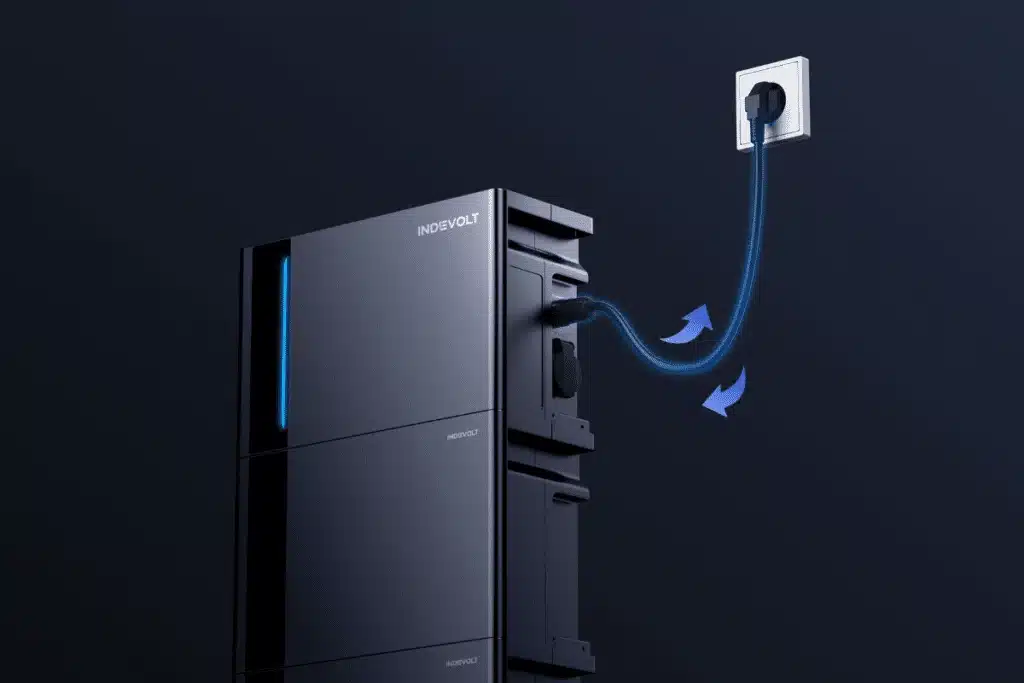
There is also a much simpler form of battery backup. Some plug-in home batteries have an emergency power socket built directly into the battery.
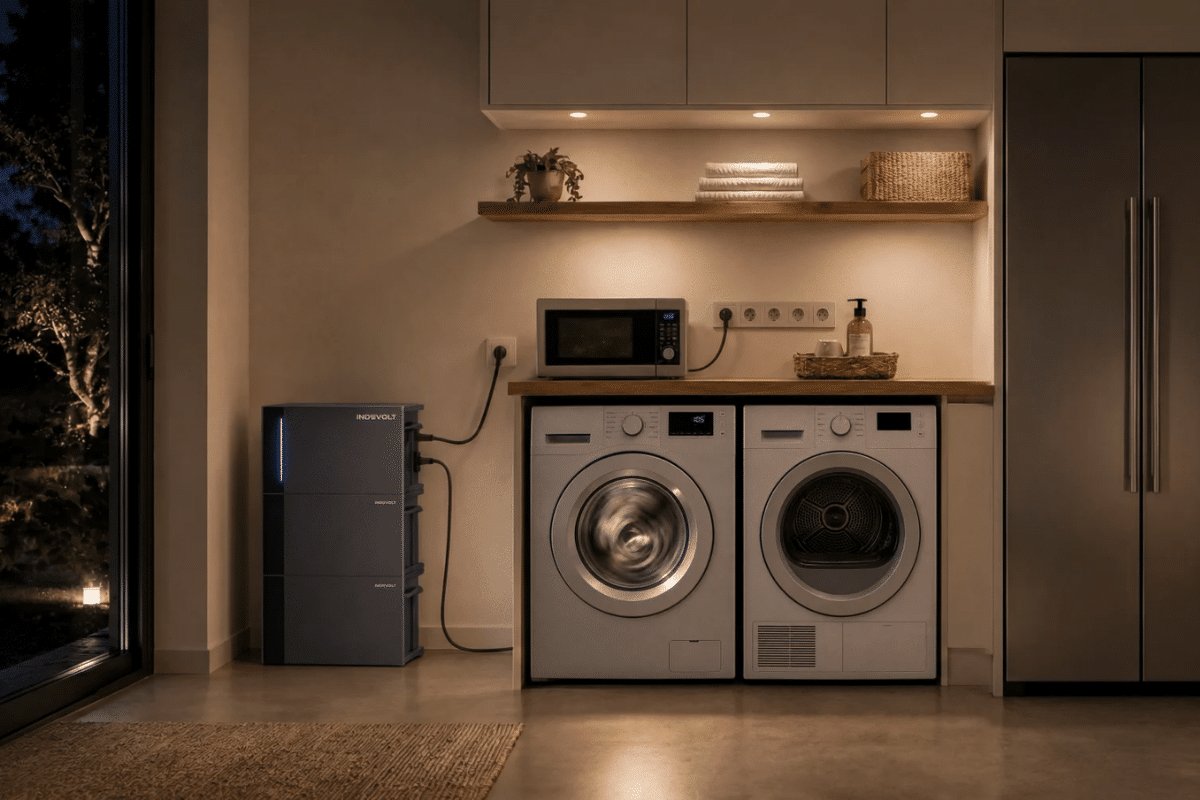
When the grid is unavailable, you can connect an extension lead or suitable power strip to this emergency output and use the stored energy for basic appliances. This can be enough to keep a fridge, router, lamps, phone chargers or other essential equipment running.
A simple backup option
If you only want to keep a few important devices running, a battery with a built-in emergency power socket can provide useful backup without changing your home's electrical installation. The battery already provides the backup outlet, so there is no separate whole-home backup installation required for this basic use. You still need to stay within the battery's maximum output and follow the manufacturer's instructions for connecting appliances, extension leads and power strips.
This type of battery is very different from a professionally integrated whole-home backup system. It is not designed to feed electricity back into your household wiring. Instead, you connect the appliances you want to power directly to the battery. For basic emergency power, however, that simplicity can be a major advantage.
Whole home backup vs selected circuits
When planning battery backup, powering the whole house is not always the best option. For many households, it makes more sense to choose a number of essential circuits and keep those running during an outage.
| Option | What it offers |
|---|---|
| Emergency socket | Suitable for simple backup. Connect an extension lead or suitable power strip directly to a battery with an emergency power outlet. |
| Selected circuits | An integrated system can keep chosen circuits powered automatically, such as lighting, refrigeration and essential sockets. |
| Whole home | The wider electrical installation remains available during an outage, subject to the inverter’s power and the system’s design limits. |
Selected-circuit backup can often be a sensible compromise. You get automatic backup for the appliances that matter most without sizing the battery and inverter around the maximum possible demand of the entire property.
For example, an installer could design the backup around circuits serving your lights, fridge and freezer, internet equipment and selected sockets, while leaving high-demand circuits disconnected during an outage.
An ATS can make backup automatic
Where the battery and electrical installation support it, an automatic transfer switch (ATS) can be part of an integrated backup system. It can switch selected circuits to the battery supply when the grid fails and return them to the normal supply when the grid is restored. The exact arrangement depends on the battery inverter, the property's electrical system and the required protection and isolation. This type of installation should be designed and installed by a suitably qualified professional.
How long can a whole home battery run?
There is no single answer because runtime depends on the battery’s usable capacity and the amount of electricity your home is using.
As a simple example, a battery with 10 kWh of usable energy would theoretically provide 20 hours at an average 500 W load, or 5 hours at an average 2 kW load. Real-world runtime will be shorter because of inverter losses, battery reserve settings and changes in household demand.
This is why backup capacity should be considered alongside your normal electricity use. If you want the battery to keep your home running overnight, the important question is not simply how many kWh the battery has, but how much electricity your home will actually use during the outage.
- Lighting and internet equipment generally use relatively little energy
- Fridges and freezers can usually be supported by a suitable backup system, subject to the inverter’s requirements
- Heating systems can significantly increase electricity demand
- Electric showers, ovens and EV chargers can consume a large part of the available inverter output
- Load management can help preserve battery energy during a longer outage

What should you check before buying a backup battery?
If backup power is important to you, do not compare batteries only by their kWh capacity. First decide how you actually want to use the battery during a power cut.
- Emergency power socket: check whether the battery has a built-in outlet that can provide power during an outage
- Simple plug-in backup: if you only need a few essential appliances, check how the emergency output can safely be used with an extension lead or power strip
- Selected circuits: consider whether you would rather keep specific circuits such as lighting, refrigeration and essential sockets powered automatically
- Whole-home backup: if you want the wider electrical installation available, confirm that the inverter and backup equipment are designed for this
- Maximum backup power: check the inverter’s continuous and, where relevant, peak output
- Usable capacity: look at usable kWh rather than only the headline battery capacity
- Automatic transfer: for integrated backup, establish how the system disconnects from the grid and transfers the selected circuits to the battery
- Solar during an outage: check whether your solar panels can continue charging the battery during a power cut
- Load management: ask how high-power appliances are handled when the grid is unavailable
For many households, the most practical solution is therefore not a system that attempts to run everything. A smaller number of important circuits can provide most of the useful backup while keeping the required battery and inverter size under control.
The installer should be able to explain exactly what will remain powered, the maximum load the system can support and how the battery behaves when the grid fails.
Is whole home battery backup worth it?
For many households, backup is a useful additional benefit rather than the main reason to buy a battery.
If you mainly want to reduce your electricity bill, the battery’s ability to store solar energy or shift electricity use to cheaper periods may be more important. Backup adds another benefit: resilience when the electricity network goes down.
A full whole-home backup system can make sense if you want maximum convenience during an outage and have significant electrical demand. However, a selected-circuit system may provide almost everything you actually need with less complexity.
For some households, a plug-in battery with an emergency power socket may be enough. You can keep a fridge, router, lights and a few essential devices running without changing the home’s electrical installation.
If you are also interested in the financial side of battery storage, our guide to how a home battery can save money explains the main ways a battery can reduce electricity costs. You can also use the Home Battery Calculator to explore battery size, potential savings and payback for your household.
Frequently asked questions
Frequently asked questions
Will a home battery automatically work during a power cut?
No. The battery must be designed and installed for backup operation. A standard grid-connected battery may shut down when the grid fails.
Does a battery need to power my whole house during an outage?
No. A battery can provide useful backup in several ways. A battery with an emergency power socket can supply a few essential appliances through an extension lead or suitable power strip. A professionally integrated system can supply selected household circuits, such as lighting, refrigeration and essential sockets. Whole-home backup is another option, but it requires the battery inverter and electrical installation to be designed for the wider load.
Can a battery power my whole house during an outage?
It can, if the system is designed for whole-home backup. The inverter's maximum power output still limits how many appliances can operate at the same time.
Can a plug-in battery provide emergency power?
Some plug-in batteries have a dedicated emergency power socket. This can allow you to connect selected appliances directly to the battery during a power cut. The battery's output limit and the manufacturer's instructions still apply.
Can I choose which circuits receive backup power?
Yes. An integrated backup system can be designed around selected circuits, such as lighting, refrigeration, internet equipment and essential sockets. This can be more practical than trying to supply the entire house.
Can an ATS switch my home to battery backup?
An automatic transfer switch can be part of an integrated backup system where the battery inverter and electrical installation support it. The system must safely isolate the property from the grid and remain within its electrical limits.
How much battery capacity do I need for backup?
That depends on the appliances you want to run and how long you want them to operate. A household using only essential appliances may need much less energy than a home attempting to maintain normal electricity consumption during a long outage.
Can solar panels keep charging the battery during a power cut?
Some systems can continue using solar generation during an outage, but this depends on the inverter, backup architecture and control system. It should be confirmed for the specific installation.
Find the right battery size for your home
Backup capacity is only one part of the decision. Compare your household consumption, battery size and potential savings before choosing a system.
More articles
-

AC or DC-coupled plug-in home battery: Which setup suits your home?
-

Are home batteries safe? Fire risk and chemistry explained
-

Can you put a home battery outside?
-
How long will a home battery last in a power cut?
-

Plug-in battery vs installed home battery: which makes more sense?
-

How to choose a home battery: a step-by-step guide