
Spain
What a household in Spain should know before buying a home battery: how self-consumption works, tax relief, regional aid, registration and plug-in kits, checked against official sources where we could.
- Mainland Spain; islands differ
- Official sources
- Checked 6 November 2026
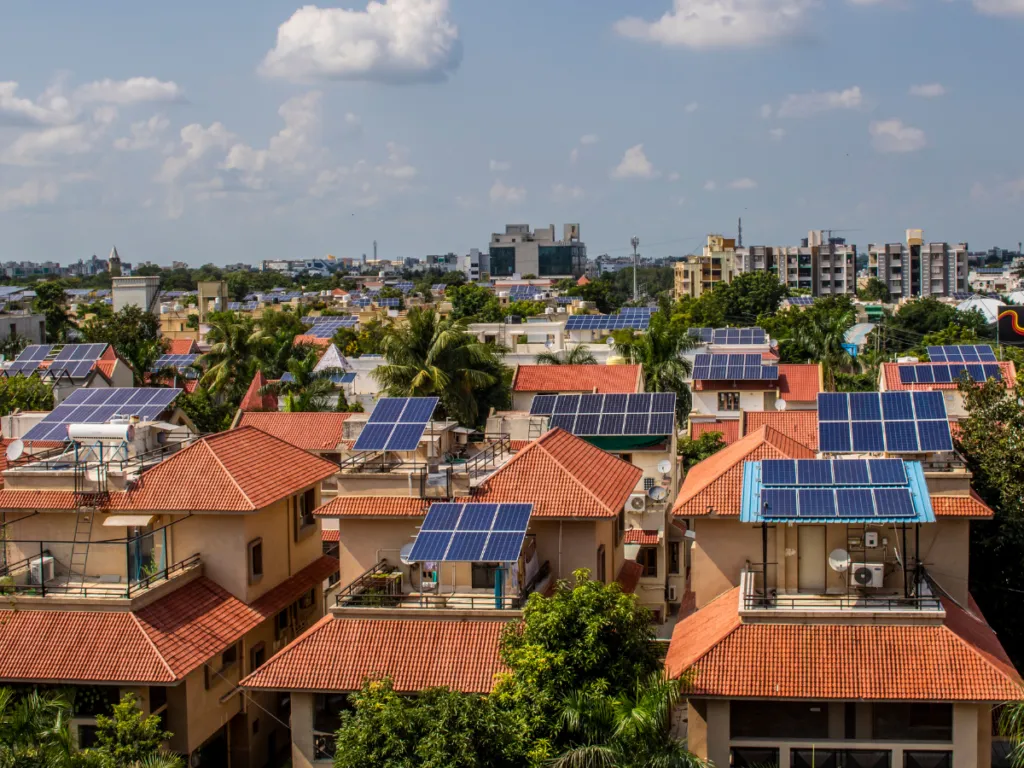
- A battery can be added to any self-consumption set-up in Spain. A home with no export needs an anti-export device; with export you can use simplified surplus compensation for systems of up to 100 kW.
- A new income tax deduction (IRPF) covers self-consumption installations, including storage, that are paid and finished in 2026: 10%, or 20% for a dwelling in a predominantly residential building, with an annual limit of €5,000.
- Electricity VAT went back to 21% on 1 June 2026, according to press reports after the temporary 10% rate lapsed. We found no reduced VAT rate for solar or batteries in the 2026 measures.
- The big Next Generation aid for residential self-consumption and storage was due to be justified by mid-2026. Regional schemes continue: Andalucía's incentive (opened 22 October 2026) offers a base rate of 55%.
- Spanish authorities say plug-and-play kits are legal. Below 800 VA with no export, no installer or electrical certificate is needed; with export or above 800 VA, a dedicated circuit and a certified installer are. We found no rule specific to plug-in batteries.
Last checked
Figures and rules on this page were checked on 6 November 2026 against the sources linked in each section. Prices, schemes and rules change, so open the linked source before you act.
How the Spanish market works
The energy ministry (MITECO) sets energy policy and the national regulator is the CNMC (Comisión Nacional de los Mercados y la Competencia). Self-consumption is governed mainly by Royal Decree 244/2019, which the 2026 emergency measures amended. Your distribution company, for example i-DE (Iberdrola), e-distribución (Endesa) or UFD (Naturgy) depending on your area, owns the meter and connection, while a separate retailer (comercializadora) sells you the electricity.
Reform is still moving. A draft royal decree on self-consumption and storage has been out for consultation since late 2025, with proposals such as exempting batteries from double tolls and charges. The Council of Ministers agreed on 13 October 2026 to process it by urgent procedure but had not approved it, and the Cortes were dissolved for elections on 29 November 2026, so the timing is uncertain (Soly Factura summary of the reform status). Treat any draft as a draft until it is in the BOE.
Electricity prices and tariffs
Households choose between the regulated PVPC tariff, which follows the wholesale price, and a free-market contract with a fixed or indexed price. The CNMC runs a price comparison tool at comparador.cnmc.gob.es. We did not find an official household average per kWh for 2026, so we do not print one here; read the energy price on your own bill, including the access toll for your time band.
VAT on electricity returned to the general 21% rate on 1 June 2026, after a temporary 10% rate lapsed under an automatic clause in Royal Decree-law 7/2026; the special electricity tax also went back to its usual level (Moncloa.com report). This comes from a press report, not the tax authority, so check your latest bill. Bono social discounts for vulnerable households were reported to stay at 42.5% and 57.5% during 2026.
A battery does not lower your fixed charges. What it can change is the price of the electricity you buy, because standard household tariffs charge less at night and at weekends. The arithmetic is in how a home battery saves money, and a battery cannot save more than you use in the evening.
21%
Electricity VAT since 1 June 2026 (press report)
42.5%
Bono social discount, vulnerable consumers (2026)
5 km
Shared self-consumption distance under RDL 7/2026 (was 2 km)
Tariffs that suit a battery
Time-of-use and indexed tariffs are what make a battery pay in Spain. Many free-market offers have three price periods, and PVPC changes by the hour, so a battery that charges cheaply and discharges at expensive hours can capture the gap. An October 2026 comparison lists, for example, one retailer's fixed three-period offer with separate peak, standard and off-peak prices (Xataka Smart Home, 2 October 2026), but a single offer is a snapshot and prices change often, so compare current offers yourself.
Indexed contracts carry price risk. Our explainers on dynamic energy contracts, negative electricity prices and earning money with a home battery on a dynamic tariff cover the mechanics. Check the contract rules for exporting from a battery before you plan around one.
Self-consumption and surplus compensation
Under Royal Decree 244/2019 there are three main modalities (IDAE professional guide). Without export, the installation never feeds the grid and must have an anti-export device. With export and compensation, surplus is credited against your bill, provided the electricity is renewable, the system is 100 kW or less and you have a compensation contract. With export and no compensation, surplus is sold on the market and the producer is registered as a market participant.
Simplified compensation works month by month: surplus kWh create a monetary credit at the price in your contract, which is deducted from that month's electricity bill, and any excess is lost, though some retailers offer a virtual battery that carries it forward. No tolls apply to the energy you feed in, but the credit is always lower than what you pay per consumed kWh. OCU compared 28 tariffs and found fixed surplus prices of €0.06 to €0.176 per kWh (OCU comparison); the date of that comparison is not stated, so check current offers.
The IDAE guide says storage can be installed in all modalities and that the access application must describe the storage capacity. Its FAQ adds that batteries are optional, that they charge before the generation meter and that surplus is only compensated or sold once the battery is full (IDAE self-consumption FAQ; this FAQ dates from 2023). Neither document sets out a separate registration route for batteries.
VAT and tax
The new IRPF deduction is the main national tax benefit in 2026. The Agencia Tributaria describes a deduction of 10% of the amounts paid for self-consumption installations that use renewable energy in a property you own, or 20% for a dwelling in a predominantly residential building, with an annual limit of €5,000. The amounts must be paid in 2026 and the installation must be finished in 2026. Storage systems are included, subsidised amounts are deducted, cash payments are excluded, and a valid electrical installation certificate (CIE) is required (Agencia Tributaria: IRPF changes, Agencia Tributaria news).
We read the annual limit of 5,000 euros as the amount of spending the percentage applies to, which would cap the deduction at €500 or €1,000, but the summary does not spell that out, so confirm with the Agencia Tributaria or your tax adviser before relying on the larger figure. The deduction is claimed in the tax year in which the installation is completed, and it cannot be combined with the energy-efficiency deductions for the same installation.
VAT on equipment and installation follows the rates in force. We found no reduced rate for solar panels or batteries in the 2026 measures, and the IDAE FAQ only says that the current VAT rates apply, so assume 21% unless your installer shows otherwise in writing. Local taxes are different: the same FAQ says councils can grant bonuses of up to 95% on local taxes linked to the works, such as the construction tax (ICIO), at their own discretion, so ask your ayuntamiento.
Grants, loans and regional support
The national Next Generation aid for residential self-consumption, storage and thermal systems was paid out through the regions. IDAE data as of January 2026 showed about €1.72 billion granted of €2.09 billion assigned, with about €640 million paid, and a government official said management and justification had to end by the first half of 2026 under EU rules (Energías Renovables, February 2026). We therefore treat that national programme as closed to new projects, but we could not confirm the closing status in each region.
Regional schemes keep going. Andalucía's incentive under the INEA programme opened on 22 October 2026 with €20.77 million, runs until 30 September 2027 or until the budget is used, and gives a base rate of 55% to individuals. Storage must be part of the same investment, limited to 5 kWh per kW of generation, and at least 75% of the battery's annual charging energy must come from the associated renewable installation. Work started since 1 May 2025 can qualify for individuals (Energías Renovables).
Other regions and many councils run their own calls, and they open and close quickly. We found no other current regional call we could verify, so check your regional energy agency and ayuntamiento before you sign a quote. Check each call: some require you to apply before you commit to the work, while others cover work already started.
Grid connection and registration
The IDAE guide lists the steps (IDAE professional guide). The installer prepares a technical memo for connections up to 10 kW at low voltage, or a project signed by an engineer above that. The installer requests a self-consumption code (CAU) from the distributor and the electrical installation certificate (CIE) is filed with the autonomous community, which passes the data on. You then update your access contract with the distributor and your supply contract with your retailer. Installations with no export are exempt from access and connection permits, as are installations with export of 15 kW or less on urbanised land.
Municipal rules vary: some councils ask for a works licence, a responsible declaration or a prior notice. The guide does not describe a separate registration route for batteries and does not say how storage counts towards the power thresholds, so ask your installer in writing how your case is treated.
The practical risk is paperwork left unfinished. Without a CIE you cannot claim the new income tax deduction. Keep every certificate with your home documents.
Safety, wiring and building rules
Electrical safety in Spain follows the low-voltage regulation (REBT). For self-consumption without export, the IDAE guide cites the REBT instruction ITC-BT-40 for the anti-export device and says the owner is responsible for any grid problems the installation causes. We saw a webinar on 2026 REBT changes for residual-current devices and surge protection, but the consolidated REBT text had no changes on 20 October 2026 according to one summary, so we make no claim about new requirements.
We could not find a Spanish national rule that sets where a home battery may go. Our general guidance is in are home batteries safe: fire risk and chemistry explained and can you put a home battery outside. Ask your installer how the unit meets the manufacturer's clearances and ventilation requirements, and check with your insurer.
In a block of flats, works on common parts such as the facade or roof can need the approval of the owners' community, and some historic areas add municipal limits.
Plug-in solar and plug-in batteries
Spain's self-consumption office answered the question directly in its FAQ: installing plug-and-play kits is legal, with conditions set by power and connection type (IDAE self-consumption FAQ, dated 2023). Kits above 800 VA, with or without export, need a dedicated circuit and an installer who certifies the work. Kits below 800 VA with no export and no dedicated circuit need no installer and no electrical certificate, but the final installation still needs an anti-export system. Below 800 VA with export, a dedicated circuit and a certified installer are always needed.
The FAQ does not discuss batteries inside plug-in kits, and we found no rule for a stand-alone plug-in battery that you connect to a normal socket. Some retailers and blogs claim a general 800 W rule that needs no registration, but we could not confirm that in an official text. Our guides to plug-in versus installed batteries and the balcony power plant with storage explain the practical differences, and the plug-in battery revolution follows how the rules develop across Europe.
The industry is also asking for clearer battery rules. The renewable-energy association APPA has called for specific storage regulation and clearer registration (Energías Renovables). Those are requests, not law.
Outside Spain
The Balearic and Canary Islands, Ceuta and Melilla have their own electricity systems, with different tariffs and support, so some figures above do not apply there. Rules in other countries also differ, so do not apply the figures on this page to a home elsewhere. We are adding guides for other countries to this section. EU battery rules apply across member states; see our explainer on the February 2027 battery registration rule.
Common questions about Spain
Is there a grant for a home battery in Spain?
The national Next Generation aid for residential self-consumption and storage was due to be justified by mid-2026, so treat it as closed. Some regions still run calls: Andalucía's incentive opened on 22 October 2026 with a base rate of 55% for individuals, runs until 30 September 2027 and limits batteries to 5 kWh per kW of generation.
Is there a tax deduction for a home battery in Spain?
Yes, in 2026. The Agencia Tributaria describes an IRPF deduction of 10%, or 20% for a dwelling in a predominantly residential building, for self-consumption installations including storage, with an annual limit of €5,000. The amounts must be paid and the installation finished in 2026, and a CIE is required.
Is there VAT relief on a home battery in Spain?
We found no reduced VAT rate for solar panels or batteries in the 2026 measures, so assume the standard 21% unless your installer shows another rate in writing. Councils can offer bonuses of up to 95% on local taxes such as the ICIO, so ask your ayuntamiento.
Can I sell the electricity my battery stores?
With simplified compensation, surplus from a system of up to 100 kW is credited against your bill at your contract's surplus price, and OCU found fixed prices of €0.06 to €0.176 per kWh across 28 tariffs. Credit is lost if it exceeds the energy you bought that month. Selling on the market requires registration and brings VAT obligations.
Do I need to register a home battery in Spain?
A battery is installed as part of a self-consumption system, so the system is handled through the installer's paperwork, a CIE and the distributor's self-consumption code. The IDAE guide gives no separate registration route for batteries; ask your installer how your case is treated.
Can I plug a battery or solar kit into a normal socket in Spain?
IDAE says plug-and-play kits are legal. Below 800 VA with no export, no installer or certificate is needed; above 800 VA, or with export, a dedicated circuit and a certified installer are. We found no rule specific to plug-in batteries.
Did electricity VAT go back to 21%?
According to a June 2026 press report, yes: the temporary 10% rate lapsed on 1 June 2026 when its automatic clause was triggered. Check your latest bill, because the tax authority's March 2026 note described the 10% rate as running to 30 June.
Work out what a battery would do in your home
Run your own numbers through the same hourly model our guides use, then compare the result with what installers quote.