
Italy
What a household in Italy should know before buying a home battery: the 2026 tax deduction, VAT, selling surplus, energy communities, connection rules and plug-in kits, checked against official sources where we could.
- Mainland Italy and islands
- Official sources
- Checked 6 November 2026
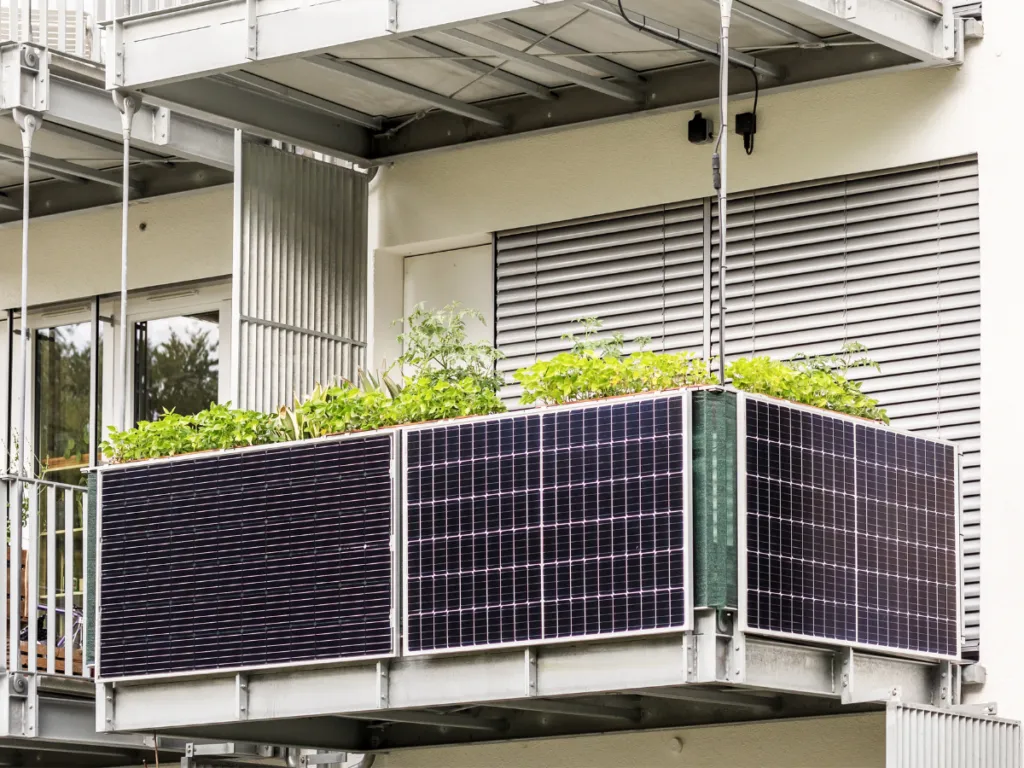
- For 2026, the renovation deduction for a photovoltaic system with storage is 50% on a main home and 36% on other homes, up to €96,000 per property, spread over 10 equal annual instalments. For 2027 one source says 36% for a main home; we could not confirm the rate for other homes.
- A 10% VAT rate applies to a photovoltaic installation on a home, but a ruling reported on 15 October 2026 says a storage system added to an existing, operating plant is charged at 22%. Ask your installer how the invoice treats the battery.
- Scambio sul posto (net metering) has closed to new plants; surplus is sold under ritiro dedicato at prices set by GSE, and there are no feed-in payments for a battery as such.
- Energy communities (CER) can receive an incentive tariff on shared electricity until 31 December 2027 at the latest, for plants up to 1 MW under the same primary substation.
- Plug-in kits of up to 350 W (plug & play) or 800 W (mini-PV) are described as possible with a notification to the network operator. We found no rule specific to plug-in batteries.
Last checked
Figures and rules on this page were checked on 6 November 2026 against the sources linked in each section. Prices, schemes and rules change, so open the linked source before you act.
How the Italian market works
The energy regulator is ARERA (Autorità di Regolazione per Energia Reti e Ambiente). GSE (Gestore dei Servizi Energetici) manages incentives and buys the surplus electricity of small plants, and Terna runs the national transmission grid. Most households are connected to e-distribuzione, part of the Enel group, though other local operators exist. A retailer sells you the electricity, so the retailer decides your price and the network operator decides how your plant is connected.
Many households are on the free market. A protected regime (Maggior Tutela) remains for vulnerable customers, which is the one ARERA publishes quarterly. That distinction matters when you read price headlines, as we explain below. The reform of the rules for storage and self-consumption is slow, and we found no new national battery law in 2026.
Electricity prices and tariffs
ARERA published a reference price for vulnerable customers in the Maggior Tutela regime: from 1 October 2026 it is 43.43 euro cents per kWh including taxes, a rise of +37.3% compared with the previous quarter, for 1 October to 31 December 2026. ARERA attributes it to higher wholesale costs linked to high gas prices (ARERA press release, 29 September 2026). The same release puts the typical vulnerable customer's spend for calendar year 2026 at €665.38, about 9.3% above 2025.
This applies only to the roughly three million vulnerable customers in that regime, not to every household. Most households are on a free-market contract, with a fixed or variable price, so read your own bill and compare current offers before you plan a battery around any one price.
A battery does not reduce your standing charges. What it can change is the price of the electricity you buy, by letting you use cheaper hours later. The savings are limited by what your home uses in the evening and at night, which is why we size a battery to your own use; see how a home battery saves money.
43.43 c
Vulnerable-customer reference price per kWh incl. taxes, from 1 October 2026 (ARERA)
+37.3%
Change versus previous quarter (ARERA)
€665.38
Typical vulnerable customer's spend, calendar year 2026
Tariffs that suit a battery
A battery pays only if there is a price gap to use. Italian households can have time-banded contracts, where night and weekend electricity costs less, or variable contracts that follow the wholesale price. We have not compared current Italian offers, so check them on the retailers' own sites and make sure your meter supports the band structure you want.
The mechanics of buying cheap and using later, including the risks of variable contracts, are in dynamic energy contracts and how to actually save and negative electricity prices explained.
Selling surplus: ritiro dedicato and the end of scambio sul posto
Scambio sul posto, the net-metering scheme, has been phased out. One report says plants that entered service by 29 May 2025 could still apply in a transitional window that ended on 26 September 2025, and that the scheme is replaced by ritiro dedicato, a direct sale of unused grid-fed energy to GSE at a set price per kWh, under article 9 of Legislative Decree 199/2021 (Money.it, 10 March 2025). Confirm your case with GSE. The same report says existing exchange agreements cannot be renewed fifteen years after the first agreement.
GSE publishes how ritiro dedicato payments are calculated (GSE: ritiro dedicato). We could not read the 2026 minimum guaranteed prices, so check GSE for the current figures. In short, exported surplus earns a market-linked price that is much lower than what you pay for electricity, so a battery that raises your own use is compared with that low export value.
Tax deduction and VAT
The renovation deduction (bonus ristrutturazione) covers photovoltaic systems. For 2026 the rate is 50% for a main home and 36% for other homes, with a spending cap of €96,000 per property, paid back over 10 equal annual instalments through your tax return (Money.it). The 2026 budget law is reported to confirm 50% for main homes in 2026 and to cut it to 36% in 2027 (MySolution); we could not confirm the 2027 rate for other homes. We could not read the Agenzia delle Entrate's own pages, so check the rates for the year you pay.
Batteries installed together with the PV system on the same invoice are reported to follow the same rate and share the same cap (QualEnergia: batteries and the 50% and 36% deductions). Keep the bank transfer evidence your installer asks for, and ask whether an ENEA communication is needed for your project; we did not verify the ENEA rule.
A reduced VAT rate of 10% applies to PV installation on a home, instead of 22%, and the installer applies it on the invoice. A ruling (risposta ad interpello n. 181 of 15 October 2026, as reported by Fiscozen) says supplying and installing a battery storage system for a plant that is already authorised and operating cannot get the 10% rate, with a possible exception when the storage is part of the original construction under a single contract (Fiscozen report). We could not check the ruling on the Agenzia's own site, so ask your installer to state the VAT rate on the battery line and keep the contract that shows how the plant and storage were ordered.
Grants and support schemes
Conto Termico 3.0, a GSE grant, is described as funding PV and batteries for private homes only when they accompany replacing the heating with an electric heat pump, and it is an alternative to, not combinable with, the tax deduction (Money.it). The reddito energetico, a grant for households with an ISEE below €15,000, had a €200 million fund for 2024 and 2025, and the same source says a 2026 refinancing was not confirmed.
Energy communities (CER) are the other route. GSE says plants of 1 MW or less in a configuration that share the same primary substation can receive the incentive tariff, which can be requested until the 30th day after the 5 GW quota is reached and no later than 31 December 2027. The capital grant of up to 40% for plants in municipalities with fewer than 5,000 inhabitants had an application deadline of 31 March 2025 and required entry into service by 30 June 2026 (GSE: self-consumption groups and energy communities). A household cannot use these simply by buying a battery; they need a legal configuration with neighbours.
Regions and municipalities sometimes run their own calls. We found no current regional call we could verify, so ask your region and comune. Terna's large storage auction (MACSE) targets utility-scale storage, not households, to our understanding.
Grid connection and registration
For a plant, the producer files a connection request through the distributor's Portale Produttori. In e-distribuzione's May 2026 connection guide, the fee for a request up to 6 kW is €30 plus VAT and up to 10 kW is €50 plus VAT. The distributor should issue a quote within 20 working days for requests up to 100 kW, and the quote is valid for 45 working days. CEI 0-21 is the technical rule for connections up to 1 kV, which includes typical homes (e-distribuzione connection guide, May 2026).
After the quote is accepted and the works are authorised, the producer registers the plant in GAUDÌ, the national plant register, and signs an operating regulation (regolamento di esercizio) before activation. The guide has a section on storage systems, which we could not read, so ask your installer how your battery is declared and who files it.
Your installer normally handles this paperwork. Ask for copies of the quote, the registration and the signed regulation when the job ends, and keep them with your home documents.
Safety, wiring and building rules
The connection must follow CEI 0-21, and you should ask your installer for the declaration of conformity of the electrical work. We could not find a single Italian national rule that sets where in a home a battery may go. Our general guidance is in are home batteries safe: fire risk and chemistry explained and can you put a home battery outside.
Ask your installer which fire-safety rules apply to your battery's size and location, and tell your home insurer before installation. For a listed or landscape-protected building, a permit from the heritage authority may be needed. In a condominium, article 1122-bis of the Civil Code allows renewable energy systems serving individual units, but works that harm shared parts or the building's decorum can be challenged.
Plug-in solar and plug-in batteries
Italy has no 800 W plug-in law like Germany's, but one professional guide describes a simplified route (Studio Madera guide). It classes plug & play systems up to 350 W, usually one panel, and mini-PV from 350 W to 800 W, usually with a micro-inverter. Both are said to use a single notification (comunicazione unica) to the network operator, and to require giving up payment for surplus, with one plug & play unit per connection point. Above 800 W the ordinary connection process applies.
The same guide says the systems on the market do not include batteries, and it does not discuss plug-in batteries. We found no rule specific to a plug-in battery. Ask your network operator before you buy any kit. Our comparison of plug-in and installed batteries and the balcony power plant guide explain the practical difference, and the plug-in battery revolution follows how the rules develop across Europe.
Outside Italy
Sicily, Sardinia and the smaller islands can have different local operators and support, so check your area. Rules in other countries also differ, so do not apply the figures on this page to a home elsewhere. We are adding guides for other countries to this section. EU battery rules apply across member states; see our explainer on the February 2027 battery registration rule.
Common questions about Italy
Is there a tax deduction for a home battery in Italy in 2026?
Yes. For 2026 the renovation deduction is 50% on a main home and 36% on other homes, up to €96,000 per property, spread over 10 years, and batteries installed with the PV system on the same invoice are reported to qualify. One source says the main-home rate falls to 36% in 2027. Check the rate for the year you pay.
Is there VAT relief on a home battery in Italy?
A 10% rate applies to PV installation on a home instead of 22%. A ruling reported on 15 October 2026 says a battery added to an existing, operating plant is charged at 22%, with a possible exception when it is ordered with the original construction. Ask your installer to state the rate on the battery line.
Can I sell surplus electricity in Italy?
Yes, through ritiro dedicato: GSE buys unused grid-fed electricity at a set price per kWh. Scambio sul posto has closed to new plants. We could not read GSE's 2026 guaranteed prices, so check GSE for current figures.
What is an energy community and can a battery help?
A renewable energy community (CER) shares electricity within a configuration, and GSE pays an incentive tariff on shared energy for plants up to 1 MW under the same primary substation, requestable until 31 December 2027 at the latest. A battery can be part of a plant, but you need a legal configuration with neighbours.
Do I need to tell the network operator about a home battery?
A plant with a battery goes through the distributor's connection process, with a request via the Portale Produttori, CEI 0-21 compliance, registration in GAUDÌ and an operating regulation. Your installer should handle it; ask which steps apply to your battery.
Can I plug a battery or solar kit into a normal socket in Italy?
One professional guide describes a simplified route for plug & play systems up to 350 W and mini-PV up to 800 W, with a notification to the network operator. We found no rule for plug-in batteries and could not check the guide against the operator's own text.
Did electricity prices rise in late 2026?
For vulnerable customers in the Maggior Tutela regime, ARERA set a reference price of 43.43 euro cents per kWh from 1 October 2026, up 37.3% on the previous quarter. This does not apply to every household, and free-market contracts are priced by the retailer.
Work out what a battery would do in your home
Run your own numbers through the same hourly model our guides use, then compare the result with what installers quote.