
Germany
What a household in Germany should know before buying a home battery: prices, tax, feed-in payments, grid and safety rules and plug-in solar, checked against official sources.
- Federal rules plus 16 federal states
- Official sources
- Checked 6 November 2026
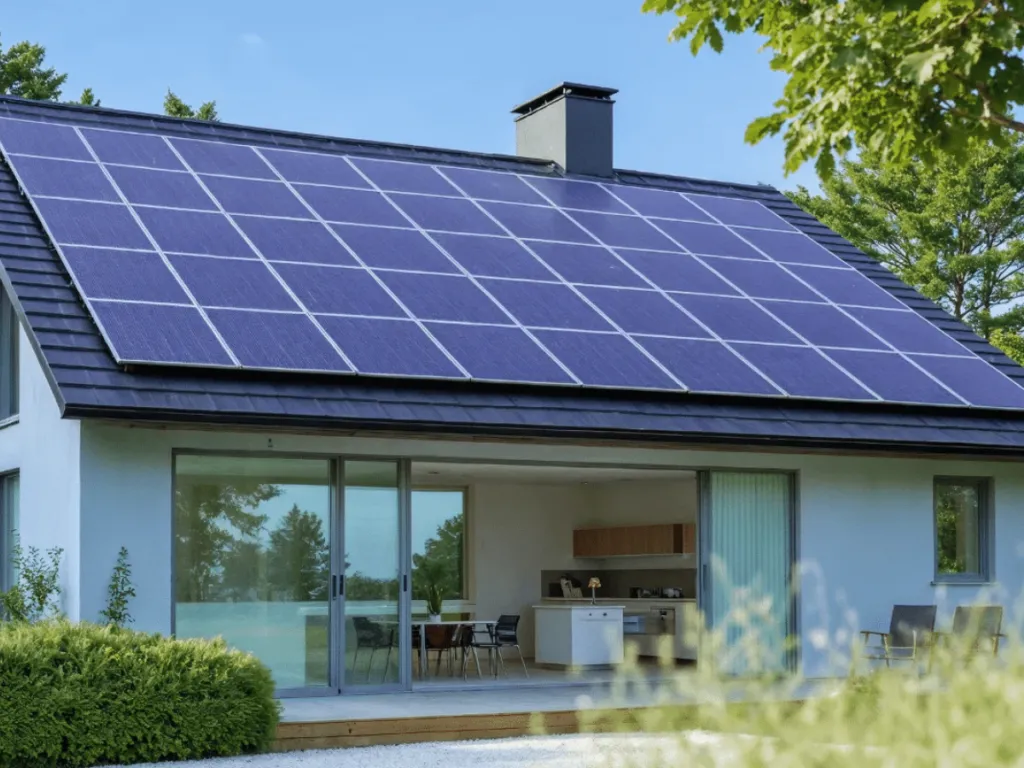
- BDEW puts the average German household electricity price at 37.3 ct per kWh (October 2026, new-customer tariffs, 3,500 kWh a year); 12.6 ct of that is taxes, levies and surcharges and 9.24 ct is network charges.
- Solar panels and home batteries installed on or near a home (up to 30 kWp) have been taxed at 0% VAT since 1 January 2023, with no end date in the law. Check your quote says so.
- New rooftop systems commissioned from 1 August to 31 December 2026 get 7.70 ct per kWh exported (up to 10 kWp, partial feed-in). The cabinet's 2027 EEG reform would end the fixed rate for new small systems, but it was not yet law when we checked.
- We found no federal grant for a home battery on its own. The KfW 270 loan is mainly open to people who feed power into the grid, and state and municipal grants vary and often run out.
- Plug-in solar up to 800 W needs only a Marktstammdatenregister entry. A plug-in battery is not covered by the plug-in product standard, and storage still has to be registered with the grid operator too.
Last checked
Figures and rules on this page were checked on 6 November 2026 against the sources linked in each section. Prices, schemes and rules change, so open the linked source before you act.
How the German market works
The Bundesnetzagentur (Federal Network Agency) regulates the electricity market and also runs the Marktstammdatenregister (MaStR), the central register where solar systems and batteries must be entered. Federal law sets the main rules, including the Renewable Energy Sources Act (EEG) and the Energy Industry Act (EnWG). Building and fire rules are set by each of the 16 federal states.
Three different parties usually sit between you and the power station. A local grid operator (Netzbetreiber) owns the cables and decides how your battery is connected. A metering operator (Messstellenbetreiber) installs and reads your meter, and in most homes this is the same company as the grid operator. A supplier (Lieferant) sells you the electricity and sets the tariff. Because they are separate, a good deal from your supplier does not change the grid connection rules, and the other way round.
Electricity prices and network fees
BDEW, the German energy industry association, puts the average household price at 37.3 ct per kWh in its October 2026 price analysis. The figure is for a household using 3,500 kWh a year on new-customer tariffs, with a share of the basic charge included. 15.41 ct of the price is procurement and sales, 9.24 ct is network charges and 12.6 ct is taxes, levies and surcharges, which include electricity tax of 2.05 ct per kWh (BDEW electricity price analysis, October 2026). Your own price depends on your contract and your region.
BDEW reports that network charges were 1.7 ct per kWh lower than a year earlier and attributes this to a federal subsidy towards the transmission network charges. Network charges are set per grid area, so two neighbouring regions can pay quite different amounts.
With a normal fixed tariff, each kWh a battery supplies replaces a kWh you would otherwise have bought at your full price. Whether that pays back depends on how much solar power you have left over and how much electricity you use in the evening and at night. We explain the arithmetic in how a home battery saves money. The Verbraucherzentrale's rule of thumb is about 1.5 kWh of capacity per 1,000 kWh of annual consumption, and it puts installed prices at roughly €300 to €700 per kWh of capacity for systems from 5 kWh (Verbraucherzentrale: do home batteries pay off?, 2 July 2026).
37.3 ct
Average household price per kWh, new-customer tariffs (BDEW)
9.24 ct
Of which network charges per kWh
12.6 ct
Of which taxes, levies and surcharges per kWh
Dynamic tariffs and smart meters
Since 1 January 2025 every electricity supplier has to offer a dynamic tariff to customers who have a smart meter (an intelligent metering system), according to the Verbraucherzentrale. In a dynamic tariff only the wholesale price part changes by the hour. Network charges, taxes and levies stay fixed, so you still pay per kWh when exchange prices are negative. The consumer advice service does not recommend dynamic tariffs for typical households, and says they mainly suit homes that can shift a large, flexible load, such as an electric car, a heat pump or a battery (Verbraucherzentrale: dynamic tariffs, October 2025).
Our guides cover the opportunity and the risk: dynamic energy contracts and how to actually save, earning money with a home battery on a dynamic tariff and negative electricity prices explained.
A smart meter is compulsory for households using more than 6,000 kWh a year, for generation systems above 7 kW, and for controllable devices under § 14a EnWG (see the next section). Since January 2025 any consumer can ask the default metering operator for an early installation, which has to be done within four months of the order. The Verbraucherzentrale lists annual price caps (gross) such as €30 for optional installations where the operator decides, €50 for solar systems up to 15 kW and €110 for 15 to 25 kW, plus a separate fee for the control equipment in some cases. All metering points are meant to have a modern meter by the end of 2032 (Verbraucherzentrale: smart meters, 10 August 2026). Check your metering operator's price sheet before you order.
Controllable devices and reduced grid fees (§ 14a EnWG)
Since 1 January 2024 new wallboxes, heat pumps, air conditioners and battery storage with a grid power draw above 4.2 kW count as controllable consumption devices. For a battery this applies only to charging from the grid. In return the grid operator must give you reduced network charges, through a flat annual reduction (module 1), a lower energy price on a separate meter (module 2) or, from April 2025, time-variable network charges (module 3, only combined with module 1). Two batteries operated together are treated as one system, and the grid operator may only reduce your draw to 4.2 kW to prevent a concrete overload (Bundesnetzagentur: § 14a EnWG).
A home battery below 4.2 kW of grid draw is generally not covered. The reduction is not always passed on automatically by suppliers, so ask what your contract does with it.
Getting paid for exports: EEG feed-in tariff and the Solarspitzengesetz
Under the EEG, the grid operator pays a fixed rate for each kWh a solar system sends into the grid, for a regular support period of 20 years. For rooftop systems commissioned from 1 August to 31 December 2026, the Bundesnetzagentur lists 7.70 ct per kWh for surplus (partial) feed-in and 12.22 ct for full feed-in, for the first 10 kWp of a system. The part of a system between 10 and 40 kWp gets 6.66 ct (partial) or 10.24 ct (full). Systems commissioned earlier keep their original rates (Bundesnetzagentur: EEG feed-in rates). The rate for new systems is adjusted every six months.
A battery changes how much you export, not the tariff. With partial feed-in you use solar power first and sell what is left. A battery lets you keep more of that surplus for the evening, so you buy less from the grid but also export less. Whether this is worth it depends on your price per kWh against the feed-in rate, which is far lower than the price you pay.
The Solarspitzengesetz (Solar Peaks Act), in force since late February 2025, added two rules for new systems. First, the feed-in payment stops in hours when exchange prices are negative, with exceptions for very small systems, and the lost hours can be made up after the regular 20-year support period. Second, new systems without a smart meter and control equipment may initially feed in only 60% of their rated power. The cap limits power, not total energy, and it ends once the required technology is installed. The same law lets batteries be charged from the grid and feed back later in some set-ups, but only under direct marketing, so ask an installer before you rely on it (co2online: Solarspitzengesetz).
7.70 ct
Partial feed-in, up to 10 kWp, commissioned 1 August to 31 December 2026
12.22 ct
Full feed-in, same size and period
20 years
Regular support period
The 2027 EEG reform (not yet law)
The federal cabinet adopted a draft EEG amendment and a grid connection package on 29 July 2026. According to industry reports, the draft ends the permanent fixed feed-in tariff for new solar systems under 25 kW from 1 January 2027. It replaces it with a transition payment of about 1 ct per kWh below the applicable rate for a limited time (reported as up to 36 months), with size limits that get tighter over 2027 to 2029. A new system would also be limited to feeding in 50% of its rated power, unless the power is consumed on site or stored, which would make a battery more attractive. Systems already connected, or connected by the end of 2026, would keep their 20-year rates. Plug-in solar up to 2 kW would be exempt (enerix summary of the cabinet decision; ZfK on the concession). These sources are trade reports, not the bill itself, and they differ slightly on the details.
The bill was still in Parliament. On 16 October 2026 the renewable energy federation BEE expected the second and third readings in the Bundestag in the week of 9 to 13 November 2026 and the Bundesrat on 20 November 2026, and warned that entry into force on 1 January 2027 was uncertain because the EU Commission also has to approve it under state-aid rules (Solarserver on the BEE statement). Check the Bundestag and Bundesnetzagentur websites for the final text before you decide on timing.
VAT and tax
Since 1 January 2023 the supply and first installation of solar panels, inverters and home batteries has been zero-rated for VAT (§ 12 Abs. 3 UStG) where the system is installed on or near a home, up to a gross output of 30 kWp per building. Plug-in solar kits are included. Maintenance and repairs are still charged at the standard 19% rate. The zero rate has no end date in the law, and a tax guide we checked reports no political plans to abolish it (mehrwertsteuerrechner.de on the zero rate). We could not open the Federal Ministry of Finance's own FAQ, so check it for edge cases such as a battery added years after the panels (Bundesfinanzministerium: PV FAQ).
Income from small solar systems is also exempt from income tax under § 3 Nr. 72 EStG. Ask a tax adviser about the exact limits and about any business-tax registration for your situation.
Loans, grants and support schemes
The Verbraucherzentrale does not mention any federal grant for batteries. At federal level there is a loan: the KfW programme 270 "Renewable Energies - Standard" finances solar systems and battery storage, including retrofits. Private households are not generally eligible. A private person can apply if they run a commercial or freelance activity, and the KfW leaflet treats an owner of a solar system who feeds part of the power into the grid as commercially active. You apply through a bank of your choice, before the project starts. We have not quoted an interest rate because it depends on the bank and on your credit rating (KfW leaflet for programme 270, May 2025; KfW: photovoltaics).
Some federal states, municipalities and utilities offer their own grants or loans for batteries, usually with a new solar system. These programmes often run out quickly and may reopen later (Verbraucherzentrale). The energy advice site co2online lists examples, including a loan for storage from the Saxon development bank SAB and municipal programmes in places such as Friedrichshafen, Waiblingen, Neuburg an der Donau and Marburg (co2online: battery funding list). We could not confirm amounts or whether these are still open, so check the scheme page for your address before you count on a grant.
Some grants require work to start only after approval, or require a particular plug type or installer. Read the conditions first.
Grid connection and registration
Every battery has to be reported to the grid operator, and it also has to be entered in the Marktstammdatenregister. The industry body VDE FNN says all electrical storage must be registered with the grid operator under the VDE-AR-N 4100 rules, and storage that only runs as an island system does not need registering (VDE FNN guidance on storage, version 7.1, July 2024; newer versions may exist). The Bundesnetzagentur requires registration in the MaStR within one month of commissioning, and feed-in payments are not due until it is done. A missing registration on its own delays payments, and a penalty only applies if the annual EEG report is also missed (Bundesnetzagentur: solar installations and registration).
The VDE FNN guidance sets some technical points that your installer should handle: single-phase connections are possible up to 4.6 kVA but a symmetrical three-phase design is preferred, the system needs grid protection and a sensor that prevents unwanted draw or feed-in, and the commissioning check is recorded in a protocol by an electrical contractor entered in the grid operator's installer register. Battery energy drawn from the grid may not later be fed back as remunerated EEG power.
Registration is the owner's duty even when an installer does it for you, so ask for the MaStR number. EU rules on battery registration are covered in our news item on the new EU rule that home batteries over 2 kWh must be registered by February 2027.
Safety, wiring and building rules
We found no single German statute that sets fire safety rules for home batteries. Fire and building rules sit in each state's building code, and the technical standards are voluntary guidance. VDE-AR-E 2510-50 is an application rule (2017) for the safety of stationary lithium battery systems in private and small commercial use. A free 24-page safety guide for lithium-ion home storage, written by the German solar and storage associations and the electrical trade association, is an industry recommendation and is not binding (VDE-AR-E 2510-50; Sicherheitsleitfaden Li-Ionen Hausspeicher).
In practice, choose a certified product, have a specialist company install it, and ask in writing where it will be placed. The Verbraucherzentrale suggests a dry room such as a cellar, away from high or low temperatures, and notes that the meter cabinet may need changes (Verbraucherzentrale). Our guides explain fire risk and battery chemistry and whether a battery can go outside.
Tell your building insurer before installation and ask whether the battery's location affects your cover.
Plug-in solar and plug-in batteries
Plug-in solar devices (Balkonkraftwerke) are allowed with up to 800 W AC output at the inverter and up to 2,000 Wp of modules. You enter the device in the Marktstammdatenregister with a simplified form that asks for five details: module power, inverter power, location, commissioning date and meter number. Since the Solarpaket I in May 2024 you no longer register with the grid operator, and the Bundesnetzagentur passes the details on. An old backwards-running meter is tolerated until the operator replaces it, and exported power is not paid (Verbraucherzentrale: laws and standards for plug-in solar, 21 October 2026).
The product standard DIN VDE V 0126-95 has applied since 1 December 2025. A normal Schuko plug is allowed for module power up to 960 W; above that, the standard requires a special feed-in socket installed by an electrician. Since October 2024 a landlord may refuse a plug-in device only if the installation would be unreasonable for them (Verbraucherzentrale: plug-in solar FAQ).
Batteries are different. The Verbraucherzentrale says the product standard covers devices without storage, and that a separate standard for devices with storage is being prepared. For now, storage in a plug-in set-up follows the ordinary battery rules: it has to be registered in the MaStR and with the grid operator. Up to 800 W feed-in, VDE-AR-N 4105 allows a simplified procedure (form F.1.2) that you can fill in yourself, but not every grid operator accepts it yet, and until 1 March 2027 operators may still apply the earlier version of the rule (Verbraucherzentrale; MaStR FAQ). Our guides compare plug-in and installed home batteries and explain balcony power plants with storage, AC and DC coupling and the plug-in battery trend.
Outside Germany
Rules, tariffs and incentives for home batteries differ from country to country, so do not apply the figures on this page to a home elsewhere. See the other guides in this section for other countries.
Common questions about Germany
Is there a grant for a home battery in Germany?
We found no federal grant for a home battery on its own. The KfW 270 loan finances batteries, but private households are not generally eligible; it is aimed at people who run a commercial activity, which can include feeding solar power into the grid. Some federal states, municipalities and utilities offer grants, often with a new solar system, and these can run out quickly.
Is there VAT on a home battery in Germany in 2026?
Not on a battery installed with or on a solar system at a home, up to 30 kWp per building. The supply and first installation are zero-rated for VAT under § 12 Abs. 3 UStG, in force since 1 January 2023 with no end date in the law. Maintenance and repairs carry 19%.
What is the current feed-in tariff in Germany?
For rooftop systems commissioned from 1 August to 31 December 2026, the rate is 7.70 ct per kWh for surplus feed-in and 12.22 ct for full feed-in, for the first 10 kWp. Systems already connected keep their rates. A cabinet draft would end the fixed rate for new small systems from 2027, but it was not law when we checked.
Do I have to register a home battery?
Yes. Enter it in the Marktstammdatenregister within one month of commissioning, and report it to your grid operator. Your installer usually does the paperwork, but registration is the owner's duty, so ask for the confirmation.
Can I plug a battery into a normal socket in Germany?
Plug-in solar up to 800 W is allowed, but the plug-in product standard covers devices without storage, and a separate standard for storage is in preparation. A battery still has to be registered with both the Marktstammdatenregister and the grid operator. A simplified procedure exists up to 800 W, but not every operator accepts it yet.
Do dynamic electricity tariffs work with a home battery?
They can, because a battery lets you shift use to cheap hours. All suppliers must offer a dynamic tariff to customers with a smart meter, but taxes and network charges stay fixed, and consumer advisers warn that it is not suitable for every household. Compare the real cost, not the lowest hourly price.
What are the rules for a battery under § 14a EnWG?
Battery storage with a grid draw above 4.2 kW counts as a controllable device since 1 January 2024, for charging only. The grid operator can then reduce your draw only to prevent overload, and you get reduced network charges in return. Smaller batteries are generally not covered.
Will the 2027 EEG reform change what I get for exported solar power?
The cabinet draft would replace the fixed feed-in tariff for new small systems with a shorter transition payment and a 50% feed-in limit, while existing systems would keep their rates. It was still in Parliament on our check date, so follow the Bundestag and Bundesnetzagentur announcements.
Work out what a battery would do in your home
Run your own numbers through the same hourly model our guides use, then compare the result with what installers quote.