
Belgium
What a Belgian household should know before buying a home battery. Energy rules differ between Flanders, Wallonia and Brussels, so this guide explains each region separately, checked against official sources where we could.
- Flanders, Wallonia and Brussels
- Official sources
- Checked 6 November 2026
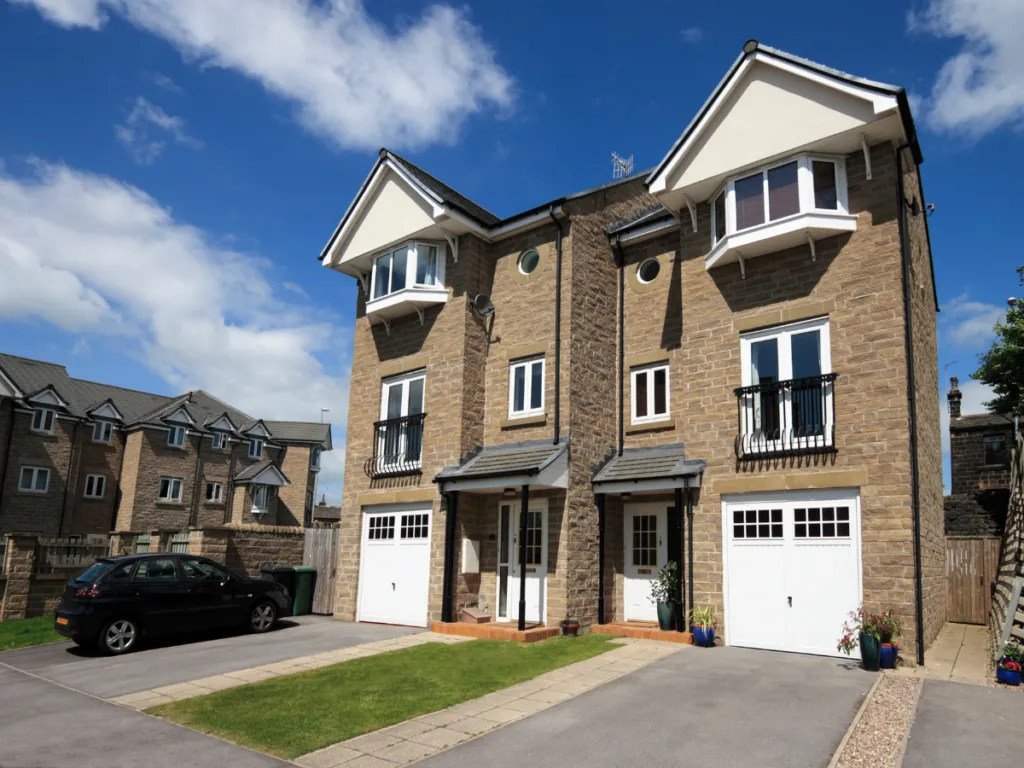
- Energy is a regional responsibility in Belgium. Flanders, Wallonia and Brussels each have their own regulator, network operators, tariffs and meter rules, so check the rules of the region where the home is.
- Flanders charges a capacity tariff based on your monthly peak, with a minimum of 2.5 kW. For 2026 it ranges from €51.99 to €60.53 per kW per year including VAT, depending on the Fluvius area.
- The Flemish battery premium is closed: the desk shut for good on 1 July 2026, and no premium was paid for batteries commissioned from April 2023. We found no purchase subsidy for batteries in Brussels, or in Wallonia.
- We could not confirm the VAT rate on a battery with the federal tax administration. Installer sites report 21%, and a reduced 6% rate is tied to renovation work on older homes, so get the rate in writing on your quote.
- Plug-in solar and batteries have been allowed in Flanders since 17 April 2025, but only Synergrid-homologated devices, and notification to Fluvius depends on power and meter type.
Last checked
Figures and rules on this page were checked on 6 November 2026 against the sources linked in each section. Prices, schemes and rules change, so open the linked source before you act.
How the Belgian market works
Belgium splits energy responsibility between the federal state and three regions. The federal regulator CREG covers the national level, while each region has its own regulator and its own rules for distribution networks and tariffs: VREG in Flanders, CWaPE in Wallonia and BRUGEL in Brussels.
The company that connects you to the grid also depends on where you live. Fluvius runs the distribution networks in Flanders, ORES, RESA, AIEG and AIESH operate in Wallonia, and Sibelga in Brussels. A separate supplier sells you the electricity. The supplier decides your contract and what you are paid for exports, while the network operator decides how your battery is metered and connected.
Electricity prices and tariffs
Prices vary a lot by region, supplier and contract. As a snapshot, the comparison site Selectra reported an all-in average of €0.4591 per kWh for a Flemish household in November 2026, based on 65 non-dynamic contracts for a home using 3,500 kWh a year with a digital meter. This is Selectra's own database, not a regulator figure, and it covers Flanders only (Selectra: electricity prices).
The same page lists the cheapest annual cost at 3,500 kWh as €1,277 in Flanders, €1,368 in Wallonia and €1,623 in Brussels. Those are single best offers, not averages, and network costs differ by region, so use them only to see that the three regions are not comparable.
Dynamic and time-of-use contracts are what usually make a battery worthwhile. We explain the arithmetic and the contracts in how a home battery saves money, dynamic energy contracts and earning with a battery on a dynamic tariff.
€0.4591
Average Flemish all-in price per kWh, Selectra, Nov 2026
€51.99 to €60.53
Flanders capacity tariff per kW per year, 2026
2.5 kW
Minimum capacity charged in Flanders
Flanders: the capacity tariff
In Flanders, part of your network cost depends on your electricity peaks, not only on how many kWh you use. Each peak is a 15-minute average, your highest peak of each month is recorded, and the average of the 12 monthly peaks sets the charge. Every household pays for at least 2.5 kW. The tariff has applied since 1 January 2023 (CallMePower: capacity tariff, updated 26 October 2026).
For 2026 the rate per kW per year, including VAT, ranges from €51.99 in the Limburg area to €60.53 in the West area. CallMePower illustrates the cost with an average Flemish peak of 4.24 kW, which gives about €220 to €257 a year depending on the area. Rates are revised each year, so check your invoice.
A battery can in principle flatten your peaks, for example by supplying a short high-power load such as an induction hob or a charging car. How much it saves depends on your own usage and on how the battery is controlled, and the source we used does not quantify the effect, so we do not either.
Flanders: meters and exporting
The Flemish government ties the end of the reversing meter (terugdraaiende teller) to a Constitutional Court ruling of 14 January 2021, and installations commissioned from 1 January 2021 are not covered by its compensation scheme. It also says that from 2025 solar owners must have a digital meter. The prosumer tariff, a charge paid by owners who still have an old meter, falls away automatically once the digital meter is installed (Vlaanderen.be).
The one-off compensation for owners of older installations needed an application by 31 December 2025 and is closed. For electricity you export, you are paid by your supplier according to your contract, so compare the injection price as well as the price you pay.
Wallonia: prosumer tariff and new tariffs
Wallonia has had a prosumer tariff since 1 October 2020. It is based on the capacity of your installation (a flat charge per kWe) or, with a two-way or smart meter, on the kWh you actually take from the grid. The Walloon compensation prime that covered part of it ran only for 2020 to 2023, and from 2024 there is no support (Wallonie.be, updated 23 July 2026).
A comparison site gives an average 2026 flat rate of €86.96 per kWe per year including VAT for the operator ORES, with a higher charge than in 2024. The page contradicts itself on some points, so treat it as indicative and ask your network operator for your own rate (Energy Village).
New distribution tariffs for 2026 to 2029 were approved by CWaPE on 26 June 2025. From 1 January 2026 off-peak hours are 11:00 to 17:00 and 22:00 to 07:00 every day, and an optional IMPACT tariff for smart meters has cheaper and more expensive time bands. Source: the prosumer association BeProsumer, which interprets the decisions. The same source says owners with a meter that still runs backwards keep that arrangement until the end of 2030 for installations commissioned before 2024. We could not find CWaPE's own text, so confirm this with your operator.
Brussels: no net metering, green certificates
In Brussels net metering was abolished in 2021, so you need a two-way meter and your supplier buys your surplus without network tariffs or taxes at a price that varies. BRUGEL, the regional regulator, said in 2018 that it would not introduce a flat prosumer tariff in Brussels and prefers billing on measured flows (Homegrade, updated July 2026; BRUGEL, 2018).
Green certificates (certificats verts) for solar are still granted for 10 years. From 1 April 2026 the rate is 2.055 certificates per MWh for installations up to 5 kWp. Homegrade states that there is no purchase subsidy for a home battery in Brussels, and it places the battery cost between €1,500 and €8,000 for 3 to 15 kWh.
Premiums and support
Flanders paid a premium for home batteries, but it is closed. Batteries put into use up to 31 March 2023 could get at most €850 (up to €1,725 in 2022), never more than 40% of the invoice including VAT. Nothing is paid for batteries commissioned from April 2023. The application desk closed on 1 December 2024 and the premium desk shut for good on 1 July 2026. Anyone with an open file should contact the Flemish agency VEKA (Vlaanderen.be).
We found no battery purchase subsidy in Brussels (Homegrade, July 2026) and none in Wallonia (the sources we checked mention none), but we could not read every regional or municipal scheme. Some municipalities and provinces run their own, so ask yours. Do not trust a promised premium unless it is published on an official website.
VAT on a home battery
We could not confirm the VAT rate on a home battery against the Belgian tax administration, so treat this section with caution. Installer sites report that a home battery carries 21% VAT in 2026 and that the reduced 6% rate, which applies to renovation work by a registered contractor on a home older than 10 years, does not apply to a standalone battery.
VAT rules for solar panels have changed several times in recent years, and we did not verify the current rate. Ask your installer to put the VAT rate and its legal basis on the quote in writing, and check the federal finance administration's page before signing. Some sites describe a VAT reclaim for people who trade electricity with a dynamic contract and a smart battery, but we did not verify it for Belgium and it is a business route, not a household one.
Notification and inspection
In Flanders, installations must be reported to Fluvius. Solar Magazine reported in May 2026 that customers must register an installation within 3 months after the inspection, through Mijn Fluvius. It also reported that in 2025 about 19,000 households were fined €118 each for solar installations not reported, and that on 14 July 2026 three majority parties submitted a draft decree that would put the duty on the inspector instead of the household. That draft is not law yet (Solar Magazine).
Under the old Flemish premium a battery had to be inspected under the AREI (the general regulation for electrical installations) and reported to Fluvius. We did not verify the inspection and notification rules for batteries in Wallonia and Brussels, so ask your installer which duties apply in your region and who files them.
Safety, wiring and fire rules
Belgian electrical installations must follow the AREI, and the Flemish premium required an inspection by an approved body. We did not find a Belgian fire-safety standard specific to home batteries during our check, so we cannot name one. Ask your installer which standards the installation meets and for the inspection report.
Where you put the battery matters. See are home batteries safe and can you put a home battery outside, and tell your home insurer before installation.
Plug-in solar and plug-in batteries
In Flanders, plug-in solar panels and batteries (stekkerzonnepanelen and stekkerbatterijen) have been allowed since 17 April 2025. Every device must be homologated by Synergrid, an inverter output under 800 W is recommended for safety, and the device itself does not need an AREI inspection (Vlaanderen.be).
The notification duty depends on power and meter. Under 800 W with a digital meter, no notification is needed and detection is automatic. Under 800 W with an analogue meter, or at 800 W or more with any meter, you must notify Fluvius within 30 days. Plug the device straight into a wall socket, on a separate circuit, and not into a power strip.
For Brussels, Homegrade says plug-and-play systems have been allowed since April 2025, earn no green certificates, and must be registered with Sibelga, which installs the two-way meter free of charge. For Wallonia, a Belgian newspaper reported on 14 January 2026 that plug-and-play batteries have been allowed since October 2025 under a revised Synergrid prescription, citing BeProsumer; we did not find the primary text. Read our explainers on plug-in and installed batteries and balcony power plants with storage.
Outside Belgium
Rules, tariffs and incentives for home batteries differ from country to country, so do not apply the figures on this page to a home elsewhere. Guides for the Netherlands and Ireland sit next to this one, and we are adding more.
Common questions about Belgium
Do the same home battery rules apply across Belgium?
No. Energy is a regional responsibility, so Flanders, Wallonia and Brussels have their own regulators, network operators, tariffs, meter rules and incentives. Check the rules of the region where the home is.
Is there a premium for a home battery in Belgium?
The Flemish premium is closed: no premium was paid for batteries commissioned from April 2023, and the desk closed for good on 1 July 2026. We found no purchase subsidy in Brussels or Wallonia, but some municipalities run their own schemes.
What is the capacity tariff in Flanders?
A network charge based on your monthly peak, with a minimum of 2.5 kW. For 2026 the rate is €51.99 to €60.53 per kW per year including VAT, depending on your Fluvius area. It has applied since 1 January 2023.
Is there VAT on a home battery in Belgium?
Installer sites report 21% VAT in 2026, with the reduced 6% rate tied to renovation work on homes older than 10 years. We could not confirm this with the tax administration, so ask for the rate and its basis in writing on your quote.
Do I have to report a home battery in Belgium?
In Flanders, installations are reported to Fluvius through Mijn Fluvius, within 3 months after inspection according to a May 2026 report. A draft decree would shift this duty to the inspector but is not law yet. Ask your installer who files it in your region.
Are plug-in batteries allowed in Belgium?
Yes in Flanders since 17 April 2025, if the device is homologated by Synergrid. Notification to Fluvius depends on power and meter type. Brussels has allowed plug-and-play since April 2025 with registration at Sibelga, and press reports say Wallonia followed in October 2025.
Does Belgium still have net metering?
It depends on the region. Brussels abolished it in 2021, Flanders ended it for installations commissioned from 2021 (the prosumer tariff falls away once a digital meter is installed, and the capacity tariff applies to households), and in Wallonia owners with a backwards-running meter reportedly keep it until the end of 2030 for installations before 2024. Check with your network operator.
Work out what a battery would do in your home
Run your own numbers through the same hourly model our guides use, then compare the result with what installers quote.