Can You Use a Home Battery Without Solar Panels?
On this page
- How does a home battery work without solar?
- Why would you use a home battery without solar?
- Dynamic electricity tariffs and home batteries
- What are the advantages of a home battery without solar?
- What are the disadvantages?
- How big should a home battery be without solar?
- Is a home battery without solar worth it?
- What should you check before buying?
- Frequently asked questions
Home batteries are often associated with solar panels. Solar power can charge a battery during the day, with the stored electricity then used later when the sun is no longer producing. But solar panels are not the only way to use a home battery.
For households without solar panels, a battery can still store electricity from the grid and make it available later. This can be particularly useful when electricity prices change throughout the day, as the battery can charge when electricity is cheaper and discharge when prices are higher.
The short answer
Yes, you can use a home battery without solar panels. A suitable battery can charge from the electricity grid, store that electricity and supply it to your home later. Whether this is financially worthwhile depends mainly on your electricity tariff, energy use, battery size and the cost of the system.
How does a home battery work without solar?
When a battery is installed alongside solar panels, the battery can store electricity generated by the panels during the day. Without solar, the battery simply gets its electricity from the grid instead.
The basic process is simple:
- The battery charges from the electricity grid.
- The stored electricity remains available in the battery.
- The battery discharges when your home needs electricity.
- Your home can then use the stored electricity instead of importing as much from the grid at that moment.
The main idea is therefore not to generate electricity, but to move electricity consumption from one time of day to another.

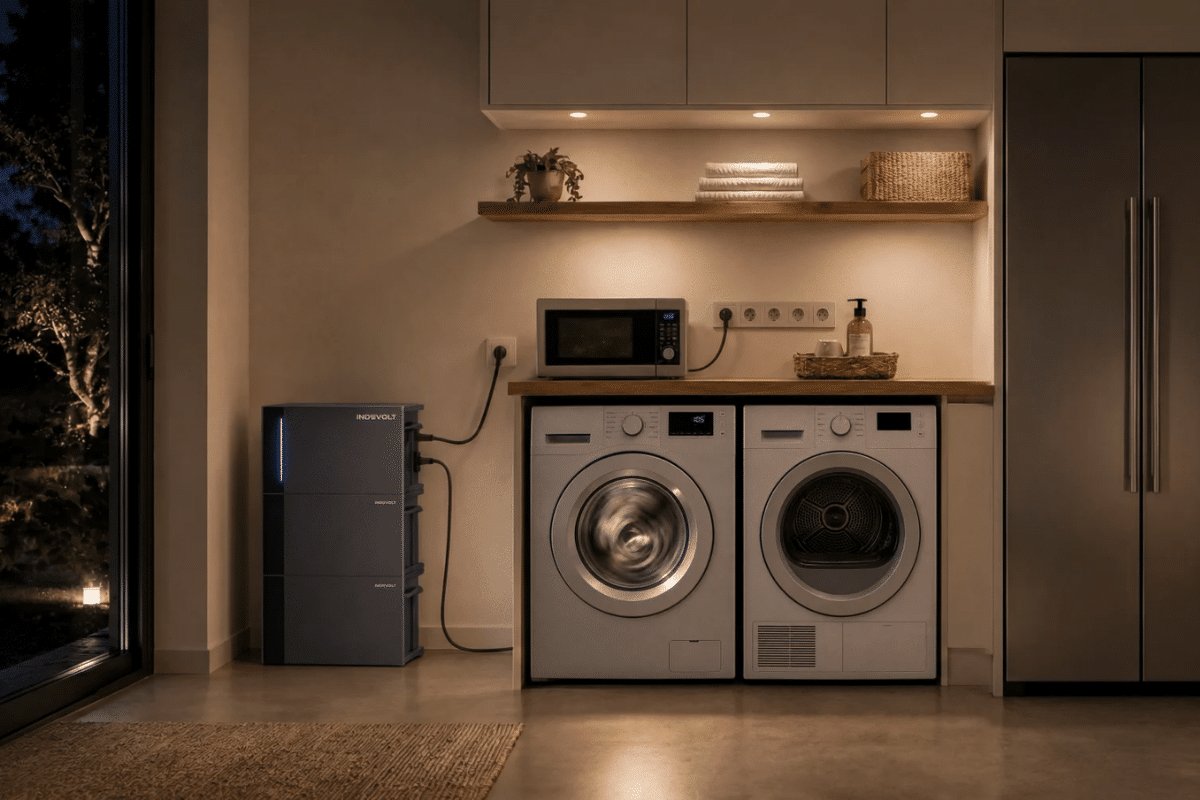
A standalone home battery can charge from the electricity grid and supply stored electricity to your home without solar panels.
Why would you use a home battery without solar?
The main reason is to take advantage of differences in electricity prices.
Some electricity tariffs have cheaper periods and more expensive periods. With a suitable tariff, a battery can charge when electricity costs less and then supply your home later when electricity is more expensive.
This is sometimes called energy arbitrage. You are effectively using the battery to shift when you buy electricity rather than generating electricity yourself.
This can be particularly relevant for households that do not have solar panels, for example because their property is not suitable for solar or because they simply want to use battery storage independently from solar generation.
Dynamic electricity tariffs and home batteries
A dynamic electricity tariff can make a home battery without solar more interesting because the price you pay for electricity can change throughout the day.
Imagine electricity is relatively cheap overnight and more expensive during another part of the day. Instead of buying all your electricity at the more expensive time, a battery can charge earlier and provide some of that stored energy later.
The potential value comes from the difference between those prices. However, the difference between the cheap and expensive periods is not the same as your actual saving. Battery losses and the cost of the battery also need to be considered.
For a more detailed explanation, read our guide to using a home battery with a dynamic electricity tariff.

What are the advantages of a home battery without solar?
Using a battery without solar has some clear advantages, especially if your electricity tariff gives you cheaper periods during the day.
- You can use a home battery without installing solar panels.
- You can store electricity from the grid for later use.
- A suitable tariff can allow you to charge when electricity is cheaper.
- The battery can reduce the amount of electricity you buy during more expensive periods.
- You can still use energy storage if solar panels are not suitable for your property.
What are the disadvantages?
- You still have to buy the electricity from the grid.
- The battery itself has an upfront cost.
- Some energy is lost during charging and discharging.
- The potential saving depends on your electricity tariff.
- A battery that is too large for your household may not be used efficiently.
How big should a home battery be without solar?
The right battery size depends on how much electricity your household uses and when you use it.
A household that mainly wants to shift evening electricity use may have different requirements from a household with high electricity demand from an electric vehicle, heat pump or other appliances.
A larger battery is not automatically a better battery. If there is not enough electricity consumption to use the stored energy regularly, some of the available capacity may simply remain unused.
It is therefore better to start with your household’s actual electricity consumption rather than choosing a battery size based only on its maximum capacity. You can use the HomeBattery.com battery calculator to explore what battery size could fit your electricity use and compare the potential economics.
Is a home battery without solar worth it?
It can be, but there is no single answer that applies to every household.
The financial case is generally more interesting when there is a meaningful difference between cheaper and more expensive electricity periods, your household uses enough electricity to make regular use of the battery, and the battery can automatically respond to your tariff.
If your electricity price is fairly stable throughout the day, there may be less opportunity to save by charging and discharging the battery at different times.
The purchase and installation cost also matters. Even if a battery can reduce your electricity costs, those savings need to be considered alongside the cost of the system.
What should you check before buying?
If you are considering home battery storage without solar, there are a few things worth checking before choosing a system.
- Your electricity tariff: check whether there are meaningful price differences during the day.
- Your electricity consumption: the battery needs regular energy use to make good use of its capacity.
- Battery capacity: choose a size that matches your household rather than simply choosing the largest option.
- Grid charging: check that the battery and inverter support charging from the electricity grid.
- Automatic control: if you use a dynamic tariff, check whether the system can respond automatically to changing prices.
- Total cost: consider the battery, inverter, installation and other system costs together.
Frequently asked questions
Can you use a home battery without solar panels?
Yes. A suitable home battery can charge from the electricity grid and store that electricity for later use. Solar panels are not required.
Can a home battery charge from the grid?
Yes, provided the battery and inverter system support grid charging. The available charging options depend on the specific system.
Can a home battery without solar save money?
It can. The potential saving mainly depends on your electricity tariff, how much electricity you use, battery efficiency and the cost of the system.
What type of electricity tariff is useful with a home battery?
A tariff with different electricity prices at different times can create an opportunity to charge the battery when electricity is cheaper and use the stored energy later.
Is a bigger battery always better?
No. The battery should be sized around your electricity consumption and how you intend to use the stored energy. A larger battery can cost more without necessarily providing proportionally greater savings.
Could a home battery work for your home?
Your electricity consumption and tariff are important when deciding whether a home battery without solar makes sense. Use the HomeBattery.com calculator to explore a suitable battery size and the potential economics for your situation.
The economics of a home battery depend on your electricity tariff, household consumption, battery system and installation costs. Use current UK prices and tariff conditions when making a purchase decision.