
Is a Home Battery Worth It in 2026? Real Payback Numbers Explained
It’s the question every homeowner asks before spending thousands on storage: is a home battery actually worth it? The honest answer is it depends — but not in a vague way. Whether a battery pays for itself comes down to a handful of measurable factors, and in 2026 several of them have shifted firmly in the battery owner’s favour.
This guide breaks down exactly how a battery earns its money, what payback looks like today, and how to tell whether it makes sense for your home.
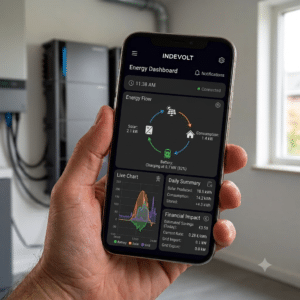
The four ways a home battery pays you back
A battery doesn’t save money one way — it stacks several returns on top of each other. The more of these apply to you, the stronger the case.
1. Higher solar self-consumption. Without storage, you use only the solar power generated in real time and export the rest — often for little or nothing. A battery captures your midday surplus and releases it in the evening, so you buy far less from the grid. This is the classic, foundational saving.
2. Tariff arbitrage. On a dynamic or time-of-use tariff, the battery charges when wholesale power is cheap and discharges when it’s expensive. Depending on your market, this alone can add tens of euros per kWh of capacity each year — sometimes rivalling the self-consumption saving.
3. Export income. In some markets you’re paid a premium to feed stored power back into the grid at peak demand. Where those “intelligent” export rates exist, a battery becomes a two-way asset: cheap in, expensive out.
4. Peak-price avoidance and resilience. Even ignoring income, simply never buying electricity at the top of the daily price curve protects you from rising rates and price-cap increases — and gives you backup power during outages.
What payback actually looks like in 2026
There’s no single number, because it depends heavily on where you live and how you use the battery. But some patterns are clear:
- Whole plug-in balcony systems with storage often reach payback in under within 3 to 5 years thanks to their low upfront cost.
- Full home batteries on a good dynamic tariff typically see payback windows shortened by two to four years compared with sticking to a flat-rate tariff.
- In high-price, high-volatility markets like the UK, combined solar-plus-battery households frequently report £600–£1,200 in annual benefit, which meaningfully compresses payback.
The takeaway: batteries have moved from “eco luxury” to “financially defensible” in most Western markets — provided you set them up to actually capture the available value.
The factors that decide your answer
Run yourself through this checklist. The more you tick, the more worth it a battery becomes.
- Your electricity price is high. The higher your grid rate, the more each stored kWh is worth. Elevated European prices since 2021 are a big part of why batteries pay back faster now.
- Your daily price spread is wide. A big gap between cheap overnight and expensive peak hours is the engine of arbitrage savings.
- You have (or can get) a smart meter. No smart meter means no dynamic tariff — and one of your four return streams disappears.
- Your evening consumption is meaningful. Batteries earn most when you’d otherwise be buying expensive evening power. Households that cook, work from home, or run an EV or heat pump benefit most.
- You’re changing net-metering or export rules. Where generous export or net-metering schemes are being phased down, self-consumption via a battery becomes far more valuable — a key reason storage demand is rising across several markets.
Getting the size right protects your return
A battery that’s too big is a surprisingly common and costly mistake. If it never fully cycles on shorter or cloudier days, that extra capacity is money that isn’t working.
- 7–12 kWh usable suits most households.
- 12–18 kWh fits homes with an EV plus a heat pump.
- Going bigger than you can reliably cycle each day lowers your per-kWh return, not raises it.
Longevity: will it last long enough to pay off?
Yes, for modern chemistry. LiFePO4 (LFP) cells — now standard in home storage — are typically rated for thousands of charge cycles, giving roughly 10–16 years of daily use. That’s comfortably long enough for the arbitrage and self-consumption economics to play out and turn a profit over the system’s life.
When a battery is not worth it (yet)
To be fair, storage doesn’t suit everyone:
- You have a very low, flat electricity rate with little daily price movement.
- You can’t get a smart meter, closing off dynamic-tariff savings.
- Your consumption is tiny and mostly during daylight, so there’s little evening load to shift.
- You’d oversize the system well beyond what you can cycle daily.
If several of those describe you, wait, or start with a small plug-in system rather than a full home battery.
Frequently asked questions
How long until a home battery pays for itself? For low-cost plug-in systems, often under five years. For full home batteries, it varies by market and setup, but a good tariff can shorten payback by two to four years versus a flat rate.
Do I need solar panels for a battery to be worth it? No. A standalone battery can pay back purely through tariff arbitrage — charging cheap, discharging expensive. Solar just adds another savings layer.
Will rising electricity prices make my battery more valuable? Generally yes. When grid prices rise, the value of every kWh you avoid buying at peak goes up, widening your savings.
What’s the most common mistake? Buying more capacity than you can fully cycle each day, and buying hardware that can’t charge from the grid on a schedule. Both quietly erode your return.