
How to Choose a Battery Storage Installer in the UK: The Checks That Protect Your Payback
28/10/2026


Home batteries are everywhere right now in the news, on social media, maybe already on your neighbour’s wall. But the basics still leave most people with the same three questions: What is it? Do I actually need one? And how do I earn it back?
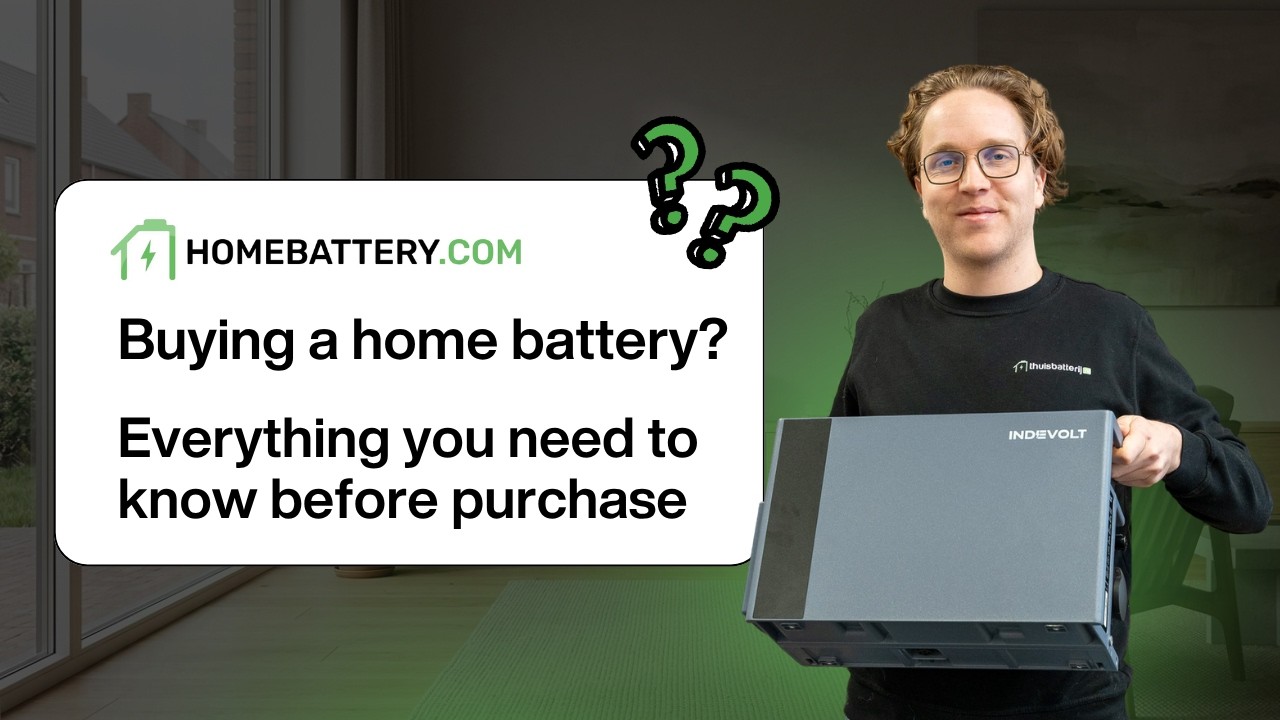
Our new video guide walks you through it from A to Z. Watch it below, then use the quick summary underneath to jog your memory or share with someone who’s deciding.
If you’d rather read than watch, here are the key takeaways from the guide:
There’s a simple timing mismatch at the heart of the problem. Your solar panels produce the most power between roughly 11 AM and 3 PM, exactly when most people are out at work or school. That surplus flows back to the grid, and in the evening you buy it all back at a higher price. Increasingly, grid operators are also adding feed-in fees for the power you export. A battery fixes this by holding your daytime surplus for evening use.
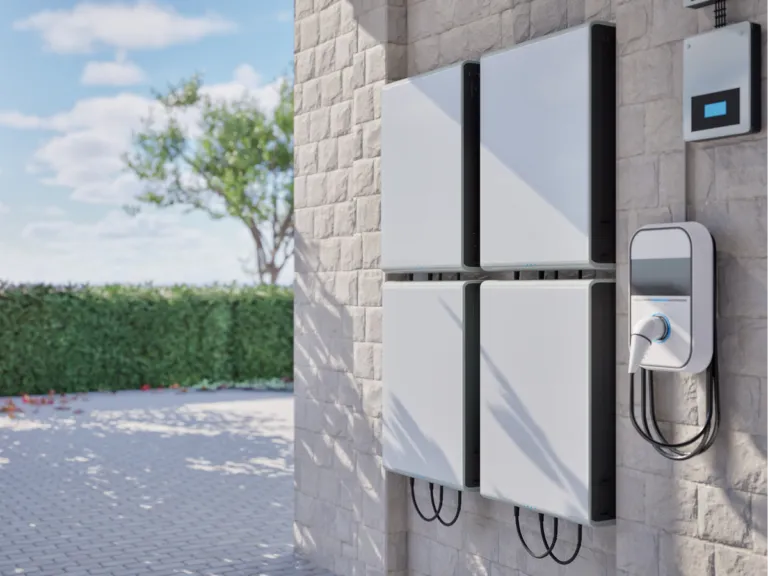
Think of it as a large power bank for your whole house. A good system has four parts: the battery cells (we focus on safe, long-lasting LiFePO4 chemistry), a Battery Management System that watches safety and health, an inverter that converts power between AC and DC, and an Energy Management System, the “brain” that decides when to charge and discharge. Many systems also include a backup outlet, so your fridge and phone keep running during a blackout.
Higher self-consumption
Without storage, the average home uses only about 30% of its own solar power. With a battery, that typically jumps to 70-80%, so you buy far less from the grid.
Dynamic charging
On a dynamic tariff, the battery can also charge from the grid when prices are lowest (even overnight in winter) and power your home during expensive peaks.
4 to 6 year payback
Together, these can bring the payback period down to around 4 to 6 years, while a modern battery lasts 15 to 20.
Bigger isn’t better. A simple rule: check your annual grid consumption and annual export, take the smaller of the two, and divide by 365. For most families that lands between 5 and 10 kWh: the sweet spot. You don’t need a 15 to 20 kWh system to get great savings; oversizing just adds cost you may never use.
Rules are shifting fast. In the Netherlands, for example, the net-metering scheme (salderingsregeling) ends on 1 January 2027. After that, every kilowatt-hour you generate is best stored and used yourself rather than exported, which is exactly what a battery is built to do.
Not necessarily. With a dynamic tariff you can still save by charging cheap and using stored power at peak times, but savings are higher when you pair it with solar.
No. Plug-and-play systems can be set up yourself: place the unit, plug it into a socket, and connect a P1 meter or CT clamp to your meter. A dedicated circuit from an electrician is optional and boosts power.
Modern LiFePO4 systems typically last 15 to 20 years, comfortably longer than their payback period.
For most households, 5 to 10 kWh. Base it on your own daily surplus rather than a salesperson's push toward a much larger system.
At HomeBattery.com we're a knowledge platform first. Explore our choice helper, in-depth guides, and video walkthroughs to find the right system for your home.
28/10/2026
28/10/2026

22/10/2026
22/10/2026
21/10/2026
20/10/2026