
New EU Rule: Every Home Battery Over 2 kWh Must Be Registered by February 2027
A quiet but far-reaching change is coming for anyone in Europe who owns — or is about to buy — a home battery. Under new EU legislation, all energy storage batteries above 2 kWh must be electronically registered from February 2027. It’s a small threshold that captures almost every residential storage system on the market, and it signals a clear shift: home batteries are moving from an unregulated accessory to tracked, traceable energy infrastructure.
Here’s what the rule is, why it exists, and what it means for you.
What the rule actually says
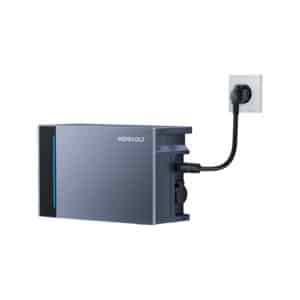

From February 2027, storage batteries over 2 kWh will have to be logged in an electronic register under EU rules. The goal, according to the EU’s Joint Research Centre, is to improve transparency, safety, and life-cycle traceability across the fast-growing storage market.
The 2 kWh cut-off is the key detail. Even the smallest plug-in balcony batteries — many of which start around 2–2.5 kWh — sit right at or above the line. Full home batteries are well past it. In practice, this means nearly all consumer storage is in scope.
Why the EU is doing this
The rule isn’t an isolated move. It sits inside a much bigger regulatory push built around the EU Batteries Regulation, which is phasing in requirements on carbon footprint, recycling, and lifecycle compliance through 2025–2026 and beyond. Part of that framework is the coming “battery passport” — a digital record of a battery’s origin, materials, and history.
The context is a market growing at breakneck speed. Europe’s cumulative energy storage capacity passed 100 GW, and forecasts see it more than doubling by 2030. When a category scales that fast, regulators want to know what’s installed, where, and what happens to it at end of life — for grid planning, for safety, and for recycling.
What it means for home battery owners
The practical impact is modest but real:
- New buyers: Expect registration to become a standard step at or after installation, much like registering a plug-in solar system already is in several countries. Your installer or manufacturer will likely handle much of it.
- Existing owners: Batteries already installed may need to be logged as the national systems come online. Keep your purchase and installation paperwork — capacity, serial number, install date — accessible.
- Everyone: Traceability cuts both ways in your favour. A registered, documented battery is easier to insure, service, warranty, and eventually recycle or resell.
None of this changes whether a battery is worth buying. If anything, clearer rules and lifecycle tracking make the category more mature and more trustworthy.
The bigger picture
This registration requirement is one thread in a wider 2026 storage agenda across Europe — from “Made in EU” content rules being proposed for larger systems, to faster permitting for storage projects, to national schemes fast-tracking battery deployment. The direction is consistent: governments increasingly see batteries as critical infrastructure, and they’re building the rules to match.
For households, the takeaway is simple. If you own a home battery over 2 kWh, registration is coming. If you’re planning to buy one, factor it in as a routine formality — and hold on to your documentation.
Quick FAQ
Does this affect small plug-in balcony batteries? Likely yes if they’re 2 kWh or larger, which most are. Very small units below 2 kWh fall under the threshold.
Do I have to do anything right now? Not urgently — the requirement applies from February 2027. For now, simply keep your battery’s specs and installation records handy.
Is this the same as the battery passport? Related but not identical. Registration logs the system; the battery passport is a broader digital record of materials and lifecycle under the EU Batteries Regulation. Both point the same way: more traceability.
We track the rules shaping home storage across Europe so you don’t have to. Follow Homebattery.com for plain-English coverage of battery policy, tariffs, and technology.